

Imagine a lawn care tool that works while you sleep, adapts to your yard’s unique shape, and even handles the rain—all without a drop of gas or a single push from you. That’s the promise of today’s robotic mower, a far cry from the bulky, labor-intensive riding mowers of the past. If you’re still clinging to the idea that a traditional mower is the only way to tame a large yard, it’s time to reconsider. Autonomous lawn mowers aren’t just a novelty; they’re a smarter, more efficient way to maintain your lawn, offering capabilities that riding mowers simply can’t match.
Hands-Free, Always-On Mowing
One of the most compelling advantages of a robot lawn mower is its ability to operate autonomously, without requiring your constant attention. Unlike riding mowers, which demand your time and physical effort, robotic models can be programmed to mow on a schedule—whether that’s daily, every other day, or even multiple times a week. This means your lawn stays consistently manicured, with no unsightly patches or overgrown sections between mowings.
Most models, like those from Husqvarna Automower, Worx Landroid, or Gardena Sileno, use boundary wires or GPS to navigate your yard, ensuring they cover every inch while avoiding obstacles like trees, flower beds, or patio furniture. And because they’re electric, they operate quietly, so they won’t disturb you or your neighbors—even if they’re running at 2 a.m.
Precision and Adaptability
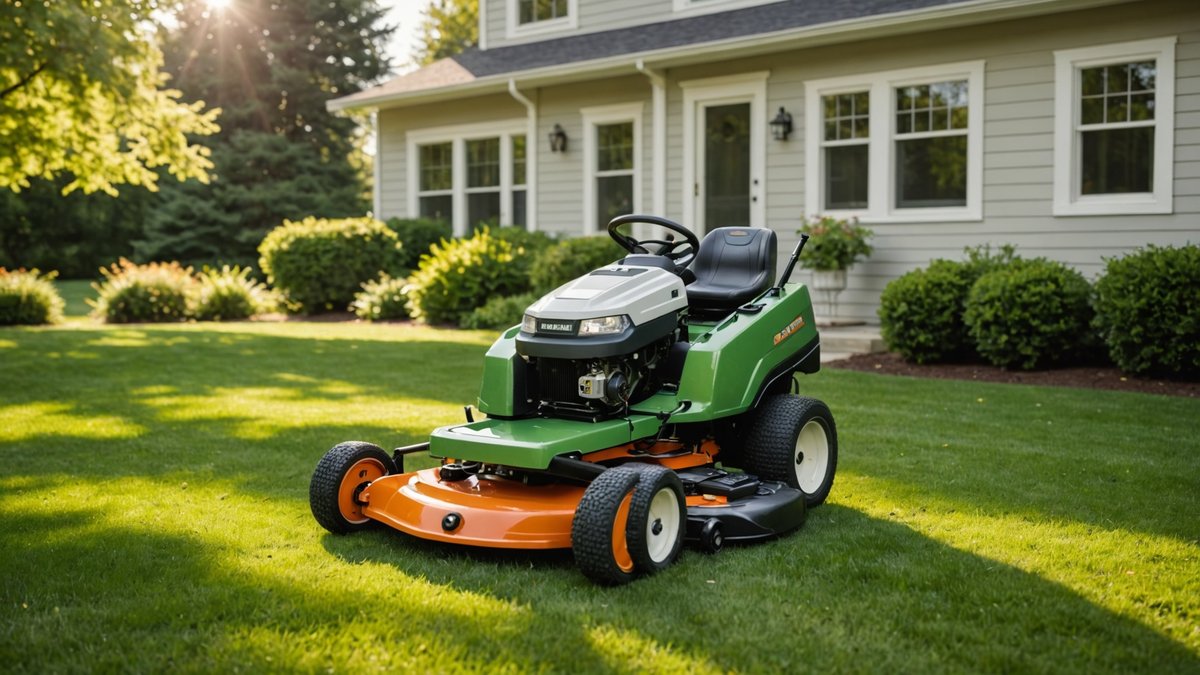
Riding mowers are great for covering large areas quickly, but they lack the finesse of a smart mowing robot. Robotic mowers are designed to handle complex yard layouts with ease. Need to mow around a winding garden path or a tightly spaced orchard? No problem. Many models can navigate slopes up to 20-25 degrees and tight spaces that a riding mower would struggle with. Some even use AI-powered sensors to detect and avoid small obstacles in real time.
Another standout feature is their ability to mulch grass clippings finely and return them to the soil as natural fertilizer. This not only eliminates the need for bagging but also promotes a healthier lawn over time. Riding mowers often leave behind clumps of grass or require you to manually dispose of clippings, which can be time-consuming and messy.
Weather and Seasonal Smarts
Ever tried to mow a soggy lawn with a riding mower? It’s a messy, slippery chore that can leave ruts in your yard and clog your mower’s deck. Autonomous lawn mowers, on the other hand, are built to handle wet conditions with ease. Many models are weatherproof and can operate in light rain without issue. Some even include rain sensors that pause mowing during heavy downpours and automatically resume once the weather clears.
Seasonal adaptability is another win. Robotic mowers can adjust their cutting height and frequency based on the season. For example, they can mow more frequently in the spring when grass grows quickly, then scale back in the summer or fall. Some advanced models, like the Robomow RS630, even offer app-based controls to fine-tune settings remotely.
Eco-Friendly and Low-Maintenance
If sustainability is a priority for you, a robotic mower is a clear winner over gas-powered riding mowers. Here’s why:
- Zero Emissions: Robotic mowers are electric, so they produce no direct emissions, reducing your carbon footprint.
- Energy Efficiency: They consume far less energy than gas mowers, often costing just pennies per hour to operate.
- No Gas or Oil Changes: Say goodbye to trips to the gas station or messy oil changes. Just plug in your mower to recharge its battery.
- Low Noise Pollution: Their quiet operation means you won’t disturb wildlife or neighbors, making them ideal for urban or suburban areas.
- Minimal Upkeep: Unlike riding mowers, which require regular blade sharpening, oil changes, and air filter replacements, robotic mowers have fewer moving parts and need less maintenance. Most only require occasional blade replacements and cleaning.
For homeowners looking to reduce their environmental impact, models like the Ego Power+ LM2100 or Mammotion LUBA offer a greener alternative without sacrificing performance.
Enhanced Safety Features
Safety is a major concern with any lawn equipment, but robot lawn mowers are designed with multiple layers of protection to keep you, your family, and your pets safe. Here are some key safety features you’ll find in most models:
- Lift and Tilt Sensors: If the mower is lifted or tilted (e.g., by a child or pet), the blades automatically stop spinning.
- Collision Sensors: These detect obstacles and either slow down, stop, or change direction to avoid them.
- Pin Code Locks: Prevent unauthorized use, especially important if you have curious kids.
- Low-Cutting Blades: The blades on robotic mowers are typically smaller and spin at lower speeds than those on riding mowers, reducing the risk of injury.
Riding mowers, by contrast, pose a higher risk of accidents due to their size, speed, and exposed blades. According to the U.S. Consumer Product Safety Commission, thousands of accidents involving riding mowers are reported each year, many of which could be avoided with the use of a safer, autonomous lawn mower.
What This Means for You
So, what do these advantages add up to for the average homeowner or landscaping pro? For starters, robotic mowers save you time—lots of it. Instead of spending hours each week behind the wheel of a riding mower, you can let the robot handle the work while you focus on other tasks or simply relax. For professionals, this means the ability to manage multiple properties simultaneously, increasing efficiency and reducing labor costs.
They also save you money in the long run. While the upfront cost of a high-quality autonomous lawn mower can be higher than a riding mower (typically ranging from $800 to $3,500), the savings on gas, maintenance, and even lawn care services can add up quickly. Plus, the consistency of a robotic mower can reduce the need for fertilizers or herbicides, as a well-maintained lawn is naturally more resistant to weeds and pests.
For those with large or complex yards, a robotic mower might seem like a gamble, but the technology has advanced significantly in recent years. Models like the Husqvarna Automower 450X or Worx Landroid M are capable of handling yards up to 1.25 acres or more, and some even support multi-zone mowing for properties with separate lawn areas.
Finally, there’s the peace of mind that comes with knowing your lawn is always taken care of—without the physical strain or environmental guilt. Whether you’re a busy homeowner, a tech enthusiast, or a landscaping pro looking to streamline your operations, a smart mowing robot could be the upgrade your yard needs.
FAQ
Can a robotic mower handle a large yard?
Yes! While early models were limited to smaller lawns, today’s autonomous lawn mowers can handle yards up to 1.25 acres or more. For very large properties (2+ acres), you may need to invest in a commercial-grade model or use multiple units. Brands like Husqvarna and Robomow offer high-capacity models designed for larger spaces. Just be sure to check the manufacturer’s specifications for maximum coverage area and battery life.
Are robotic mowers worth the investment?
For most homeowners, the answer is a resounding yes. While the initial cost is higher than a traditional mower, the long-term savings on time, fuel, and maintenance often justify the expense. Plus, the convenience of smart mowing—where the robot does the work for you—is a major selling point. If you value your free time and want a consistently well-kept lawn without the hassle, a robotic mower is a smart investment.
Do robotic mowers work with smart home systems?
Many modern robot lawn mowers are designed to integrate with smart home ecosystems. For example, Husqvarna Automower models can connect to smart home platforms like Amazon Alexa or Google Assistant, allowing you to control them with voice commands. Some models also offer app-based controls, so you can adjust settings, check battery levels, or start/stop the mower from your smartphone. If smart home compatibility is important to you, look for models with Wi-Fi or Bluetooth connectivity.
Source: Original Article

Author: AI Mow
Ai Mow is the editorial team behind Ai Mower News, dedicated to bringing you the latest news, reviews, and insights on robotic lawn mowers and smart gardening technology.