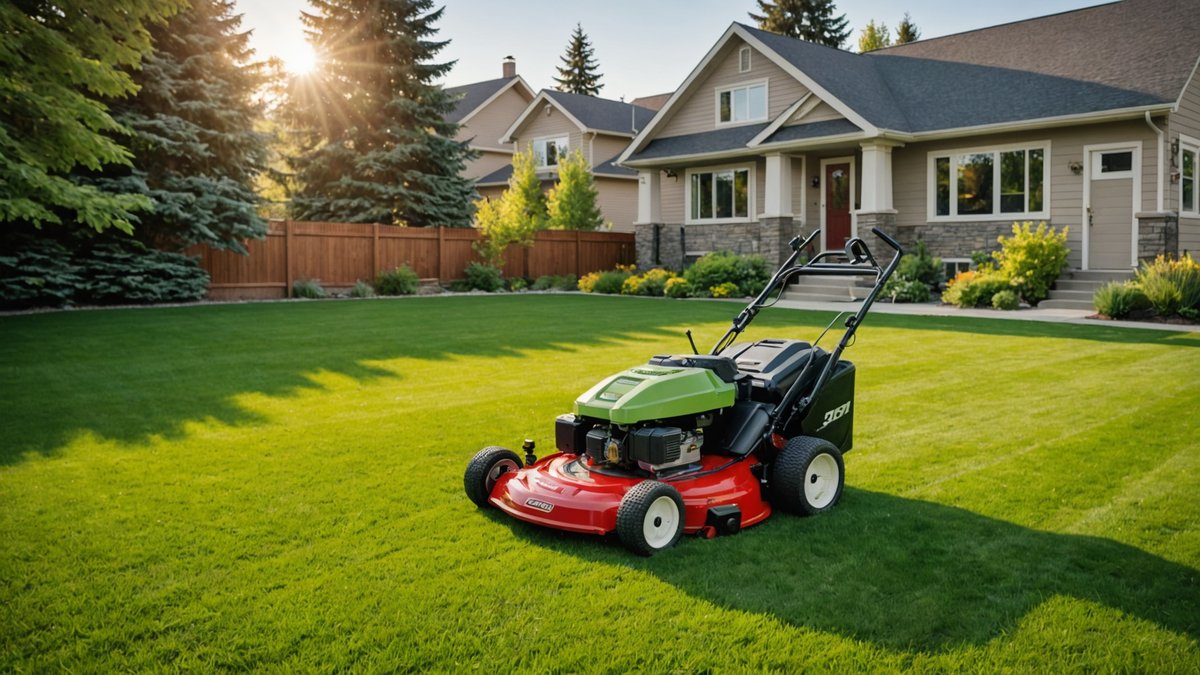
The future of lawn care is rolling into Calgary this summer, as the city tests autonomous lawn mowers to maintain its athletic fields. This pilot program could signal a major shift in how municipalities and landscaping pros handle large-scale turf management—offering a glimpse into how robotic mowers might soon take over public spaces, not just backyards.
If successful, this initiative could inspire other cities to adopt smart mowing solutions, reducing labor costs, emissions, and noise pollution. For homeowners and pros watching this space, Calgary’s experiment is a real-world case study in whether robot lawn mowers can handle the demands of commercial-scale maintenance.
Calgary’s Pilot Program: Testing Robotic Mowers in the Wild
The City of Calgary is deploying a fleet of autonomous lawn mowers across select athletic fields this season, putting these machines to the test in a high-traffic, high-visibility environment. Unlike residential robotic mowers, which typically handle small, enclosed lawns, these units must navigate open spaces, uneven terrain, and frequent human activity—all while maintaining the precision and consistency required for sports fields.
This isn’t just a tech demo. The city is evaluating whether these machines can deliver real-world benefits, such as reduced maintenance costs, lower carbon footprints, and improved field quality. If the pilot succeeds, it could accelerate the adoption of smart mowing in parks, golf courses, and other public green spaces across North America.
Why This Matters for the Robotic Mower Industry
Calgary’s experiment is a big deal for the robot lawn mower market, which has largely focused on consumer and small-scale commercial applications. Most autonomous mowers today, like those from Husqvarna, Worx, or Gardena, are designed for homeowners with yards up to a few acres. Brands like Mean Green and Sublime Robotics are pushing into commercial territory, but large-scale municipal use remains uncharted territory.
Success in Calgary could:
- Prove scalability: Demonstrate that robotic mowers can handle vast, complex areas beyond private properties.
- Accelerate adoption: Encourage other cities to invest in automation, creating a new market for commercial-grade autonomous lawn mowers.
- Drive innovation: Push manufacturers to develop rugged, high-capacity models tailored for public and professional use.
- Highlight sustainability: Showcase the environmental benefits of switching from gas-powered fleets to electric, zero-emission smart mowing solutions.
For landscaping professionals, this could mean a future where fleets of autonomous lawn mowers work alongside human crews, handling routine maintenance while freeing up labor for more specialized tasks.
Key Specs and Considerations for Commercial Robotic Mowers
While Calgary hasn’t disclosed the exact models being tested, commercial-grade robot lawn mowers typically share several features that set them apart from residential units. Here’s what you’d expect from machines built for large-scale use:
- Cutting capacity: Wider cutting decks (40+ inches) and higher blade speeds to cover large areas efficiently.
- Battery life: Extended runtime (8+ hours) or swappable battery packs to handle all-day operation without frequent recharging.
- Durability: Reinforced chassis, all-terrain wheels, and weatherproofing to withstand harsh conditions and heavy use.
- Navigation tech: Advanced GPS, RTK (real-time kinematic) positioning, and obstacle avoidance systems to ensure precise, safe operation in dynamic environments.
- Fleet management: Cloud-based software for remote monitoring, scheduling, and performance tracking across multiple units.
- Safety features: Emergency stop buttons, lift sensors, and collision detection to protect both the machine and bystanders.
For comparison, residential models like the Husqvarna Automower 450X or Worx Landroid M usually max out at 2-3 hours of runtime and are designed for lawns under 1 acre. Commercial units, such as those from Mean Green or Sublime Robotics, are built to tackle 10+ acres per day with minimal human intervention.
Challenges Ahead for Autonomous Mowing in Public Spaces
While the potential is huge, Calgary’s pilot won’t be without hurdles. Public spaces present unique challenges for robotic mowers, including:
- Safety concerns: Athletic fields are busy places. The mowers must reliably detect and avoid people, pets, and equipment to prevent accidents.
- Terrain variability: Uneven ground, slopes, and obstacles like sprinkler heads or goalposts require advanced navigation capabilities.
- Theft and vandalism: Unlike fenced-in backyards, public spaces are vulnerable to tampering. Commercial autonomous lawn mowers may need built-in security features like GPS tracking or alarm systems.
- Regulatory hurdles: Cities may need to update local ordinances to allow for the operation of large, autonomous machines in public areas.
- Maintenance and support: A fleet of robot lawn mowers requires a robust service infrastructure, including parts availability, technical support, and training for city staff.
If Calgary can overcome these challenges, it could set a precedent for how cities integrate smart mowing into their maintenance routines.
What This Means for You
So, what does Calgary’s experiment mean for homeowners, landscaping pros, and industry watchers?
- For homeowners: If commercial robotic mowers take off, the technology could trickle down to consumer models. Expect more durable, feature-rich options for large properties, as well as potential cost savings as economies of scale improve.
- For landscaping pros: This could be a game-changer. Autonomous lawn mowers could reduce labor costs, improve efficiency, and allow your crew to focus on higher-value services like design or specialized care. Keep an eye on brands like Mean Green, Sublime Robotics, and others entering the commercial space.
- For municipalities: If Calgary’s pilot succeeds, expect other cities to follow suit. This could lead to quieter, cleaner, and more consistent public spaces—all while reducing long-term maintenance costs.
- For the industry: A successful municipal deployment could accelerate innovation, leading to better smart mowing tech across the board. Think improved AI, longer battery life, and more robust machines.
In short, Calgary’s test run isn’t just about mowing fields—it’s about proving that robotic mowers can handle the big leagues. And if they can, the entire lawn care industry might never look back.
FAQ
What brands are leading the way in commercial robotic mowers?
While Calgary hasn’t specified which models it’s testing, some of the top brands in the commercial autonomous lawn mower space include:
- Mean Green: Known for their commercial-grade electric mowers, including robotic models designed for large properties.
- Sublime Robotics: A newer player focused on AI-driven robot lawn mowers for professional use.
- Husqvarna: While primarily a residential brand, their Automower line includes models capable of handling larger areas, and they may expand into commercial applications.
- Deere & Company: John Deere has been investing in autonomy and may enter the smart mowing market with commercial solutions in the future.
Are robotic mowers safe for use in public spaces?
Safety is a top concern for any autonomous lawn mower operating in public areas. Modern commercial models are equipped with multiple safety features, including:
- Obstacle detection sensors (LiDAR, ultrasonic, or camera-based).
- Emergency stop buttons and lift sensors to halt operation if the mower is tipped or manually stopped.
- GPS and geofencing to keep the mower within designated boundaries.
- Low-noise operation to minimize disruption.
However, regulations and real-world testing (like Calgary’s pilot) are essential to ensure these systems are foolproof before widespread adoption.
How do robotic mowers compare to traditional mowers in terms of cost?
The upfront cost of a commercial robot lawn mower is significantly higher than a traditional mower—often tens of thousands of dollars per unit. However, the long-term savings can be substantial:
- Labor savings: Reduced need for human operators, especially for routine maintenance tasks.
- Fuel savings: Electric models eliminate the cost of gas and reduce emissions.
- Maintenance savings: Fewer moving parts and less wear and tear compared to gas-powered mowers.
- Longevity: With proper care, a commercial autonomous lawn mower can last 10+ years, offering a strong return on investment over time.
For municipalities and landscaping businesses, the break-even point may come within a few years, depending on usage and local labor costs.
Source: Original Article

Author: AI Mow
AI Mow is the AI-assisted news desk of AI Mower News. It monitors manufacturer announcements, trade shows and industry sources, and drafts stories in our editorial voice. Every article is checked against its original source before publication — our fact gate holds anything that claims testing we did not do or specs the source does not support — and is published under this byline for transparency. How we work: https://aimowernews.com/editorial-guidelines/ · The people behind it: https://aimowernews.com/our-team/