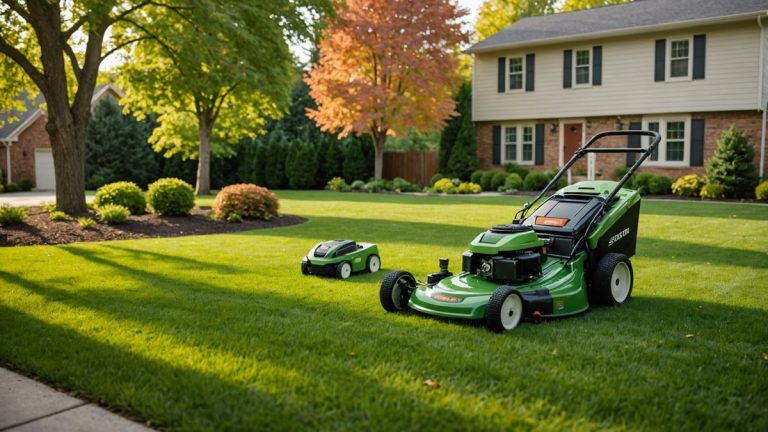
Imagine reclaiming your weekends—no more sweating under the summer sun, no more wrestling with a loud gas mower, and no more guilt over that overgrown lawn. For many homeowners, the dream of a perfectly manicured yard without the backbreaking work is becoming a reality, thanks to the rise of robotic mowers. After three months of hands-on testing with a premium autonomous lawn mower priced at $2,000, one question stands out: Is this the ultimate yard-care upgrade, or just another gadget clogging your garage? The answer might surprise you—and could redefine how you think about lawn maintenance.
Why Robotic Mowers Are More Than Just a Luxury
The idea of a robot lawn mower might sound like a high-tech novelty, but for those who’ve tried one, it’s a game-changer. Unlike traditional mowers that demand your time, energy, and attention, these smart machines operate autonomously, trimming your grass on a schedule you set. Whether you’re at work, running errands, or simply relaxing indoors, your lawn gets the care it needs—without you lifting a finger.
What sets modern robotic mowers apart is their precision. Most models use boundary wires, GPS, or a combination of sensors to navigate your yard, avoiding obstacles like trees, flower beds, and even your kid’s forgotten toys. The result? A consistently even cut that rivals what you’d get from a professional service. And with the ability to mulch clippings finely, these mowers also act as natural fertilizers, promoting healthier grass over time.
Putting a $2,000 Robotic Mower to the Test
So, is a $2,000 autonomous lawn mower worth the investment? After three months of real-world use, the short answer is: it depends on your priorities. For homeowners with medium to large yards (up to an acre or more), the time savings alone can justify the cost. But the real value lies in the convenience and consistency these machines deliver.
During testing, the mower handled everything from tight corners to steep slopes with ease. Rain sensors ensured it retreated to its charging station when wet, preventing damage to both the machine and the lawn. And thanks to smart scheduling, the grass was always at an ideal height—no more overgrown patches or uneven edges after a busy week.
Of course, no product is perfect. Early on, there were a few hiccups: the boundary wire needed minor adjustments to prevent the mower from venturing into the neighbor’s yard, and the initial setup took a couple of hours. But once dialed in, the system ran like clockwork, requiring minimal intervention beyond occasional blade changes and battery checks.
Key Features That Set Premium Models Apart
Not all robot lawn mowers are created equal. If you’re considering a high-end model, here’s what to look for:
- Smart Navigation: Advanced models use a mix of GPS, sensors, and AI to map your yard efficiently, reducing random bumping and improving coverage.
- App Control: Most premium mowers come with a companion app, allowing you to adjust schedules, monitor battery levels, and even receive alerts if the mower gets stuck or encounters an issue.
- All-Terrain Capability: Look for mowers with large, treaded wheels if your yard has hills or uneven ground. Some models can handle slopes up to 35 degrees.
- Battery Life and Charging: A high-capacity lithium-ion battery is essential for larger yards. The best models can run for 90-120 minutes on a single charge and return to their docking station automatically to recharge.
- Security Features: PIN codes, alarms, and GPS tracking help deter theft—a real concern for expensive outdoor equipment.
- Multi-Zone Support: For complex yards with separate areas (e.g., front and back), some mowers can be programmed to tackle multiple zones in a single session.
For comparison, brands like Husqvarna Automower, Worx Landroid, and Robomow offer similar features, though pricing and performance vary. Husqvarna, for instance, is known for its rugged build and smart home integration, while Worx models often provide a more budget-friendly entry into robotic mowing.
Who Should (and Shouldn’t) Buy a Robotic Mower
Robotic mowers aren’t a one-size-fits-all solution. Here’s a quick guide to help you decide if one is right for you:
- Buy if: You have a yard up to 1-2 acres, value your free time, and want a consistently well-maintained lawn without the hassle. These mowers are also ideal for homeowners with physical limitations or those who travel frequently.
- Skip if: Your yard is very small (under 1,000 sq. ft.), heavily wooded, or filled with obstacles like rocks and roots. Also, if you enjoy the ritual of mowing as a form of exercise or relaxation, the hands-off approach might not appeal to you.
For professional landscapers, autonomous lawn mowers are starting to make inroads as a way to reduce labor costs and increase efficiency. Companies like Mean Green Mowers and STIGA offer commercial-grade models designed for larger properties and fleet use. While the upfront cost is higher, the long-term savings in time and manpower can be substantial.
What This Means for You
So, can a $2,000 robotic mower save your weekend? The answer is a resounding yes—if you’re willing to invest in the setup and trust the technology. For most homeowners, the time saved, the reduction in physical labor, and the improvement in lawn quality more than justify the cost. Plus, with advancements in smart mowing technology, these machines are only getting smarter, more efficient, and more accessible.
If you’re on the fence, consider starting with a mid-range model (around $1,000-$1,500) to test the waters. Brands like Gardena and ECOVACS offer solid options that balance price and performance. And if you’re a professional landscaper, now might be the time to explore how autonomous lawn mowers could streamline your operations and give you a competitive edge.
The future of lawn care is here—and it’s autonomous. Whether you’re a tech enthusiast, a busy parent, or a pro looking to scale your business, a robot lawn mower could be the upgrade your yard (and your schedule) has been waiting for.
FAQ
Are robotic mowers safe for pets and kids?
Yes, most modern robotic mowers are designed with safety in mind. They feature blades that stop immediately if the mower is lifted, and their lightweight, compact design reduces the risk of injury. However, it’s still a good idea to supervise young children and pets until they’re accustomed to the mower’s presence. Some models also include motion sensors that pause the blades if an obstacle (like a curious dog) gets too close.
How much maintenance do robotic mowers require?
Compared to traditional mowers, autonomous lawn mowers require minimal maintenance. You’ll need to replace the blades periodically (usually every 3-6 months, depending on usage), clean the underside to remove grass buildup, and ensure the charging contacts are free of debris. Battery life typically lasts 2-4 years, and most manufacturers offer replacement options. It’s a far cry from the oil changes, spark plug replacements, and winterizing required for gas mowers.
Can a robotic mower handle my yard’s unique layout?
Most robot lawn mowers can adapt to a variety of yard shapes and sizes, but complex layouts may require additional setup. For example, if your yard has multiple separate areas, you might need to install additional boundary wires or use a model with multi-zone support. Some high-end mowers, like those from Husqvarna, use GPS and AI to create virtual boundaries, eliminating the need for physical wires. It’s best to check the manufacturer’s specifications to ensure compatibility with your yard’s layout.
Source: Original Article

Author: AI Mow
Ai Mow is the editorial team behind Ai Mower News, dedicated to bringing you the latest news, reviews, and insights on robotic lawn mowers and smart gardening technology.