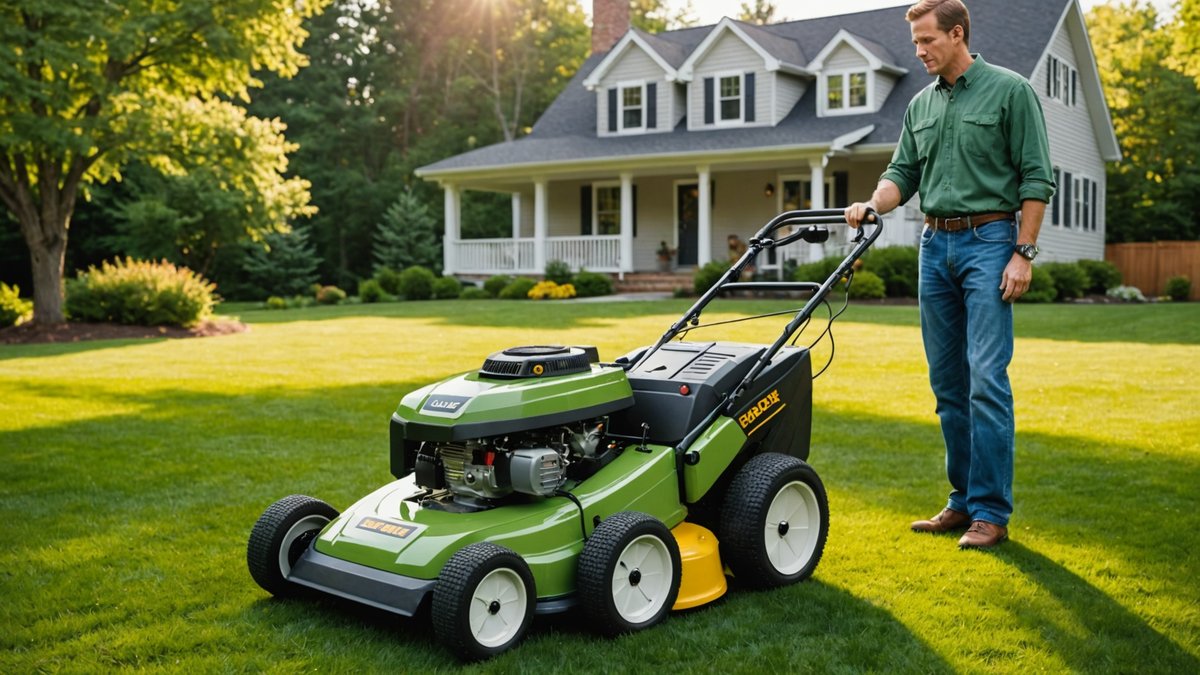
The Adirondack Park is known for its rugged wilderness and pristine landscapes, but this summer, it’s also becoming a testing ground for the future of robotic mower technology. The New York State Department of Environmental Conservation (DEC) has launched a pilot program in Ray Brook, deploying an autonomous lawn mower to handle maintenance tasks at its headquarters. This initiative isn’t just about keeping the grass trim—it’s a bold step toward integrating smart mowing solutions into public land management, offering a glimpse of how automation could reshape outdoor upkeep for agencies, municipalities, and even homeowners.
Why the DEC Chose Robotic Mowing
The DEC’s decision to test a robot lawn mower reflects a growing trend: organizations are increasingly turning to automation to address labor shortages, reduce emissions, and improve efficiency. Traditional lawn care often relies on gas-powered equipment, which can be noisy, polluting, and labor-intensive. By contrast, autonomous mowers operate quietly, emit zero direct emissions (if electric), and can work around the clock without breaks. For a state agency managing vast public spaces, these benefits are hard to ignore.
Ray Brook’s pilot program is particularly noteworthy because it tests the mower’s adaptability to the Adirondacks’ varied terrain. Unlike the manicured lawns of suburban homes, the DEC’s grounds include slopes, uneven patches, and natural obstacles—challenges that push the limits of current robotic mower technology. If successful, this pilot could pave the way for broader adoption in parks, campgrounds, and other public areas across New York.
Meet the Mower: Specs and Capabilities
While the DEC hasn’t publicly named the specific model in use, the mower is likely a commercial-grade autonomous lawn mower designed for large-scale operations. Based on industry standards and comparisons to similar pilots, here’s what we can infer about its capabilities:
- Navigation: Uses a combination of GPS, RTK (Real-Time Kinematic) positioning, and sensors (e.g., LiDAR or ultrasonic) to map and navigate the area autonomously. Unlike residential models that rely on boundary wires, commercial mowers often use virtual fencing for flexibility.
- Cutting Width: Likely between 22 and 30 inches, allowing it to cover large areas efficiently. For context, popular residential robot lawn mowers like the Husqvarna Automower® 450X have a 9.4-inch cutting width, while commercial models (e.g., Mean Green’s Autonomous Mower) can exceed 50 inches.
- Battery Life: Commercial autonomous mowers typically run for 4–8 hours on a single charge, with some models supporting hot-swap batteries for continuous operation. This is critical for covering the DEC’s expansive grounds.
- Obstacle Detection: Advanced sensors can detect and avoid trees, rocks, benches, and even people or animals, ensuring safety and precision.
- Weather Resistance: Built to withstand rain, heat, and other outdoor conditions, with IP ratings (e.g., IPX4 or higher) for water resistance.
- Remote Monitoring: Operators can track the mower’s progress, battery status, and maintenance needs via a smartphone app or web dashboard—a feature standard in smart mowing systems like those from STIHL or Worx Landroid.
For comparison, homeowners considering a robotic mower for their yard might look at models like the Gardena Sileno Life or the Ecovacs Goat G1, which offer many of these features on a smaller scale. Meanwhile, landscaping pros might explore options like the Graze by Left Hand Robotics or the Scag Liberty Z, which are designed for commercial fleets.
Challenges and Considerations
While the pilot program is a promising step, it’s not without hurdles. Autonomous lawn mowers face unique challenges in public spaces, including:
- Regulatory Hurdles: Public agencies must navigate safety regulations, liability concerns, and potential pushback from visitors wary of robots in natural spaces.
- Terrain Complexity: The Adirondacks’ uneven, obstacle-rich environment tests the limits of current navigation systems. Residential robot lawn mowers typically struggle with slopes steeper than 20–25 degrees, and commercial models may need custom tuning for rugged terrain.
- Maintenance: Autonomous mowers require regular blade sharpening, battery replacements, and software updates. For a large organization like the DEC, scaling this maintenance could be a logistical challenge.
- Cost: Commercial-grade autonomous lawn mowers can cost $10,000–$50,000 or more, a significant investment even for a state agency. However, long-term savings on labor and fuel may justify the expense.
Despite these challenges, the DEC’s pilot aligns with a broader shift toward automation in landscaping. Companies like iRobot (which acquired Left Hand Robotics in 2021) and Deere & Company are heavily investing in autonomous outdoor equipment, signaling that smart mowing is here to stay.
What This Means for You
So, why should homeowners and landscaping pros care about a state agency testing a robotic mower in upstate New York? Here’s the bottom line:
- For Homeowners: The DEC’s pilot demonstrates that autonomous lawn mowers are becoming more versatile and reliable. As the technology matures, we can expect residential models to improve in navigation, battery life, and obstacle avoidance. If you’ve been waiting for a robot lawn mower that can handle a complex yard, this trend is good news. Keep an eye on brands like Husqvarna, Robomow, and Mammotion, which are pushing the boundaries of what’s possible.
- For Landscaping Pros: The DEC’s experiment highlights the potential for autonomous lawn mowers to reduce labor costs and improve efficiency in large-scale operations. If the pilot succeeds, we may see more municipalities and commercial property managers adopting these machines, creating new opportunities for pros who can service and manage robotic fleets. Companies like Mean Green and Scag already offer commercial-grade options, and more are likely to follow.
- For the Environment: Electric robotic mowers produce zero direct emissions, reducing the carbon footprint of lawn care. As public agencies and businesses adopt these machines, the shift could contribute to cleaner air and quieter communities.
If you’re considering a robotic mower for your home or business, now is a great time to start researching. The technology is evolving rapidly, and early adopters stand to benefit from increased efficiency and long-term savings.
FAQ
How do autonomous lawn mowers differ from residential robot lawn mowers?
Autonomous lawn mowers designed for commercial or public use are typically larger, more durable, and equipped with advanced navigation systems (e.g., RTK GPS) to handle vast, complex areas without boundary wires. Residential robot lawn mowers, like the Husqvarna Automower or Worx Landroid, are smaller, use boundary wires or virtual fences, and are optimized for yards up to a few acres.
Are robotic mowers safe for public spaces like parks?
Yes, but safety depends on the model and its features. Commercial autonomous lawn mowers used in public spaces are equipped with emergency stop buttons, obstacle detection sensors, and sometimes even cameras to avoid collisions with people, pets, or wildlife. The DEC’s pilot likely includes rigorous safety protocols to ensure the mower operates without incident. That said, public agencies must also address liability and regulatory concerns before widespread adoption.
What’s the future of smart mowing technology?
The future of smart mowing is bright, with advancements on the horizon in AI, battery technology, and connectivity. Expect to see:
- Better Navigation: Improved sensors and AI will allow robotic mowers to handle more complex terrains and obstacles.
- Longer Battery Life: Solid-state batteries or solar-assisted charging could extend runtime and reduce downtime.
- Fleet Management: Landscaping pros will be able to monitor and control multiple autonomous lawn mowers from a single dashboard, optimizing routes and schedules.
- Integration with Smart Homes: Residential models may increasingly sync with smart home systems (e.g., Alexa, Google Home) for voice control and automation.
As the DEC’s pilot shows, the technology is already here—it’s just a matter of time before it becomes mainstream.
Source: Original Article

Author: AI Mow
AI Mow is the AI-assisted news desk of AI Mower News. It monitors manufacturer announcements, trade shows and industry sources, and drafts stories in our editorial voice. Every article is checked against its original source before publication — our fact gate holds anything that claims testing we did not do or specs the source does not support — and is published under this byline for transparency. How we work: https://aimowernews.com/editorial-guidelines/ · The people behind it: https://aimowernews.com/our-team/