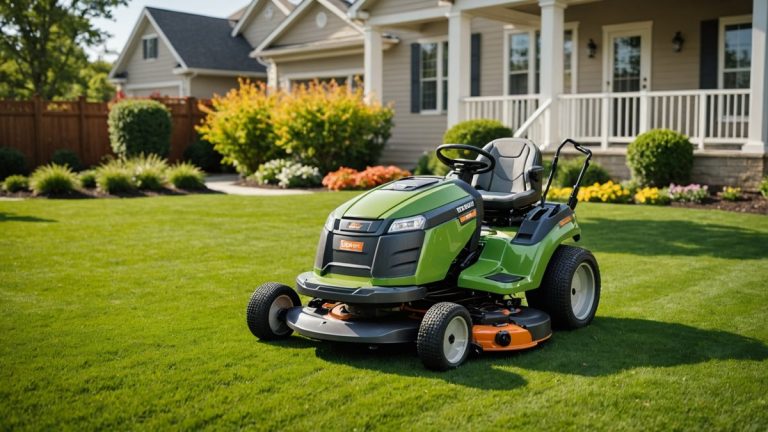
March 2026 is shaping up to be a banner month for autonomous lawn care. A recent report highlighting top finds at Home Depot reveals a clear trend: Robotic lawn mowers are no longer a niche product but a mainstream solution for homeowners seeking convenience and a perfectly manicured lawn. Let’s delve into why these autonomous marvels are making waves and explore some standout models you might find gracing the shelves this spring.
The Rise of Smart Lawn Care: Why Now?
The increasing popularity of Robotic lawn mowers is driven by several factors. Firstly, technological advancements have significantly improved their efficiency, reliability, and safety. Today’s models boast sophisticated navigation systems, obstacle avoidance, and even AI-powered lawn mapping. Secondly, the growing demand for smart home integration makes robotic mowers a natural fit for homeowners already invested in connected devices. Imagine controlling your mower from your smartphone, integrating it with your smart sprinkler system, or even scheduling mowing sessions based on weather forecasts. Finally, the appeal of reclaiming leisure time cannot be overstated. Who wouldn’t prefer relaxing on the patio to pushing a heavy mower around the yard on a Saturday afternoon?
Featured Mower: The Worx Landroid Vision Plus – A Smart Buy?
One model generating considerable buzz is the Worx Landroid Vision Plus. This mower stands out due to its advanced AI-powered vision system, allowing it to navigate complex landscapes without the need for perimeter wires. It utilizes a high-resolution camera and sophisticated algorithms to identify lawn boundaries, obstacles, and even different types of grass. According to Worx, this minimizes the need for manual intervention and ensures a precise, uniform cut. The ‘Vision Plus’ variant also offers enhanced security features, including a GPS tracking system and anti-theft alarm. While the price point is at the higher end, around $2200, the Landroid Vision Plus offers a compelling package of cutting-edge technology and user-friendly operation. Consider its key specs:
- Cutting Width: 10 inches
- Max Area Capacity: Up to 0.5 acres
- Power Source: 20V 4.0Ah Lithium-ion battery
- Features: AI Vision Navigation, GPS Tracking, Anti-Theft Alarm, Smartphone App Control
Compared to wire-guided models, the Landroid Vision Plus offers increased flexibility and ease of installation. However, it’s worth noting that the performance of vision-based navigation can be affected by extremely low light conditions or dense foliage. Potential buyers should assess their specific lawn conditions to determine if this model is the right fit.
Budget-Friendly Options: Entry-Level Robotic Mowers Evolving
While high-end models like the Landroid Vision Plus capture attention, there’s a growing Market for more affordable robotic mowers. These entry-level options typically rely on perimeter wires for navigation and offer a more basic feature set. However, even these budget-conscious models are seeing significant improvements. Expect to find features like automatic recharging, adjustable cutting heights, and basic obstacle avoidance systems in mowers priced between $800 and $1200. Keep an eye out for brands like Yard Force and Husqvarna (their entry level Aspire series) in this segment. While they might require more initial setup, these mowers offer a great starting point for homeowners looking to dip their toes into the world of robotic lawn care and experience the benefits of autonomous mowing, especially for smaller yards. Look for deals bundling the required perimeter wire to maximize savings. Also note that batteries are a potential long term expense, so check the warranty and expect to replace them every few years.
The Future of Autonomous Lawn Care: What’s Next?
The robotic lawn mower market is poised for continued growth and innovation. Expect to see further advancements in AI-powered navigation, battery technology, and smart home integration. We anticipate the emergence of mowers capable of performing other lawn care tasks, such as fertilization and weed control. Furthermore, advancements in sensor technology will lead to even safer and more efficient operation, reducing the risk of collisions with pets, children, or other objects. In the next few years, we might even see robotic mowers equipped with advanced diagnostic capabilities, capable of identifying and reporting potential lawn health issues. The future of lawn care is undoubtedly autonomous, and the trends observed in Home Depot’s March 2026 lineup are a clear indication of this transformation.
Stay tuned to AI Mower News for the latest in autonomous lawn care technology.
Deeper Analysis
The shift towards robotic mowers at major retailers like Home Depot reflects a maturing market driven by technological innovation. Key among these innovations is the rise of RTK (Real-Time Kinematic) navigation. While not explicitly mentioned in relation to the highlighted models, RTK technology is rapidly gaining traction in higher-end robotic mowers. RTK provides centimeter-level accuracy through the use of a base station and GPS, eliminating the need for perimeter wires altogether. This offers unparalleled flexibility and ease of use, allowing for precise boundary definition and dynamic zone management.
AI vision is another critical advancement. The Worx Landroid Vision Plus showcases this trend. The AI models being used are increasingly sophisticated, able to distinguish between grass, obstacles, and even different types of vegetation. This enables the mower to make intelligent decisions about cutting patterns, obstacle avoidance, and lawn health. Further, the improvements in sensor technology — including cameras, ultrasonic sensors, and bump sensors — mean that these mowers are becoming increasingly safe, minimizing the risk of accidents involving pets or children. The combination of these technologies is pushing robotic mowers beyond simple lawn trimming to a more comprehensive lawn care solution. This trend towards “wire-free” technology, driven by both RTK and AI vision, is quickly becoming the new standard, allowing for easier installation and more adaptable mowing patterns.
What This Means for Consumers
For homeowners, the increased availability of robotic mowers at Home Depot signifies greater accessibility and competitive pricing. No longer relegated to specialty stores or online retailers, robotic mowers are becoming a mainstream option for lawn care. This wider availability should lead to more competitive pricing, particularly in the entry-level segment. However, buyers should carefully consider their lawn size, complexity, and specific needs before making a purchase. A smaller, simpler lawn might be perfectly suited to a budget-friendly, wire-guided model, while a larger, more complex lawn might benefit from the advanced navigation and features of a higher-end, wire-free model.
When considering the price point, it’s crucial to factor in the long-term cost savings associated with robotic mowers. While the initial investment might be higher than a traditional mower, robotic mowers eliminate the need for gasoline, oil, and other maintenance expenses. They also free up valuable time, allowing homeowners to focus on other activities. Moreover, some models offer features like automatic fertilization and weed control, which can further reduce lawn care costs.
Industry Impact
The robotic mower market is intensely competitive, with major players like Husqvarna, Mammotion, EcoFlow, and Segway vying for market share. Husqvarna, with its long history in lawn care, has been a dominant force, but newer entrants are disrupting the market with innovative technologies and aggressive pricing. Mammotion’s LUBA series, for instance, has gained considerable attention for its advanced RTK navigation and multi-zone management capabilities. EcoFlow and Segway are leveraging their expertise in battery technology and robotics to offer competitive alternatives.
The Bottom Line
The increased prominence of robotic lawn mowers at Home Depot underscores their growing acceptance as a mainstream lawn care solution. With advancements in AI, navigation, and battery technology, these autonomous marvels offer homeowners a convenient, efficient, and environmentally friendly way to maintain a perfectly manicured lawn. As the market continues to evolve, expect to see even more innovation, lower prices, and greater integration with smart home ecosystems. Keep an eye on the continued development of RTK and vision based navigation, battery technology, and the competitive moves of the major players in the industry.
Frequently Asked Questions
The article mentions the Worx Landroid Vision Plus. What are the limitations of its AI vision system?
The Worx Landroid Vision Plus, while impressive, can have its AI vision navigation affected by extremely low light conditions or dense foliage. Potential buyers should assess their specific lawn conditions to see if these factors will affect its ability to navigate effectively. In ideal conditions, it offers a wire-free solution for complex landscapes.
What kind of battery life and replacement costs can I expect from these robotic mowers?
The article mentions the Worx Landroid Vision Plus uses a 20V 4.0Ah Lithium-ion battery, but doesn’t mention life. For other models, battery life and replacement costs are a long-term consideration, as they typically need replacing every few years. It’s important to check the warranty on the battery when purchasing a mower.
Besides the Worx Landroid Vision Plus, what are some other brands offering more budget-friendly robotic mowers at Home Depot?
The article notes that Yard Force and Husqvarna (their Aspire series) are brands to look out for in the budget-friendly segment. These entry-level models, priced between $800 and $1200, rely on perimeter wires and offer features like automatic recharging and adjustable cutting heights. Look for bundled deals to maximize savings.
The article mentions potential future advancements. Are there any robotic mowers currently available that perform tasks beyond just mowing, such as fertilization or weed control?
While the article anticipates mowers performing other tasks such as fertilization and weed control in the future, it does not mention specific models currently available with these features. The focus of the current Home Depot lineup appears to be primarily on autonomous mowing with increasing sophistication in navigation and smart home integration.

Author: AI Mow
Ai Mow is the editorial team behind Ai Mower News, dedicated to bringing you the latest news, reviews, and insights on robotic lawn mowers and smart gardening technology.