 Mowers 2026″ class=”wp-image-1117″ srcset=”https://aimowernews.com/wp-content/uploads/2026/03/commercial_mowers.png 640w, https://aimowernews.com/wp-content/uploads/2026/03/commercial_mowers-150×150.png 150w, https://aimowernews.com/wp-content/uploads/2026/03/commercial_mowers-300×300.png 300w, https://aimowernews.com/wp-content/uploads/2026/03/commercial_mowers-420×420.png 420w, https://aimowernews.com/wp-content/uploads/2026/03/commercial_mowers-600×600.png 600w, https://aimowernews.com/wp-content/uploads/2026/03/commercial_mowers-100×100.png 100w” sizes=”auto, (max-width: 640px) 100vw, 640px” />
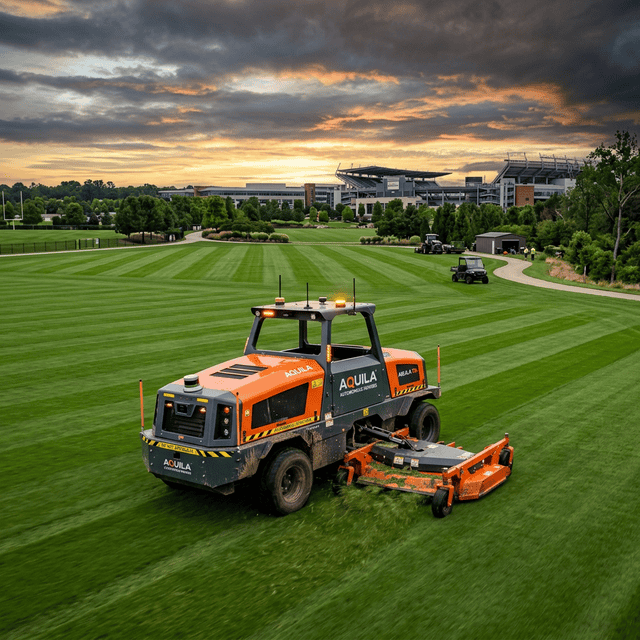
The future of landscaping is here, and it’s autonomous. Commercial autonomous Mowers are rapidly transforming how large properties, from sprawling airports to meticulously manicured golf courses, are maintained, offering unprecedented efficiency and cost savings. Let’s delve into this exciting revolution and examine the key players shaping the landscape of commercial autonomous mower 2026 technology.
The Rise of Autonomous Fleets
Gone are the days of relying solely on large crews of manual laborers. Autonomous mowers are increasingly deployed in fleets, controlled by sophisticated software that optimizes routes, avoids obstacles, and even adapts to changing weather conditions. This shift significantly reduces labor costs, a major expense for commercial landscaping operations.
Consider DFW Airport, for example, which utilizes the Graze G3. The Graze G3 boasts a cutting width of 68 inches and can operate for up to 8 hours on a single charge, covering approximately 12 acres per day. While the initial investment of around $150,000 per unit might seem steep, the reduced labor costs and improved consistency can lead to a rapid return on investment, often within 2-3 years.
Beyond cost savings, these mowers offer environmental benefits. Electric models like the Scythe M.52 produce zero emissions, contributing to a greener, more sustainable operation. Scythe’s M.52, priced around $40,000 with subscription services for maintenance and software updates, stands out with its robust obstacle detection system and precision cutting capabilities. This reduces the need for harmful pesticides and fertilizers, further minimizing environmental impact. Transitioning to autonomous fleets is not just about saving money; it’s about building a more sustainable future.
Key Players and Their Innovations
The market for commercial autonomous mowers is becoming increasingly competitive, with several companies offering innovative solutions tailored to specific needs. Greenzie, for example, specializes in retrofitting existing ride-on mowers with autonomous technology. Their system, which costs approximately $15,000 to install on a compatible mower, allows companies to gradually transition their fleets to autonomous operation without a complete overhaul. This approach is particularly attractive to businesses with existing equipment and budget constraints.
On the other hand, companies like Mammotion with their Maston offering, and Exmark with the Vertex are focusing on purpose-built autonomous mowers. The Mammotion Maston, anticipated to retail around $25,000, targets smaller commercial properties with its nimble maneuverability and precise edge trimming capabilities. The Exmark Vertex, known for its durability and performance in demanding environments, offers a larger cutting deck and increased battery life, ideal for larger properties like golf courses.
Speaking of Golf Courses, FireFly Automatix is another company that caters specifically to golf courses. Firefly’s mowers are designed with features like GPS-guided mowing and automated irrigation management. And let’s not forget RC Mowers, with their AMR (Autonomous Mowing Robot), designed for steep slopes and challenging terrains, opening up new possibilities for mainta
Understanding the Technology Behind Autonomous Mowers
The brains behind these autonomous mowers are sophisticated combinations of sensors, software, and hardware. Let’s break down some of the core technologies:
- GPS and RTK (Real-Time Kinematic) GPS: Many commercial autonomous mowers rely on GPS for initial localization and navigation. RTK GPS enhances the accuracy of standard GPS, often down to centimeter-level precision. This is crucial for maintaining straight lines and consistent cutting patterns.
- Computer Vision and Object Recognition: Cameras and advanced algorithms allow the mowers to “see” their surroundings. They can identify obstacles like trees, people, and animals, and navigate around them safely. The quality of the computer vision system directly impacts the mower’s ability to handle complex environments.
- LiDAR (Light Detection and Ranging): Some high-end models incorporate LiDAR, which uses lasers to create a 3D map of the environment. This provides a more detailed and accurate representation of the surroundings, especially in areas with poor lighting or challenging terrain.
- Ultrasonic Sensors: These sensors are often used for short-range obstacle detection, providing an additional layer of safety.
- Inertial Measurement Units (IMUs): IMUs track the mower’s orientation and movement, helping it to maintain stability and avoid getting stuck.
- Path Planning Algorithms: Sophisticated algorithms plan the most efficient mowing routes, taking into account factors like battery life, terrain, and obstacles. These algorithms often use techniques like dynamic programming and reinforcement learning to optimize performance.
Factors to Consider Before Investing
Before investing in a commercial autonomous mower fleet, several factors must be carefully considered:
- Property Size and Complexity: Larger and more complex properties require mowers with longer battery life, more robust obstacle detection, and sophisticated path planning capabilities.
- Terrain: Slopes, uneven ground, and obstacles can significantly impact the performance of autonomous mowers. Choose models specifically designed for the type of terrain on your property. RC Mowers, as mentioned, excels in this area.
- Budget: The initial investment in autonomous mowers can be significant. Factor in not only the cost of the mowers themselves but also installation, maintenance, and software updates. Also, consider different financing and leasing options.
- Maintenance and Support: Ensure that the manufacturer offers comprehensive maintenance and support services. Autonomous mowers require regular maintenance to ensure optimal performance. Subscription models often include these services.
- Connectivity and Data Management: Many autonomous mowers are connected to the internet, allowing for remote monitoring, data collection, and software updates. Consider the security implications of this connectivity and choose a vendor with strong security protocols.
- Training: While the mowers are autonomous, staff will need training on how to manage the fleet, troubleshoot issues, and interpret data.
Installation Considerations
Installation typically involves mapping the property, setting up charging stations, and configuring the mower’s software. Some systems require the installation of perimeter wires or beacons to define the mowing area. Professional installation is often recommended to ensure optimal performance and avoid costly errors. Proper setup will also affect the long-term maintenance costs.
Maintenance and Long-Term Costs
While autonomous mowers reduce labor costs, they also introduce new maintenance expenses. Batteries will need to be replaced periodically, and the mowers will require regular servicing to keep them in good working order. Factor in these costs when calculating the total cost of ownership.
The Impact on Landscaping Professionals
The rise of autonomous mowers is changing the role of landscaping professionals. Instead of spending hours manually mowing lawns, they can focus on more skilled tasks like landscape design, plant care, and irrigation management. This shift requires landscapers to acquire new skills and adapt to a more technology-driven industry.
What This Means for Homeowners and Landscapers
The technology and trends discussed regarding commercial autonomous mowers are likely to trickle down to the residential market. As technology improves and costs decrease, homeowners can expect to see more affordable and capable autonomous mowers for their own lawns. For landscapers, embracing this technology early can provide a competitive advantage and allow them to offer more efficient and cost-effective services to their clients.
The Future of Autonomous Mowing
The future of autonomous mowing is bright. As technology continues to evolve, we can expect to see even more sophisticated and capable mowers that can handle a wider range of tasks. Integration with other smart technologies, such as weather forecasting and irrigation systems, will further optimize lawn care and create more sustainable landscapes. We also anticipate increased use of AI to personalize mowing schedules and optimize cutting patterns based on grass type and environmental conditions. Furthermore, expect to see advancements in safety features, making these mowers even more reliable and secure.
📰 Related Articles
📊 Brand Profiles Mentioned
🔗 Essential Resources
- 📖 Manual Finder — 51 brands, 195+ models
- 🤖 AI Support Assistant — instant troubleshooting
- 📐 Complete Guide to Robotic Mowers 2026
- 🏆 Independent Rankings 2026
- ⚠️ Buyer’s Guide: What Dealers Won’t Tell You

Author: admin
Founding editor of Ai Mower News with deep expertise in robotic lawn mower technology, AI-powered landscaping, and smart gardening solutions.