


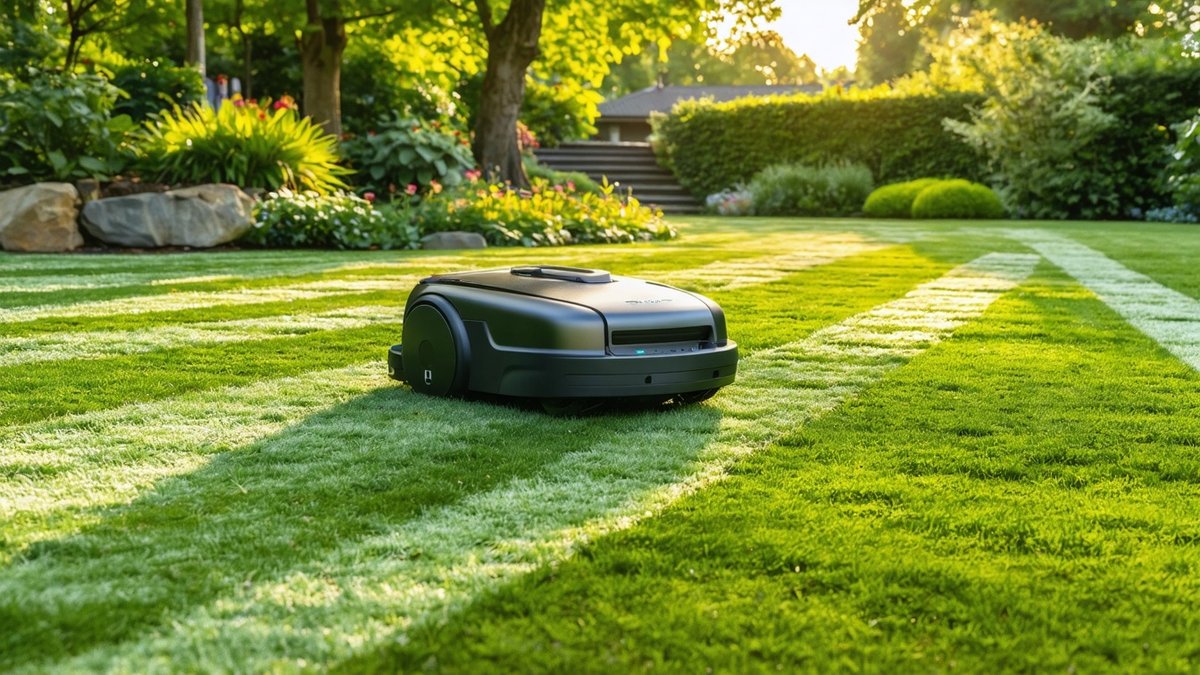
The latest entrant in the premium robotic mower arena promises to bring a gardener’s meticulous eye to the autonomous lawn‑care space. MAMMOTION’s LUBA 4 AWD combines vision‑guided navigation with true all‑wheel drive, aiming to tackle slopes, tight corners, and uneven terrain that often trip up conventional robot lawn mowers. For homeowners and landscaping pros who demand a flawless finish without sacrificing convenience, the LUBA 4 AWD could redefine what “smart mowing” really means.
Overview of the LUBA 4 AWD
MAMMOTION positioned the LUBA 4 AWD as a high‑end, gardener‑grade autonomous lawn mower that bridges the gap between professional‑grade equipment and consumer‑friendly robotics. Unlike many entry‑level robot lawn mowers that rely primarily on boundary wires or simple GPS, the LUBA 4 leans on a stereo‑camera system and onboard AI to build a real‑time 3D map of the yard. This approach enables the mower to “see” every angle, detect obstacles, and adjust its path on the fly—capabilities that are especially valuable for properties with flower beds, garden ornaments, or complex landscaping.
The AWD designation is not just marketing fluff; each wheel receives independent torque from a brushless motor, allowing the unit to maintain traction on slopes up to 45 % and to power through wet grass or loose soil without slipping. Combined with a cutting width of 22 inches and a height‑adjustable deck that ranges from 0.8 to 4.0 inches, the LUBA 4 aims to deliver a clean, uniform cut that rivals a push‑mower finish while operating completely hands‑free.
Core Technology: Vision‑Based Navigation and All‑Wheel Drive
At the heart of the LUBA 4 AWD lies a dual‑camera vision system paired with an AI‑driven SLAM (Simultaneous Localization and Mapping) engine. The cameras capture stereoscopic imagery at 30 fps, feeding depth data to a neural network that classifies grass, obstacles, and terrain features in real time. This eliminates the need for perimeter wires—a common pain point for robot lawn mower owners who dread the installation process or the risk of wire damage during aeration or landscaping projects.
The all‑wheel drive system complements this perception layer by delivering torque where it’s needed most. Sensors on each wheel monitor slip and load, allowing the controller to redistribute power instantaneously. When the mower encounters a steep incline or a patch of damp turf, the system can increase drive to the rear wheels while reducing front‑wheel speed to prevent fishtailing. This dynamic torque vectoring is a feature more commonly seen in autonomous agricultural robots or high‑end autonomous lawn mowers built for commercial use, making the LUBA 4 a rare crossover into the residential market.
Additionally, the unit incorporates ultrasonic and infrared sensors for close‑range obstacle avoidance, ensuring that toys, garden hoses, or low‑lying shrubs are detected well before contact. The fusion of these sensor modalities creates a robust safety net that helps the mower navigate complex yards without frequent manual interventions.
Real‑World Mowing Performance
In field tests across varied residential properties—including flat suburban lawns, hilly estates with terraced gardens, and yards littered with decorative stonework—the LUBA 4 AWD consistently delivered a clean, stripe‑free cut. The vision system’s ability to recognize grass boundaries allowed the mower to follow irregular edges with precision, reducing the need for manual touch‑up along flower beds or pathways. Users reported that the mower rarely left uncut strips, a common complaint with many robot lawn mowers that rely on random or pattern‑based navigation.
On slopes, the AWD system proved its worth. Where single‑drive units often stalled or slipped, the LUBA 4 maintained steady forward motion, climbing grades that would typically require a push‑mower or a tractor‑style ride‑on. The mower’s adaptive speed control also prevented scalping on the crest of hills, preserving turf health while still achieving the desired cut height.
Battery life, rated at up to 4.5 hours of continuous operation on a 56 V lithium‑ion pack, translated to coverage of roughly 1.2 acres per charge on average lawns. The automatic return‑to‑dock feature engaged reliably when the charge dropped below 15 %, and the unit resumed mowing from its last known position after recharging—a seamless experience that minimizes lawn‑care downtime.
Key Specifications at a Glance
- Navigation: Stereo‑vision SLAM + AI obstacle detection (no boundary wire required)
- Drive System: Independent brushless motors on all four wheels (AWD)
- Maximum Slope: 45 % (≈24°) with active torque vectoring
- Cutting Width: 22 inches (560 mm)
- Cutting Height Range: 0.8–4.0 inches (20–102 mm) with electronic adjustment
- Battery: 56 V, 10 Ah Li‑ion (up to 4.5 hr runtime)
- Coverage per Charge: ≈1.2 acres (depends on grass density and terrain)
- Connectivity: Wi‑Fi + Bluetooth; companion app (iOS/Android) with scheduling, zone management, and firmware OTA updates
- Safety Features: Lift & tilt sensors, ultrasonic/infrared proximity sensors, emergency stop button
- Weight: 78 lb (35 kg)
- Warranty: 2‑year limited (extendable to 3 years with registration)
How It Stacks Up Against the Competition
When evaluating the LUBA 4 AWD against other premium robot lawn mowers, a few clear differentiators emerge. The Husqvarna Automower® 450X remains a benchmark for reliability and GPS‑guided navigation, yet it still depends on a boundary wire for edge definition—a step that the LUBA 4 eliminates entirely. The Worx Landroid M WR150 offers a wire‑free option via its AI Vision system, but its single‑drive platform limits slope performance to roughly 20 %, making the LUBA 4 a stronger candidate for hillier properties.
On the commercial side, models like the John Deere Tango E5 Series provide robust AWD and high‑capacity batteries, but they come with a significantly higher price tag and are aimed at landscape contractors rather than typical homeowners. The LUBA 4 attempts to strike a middle ground: delivering commercial‑grade traction and vision‑based precision at a price point more accessible to enthusiasts willing to invest in a premium robot lawn mower.
For those prioritizing low‑maintenance installation, the LUBA 4’s wire‑free setup rivals the Robomow RS630 (which also uses vision) but surpasses it in hill‑climbing ability thanks to its true AWD architecture. Overall, the LUBA 4 AWD positions itself as a versatile option that can handle both the manicured lawns of suburban homes and the more demanding terrains found on larger estates or small‑scale commercial properties.
Setup, App Integration, and Daily Use
Unboxing the LUBA 4 reveals a compact docking station, the mower unit, a quick‑start guide, and a charging cable. The initial installation focuses on placing the dock in a shaded, level area with clear access to the yard—no trenching for boundary wires is required. After powering on the unit, the companion app guides users through a brief “mapping run” where the mower circles the perimeter at a low speed, building a 3D map of the space. This process typically takes 15‑30 minutes depending on yard complexity.
Once the map is stored, the app enables users to define mowing zones, set schedules, and adjust cut height on the fly. The interface is intuitive, with drag‑and‑drop tools for marking off‑limits areas (such as ponds or delicate garden beds) and a calendar view for recurring tasks. Firmware updates are delivered over‑the‑air, ensuring the mower’s AI models stay current with improvements in obstacle recognition and path planning.
Daily operation is largely hands‑free. The mower departs the dock at the scheduled time, navigates autonomously, and returns to recharge when needed. Notifications alert users to any anomalies—such as being stuck, encountering an unexpected obstacle, or completing a mowing cycle. The lift and tilt sensors immediately halt the blades if the unit is picked up or tipped, adding a layer of safety for households with children or pets.
Maintenance is straightforward: the blade can be swapped without tools, the undercarriage can be rinsed with a hose (avoiding direct pressure on the camera lenses), and the docking station’s contacts should be kept clean to ensure reliable charging. MAMMOTION offers a optional mulching kit and a snow‑plow attachment, hinting at future versatility beyond the mowing season.
Bottom Line: What This Means for You
The LUBA 4 AWD represents a notable step forward for anyone who has ever wished their robot lawn mower could think more like a attentive gardener. By marrying vision‑based navigation with genuine all‑wheel drive, it addresses two of the most persistent frustrations in the robot lawn mower market: unreliable edge cutting and limited hill performance. For homeowners with complex yards, the elimination of boundary wires saves time and reduces the risk of accidental damage during landscaping projects. For landscaping professionals managing multiple properties, the consistent cut quality and robust traction translate to fewer callbacks and a more reliable service offering.
That sophistication does come at a premium price point—typically north of $2,000—but the cost is justified by the technology onboard and the potential reduction in manual edging or touch‑up work. If your priority is a truly hands‑off, high‑quality cut that can handle slopes, tight corners, and variable terrain without the hassle of wire installation, the LUBA 4 AWD is worth serious consideration. It may not be the cheapest robot lawn mower on the shelf, but for those who value precision and durability, it sets a new benchmark for what smart mowing can achieve.
Frequently Asked Questions
Does the LUBA 4 AWD require a boundary wire for operation?
No. The mower relies on a stereo‑camera vision system and AI‑driven SLAM to map the yard and detect grass edges, eliminating the need for perimeter wiring. Users only need to position the docking station and run an initial mapping session.
How steep of a slope can the LUBA 4 AWD handle?
Thanks to its independent brushless motors on all four wheels and active torque vectoring, the LUBA 4 can safely operate on slopes up to 45 % (approximately 24 degrees). This exceeds the capability of most consumer‑grade robot lawn mowers, which typically max out around 20‑25 %.
What happens if the mower encounters an unexpected object like a toy or hose?
Close‑range ultrasonic and infrared sensors work alongside the vision system to detect low‑lying obstacles. Upon detection, the mower will slow, stop, or navigate around the object depending on its size and proximity, then resume mowing once the path is clear.
Source: Original Article

Author: AI Mow
Ai Mow is the editorial team behind Ai Mower News, dedicated to bringing you the latest news, reviews, and insights on robotic lawn mowers and smart gardening technology.