


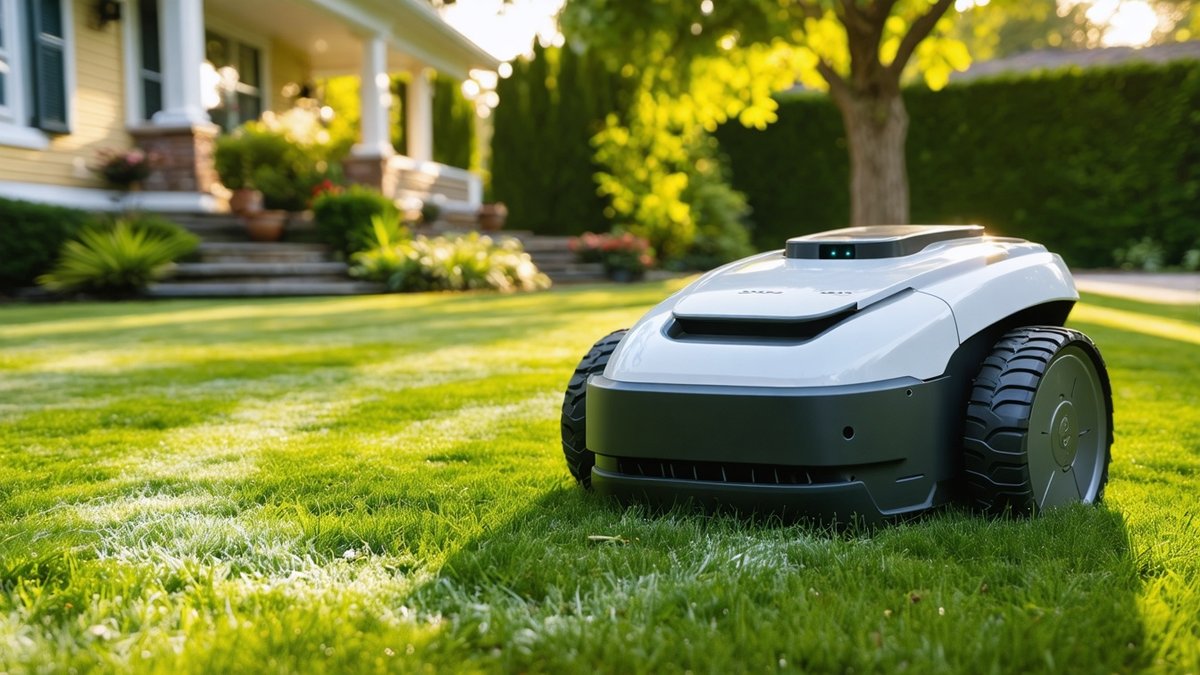
Wire-Free Robot Mowers 2026: The Complete Guide to GPS and Camera Navigation
If you’re shopping for a wire free robot mower in 2026, the big question isn’t just “which brand is best?” It’s which navigation system will actually work in your yard. Today’s no-wire mowers use three main approaches—RTK GPS, VSLAM/camera navigation, and LiDAR—and the differences matter a lot more than the marketing suggests.
For homeowners, the right gps robot mower can mean faster setup, cleaner striping, and less babysitting. For larger or more complex properties, it can also mean fewer no-go zones, better obstacle handling, and more reliable mowing around trees, patios, and narrow corridors. Below, we break down how the tech works, which brands use what, and which no wire robot mower 2026 options are worth buying now.
How Wire-Free Navigation Works: RTK GPS vs VSLAM vs LiDAR
RTK GPS is the backbone of many premium wire-free mowers. RTK stands for Real-Time Kinematic, and it improves standard GPS by using a reference station to correct signal errors. In plain English: it lets the mower know where it is with much better precision than normal GPS alone. That’s why RTK-based mowers can mow in neat patterns and return home accurately without a boundary wire.
Best for: open lawns, medium-to-large yards, owners who want the most mature wire-free system.
Watch out for: heavy tree cover, tall buildings, and yards with weak sky visibility. RTK systems can struggle when the mower can’t “see” enough satellites.
VSLAM (Visual Simultaneous Localization and Mapping) uses cameras to recognize landmarks and build a map of the yard. Some mowers rely heavily on vision, while others combine cameras with GPS or other sensors. This can be excellent in complex spaces because the mower is “seeing” the environment rather than depending only on satellite lock.
Best for: yards with lots of obstacles, irregular layouts, and users who want smarter object awareness.
Watch out for: low-light performance and camera-dependent accuracy in very plain, featureless lawns. Some systems also require more careful initial mapping.
LiDAR uses laser scanning to measure distance and create a detailed 3D picture of the yard. In robotic mowers, LiDAR is often paired with cameras or RTK rather than used alone. It can be extremely useful for obstacle detection and navigation in tricky environments.
Best for: complex landscapes, premium buyers, and users prioritizing obstacle sensing.
Watch out for: price. LiDAR-equipped mowers tend to sit at the top end of the market.
Which Brands Use Which Navigation Tech?
As of 2026, the wire-free mower market is split into a few clear camps:
- RTK GPS leaders: Husqvarna Automower NERA, Segway Navimow, Mammotion Luba 2 AWD, EcoFlow BLADE (availability varies by region), and some EGO models.
- Camera/VSLAM-focused systems: Worx Landroid Vision, Dreame robotic mowers, and several newer camera-first entrants.
- Hybrid systems: Mammotion, Dreame, and some premium models combine RTK, vision, and obstacle detection for better reliability.
In practical terms, the best gps robot mower setups are usually hybrids. Pure RTK is excellent when the sky is open. Pure camera navigation can be smart, but it may be less consistent in shade, dusk, or visually “boring” lawns. The strongest no-wire systems in 2026 tend to fuse multiple sensors so the mower can keep working when one method becomes less reliable.
What Performs Best in Real Yards?
If you want the shortest answer: RTK GPS still wins for consistency on open lawns, while hybrid camera + RTK systems are the most versatile overall.
Here’s how that breaks down by yard type:
- Open suburban lawn: RTK GPS is usually the best choice. It’s efficient, accurate, and great for clean mowing patterns.
- Tree-heavy yard: Camera or hybrid navigation can outperform RTK alone because satellite signal can be interrupted by canopy cover.
- Complex landscaping: LiDAR-assisted or hybrid vision systems are best if you have islands, tight passages, and lots of obstacles.
- Professional use: Fleet management, multi-zone mapping, and dependable edge handling matter more than raw novelty. Look for strong app controls and robust localization.
One important note: “wire-free” does not automatically mean “set it and forget it.” Even the best autonomous mower still needs proper setup, firmware updates, and occasional map refinement. But compared with boundary-wire models, the 2026 generation is much easier to live with.
Ranked: Best Wire-Free Robot Mowers to Buy in 2026
-
Mammotion Luba 2 AWD — starting around $2,099
Best overall for tough yards. The Luba 2 AWD combines RTK GPS with advanced obstacle sensing and all-wheel drive, making it one of the strongest performers on slopes and uneven terrain. It’s a standout no wire robot mower 2026 pick for buyers who need power, precision, and terrain confidence.
-
Segway Navimow i105N — around $999
Best value RTK mower for smaller lawns. Segway’s Navimow line has become a favorite for easy app setup and reliable GPS-based mowing. The i105N is a compelling entry point if you want a wire free robot mower without jumping into premium pricing.
-
Husqvarna Automower NERA 430X — roughly $3,499+
Best premium ecosystem choice. Husqvarna’s NERA platform offers high-end build quality, strong brand support, and optional wire-free EPOS-style satellite navigation in compatible setups. If you want a top-tier gps robot mower from a legacy leader, this is the benchmark.
-
Worx Landroid Vision — about $1,499
Best camera-first option for simpler yards. This model leans into vision-based navigation rather than RTK dependence. It’s appealing if you want to avoid satellite setup and your lawn has clear borders and good lighting.
-
Dreame A2 — around $2,999
Best for mixed navigation and smart obstacle handling. Dreame’s newer mowers emphasize camera intelligence and sensor fusion, which makes them attractive for homeowners who want a more “robotic vacuum for the lawn” experience.
What to Look For Before You Buy
- Navigation type: RTK GPS for open yards, VSLAM/camera for obstacle-rich spaces, or a hybrid if you want the safest all-rounder.
- Yard size rating: Make sure the mower’s official coverage matches your real lawn size, not just ideal conditions.
- Obstacle detection: Cameras, ultrasonic sensors, and LiDAR help the mower avoid toys, pets, and garden features.
- Slope handling: If your yard has hills, check the maximum incline rating and whether the mower has AWD.
- Multi-zone support: Essential for front/back yards, side lawns, and separated mowing areas.
- App quality and support: Good software matters as much as hardware in a wire-free mower.
Bottom Line
If you want the safest buy in the wire free robot mower category, choose a hybrid RTK GPS mower with strong obstacle detection. For most homeowners, that means models like the Mammotion Luba 2 AWD or Segway Navimow family, depending on yard size and terrain. If your lawn is open and straightforward, RTK is still the best-performing core technology in 2026. If your yard is shaded, irregular, or full of obstacles, a camera-first or hybrid system may be the smarter long-term choice.
In short: the best no wire robot mower 2026 isn’t the one with the flashiest spec sheet—it’s the one whose navigation system matches your yard.
Do wire-free robot mowers work without a strong GPS signal?
Some do better than others. RTK-based mowers need good satellite visibility, while camera and LiDAR-assisted systems can continue navigating in areas where GPS is weaker. Hybrid models are the safest bet for mixed conditions.
Is RTK GPS better than camera navigation?
Not universally. RTK GPS is usually more consistent on open lawns and for clean mowing patterns. Camera navigation can be better in complex yards with more obstacles or less reliable satellite visibility.
Are wire-free robot mowers worth the higher price?
For many buyers, yes. You’re paying for easier installation, fewer long-term headaches, and smarter navigation. If you’re replacing a boundary-wire system or want hands-off mowing, the premium can be justified quickly.
Source: Original Article

Author: AI Mow
Ai Mow is the editorial team behind Ai Mower News, dedicated to bringing you the latest news, reviews, and insights on robotic lawn mowers and smart gardening technology.