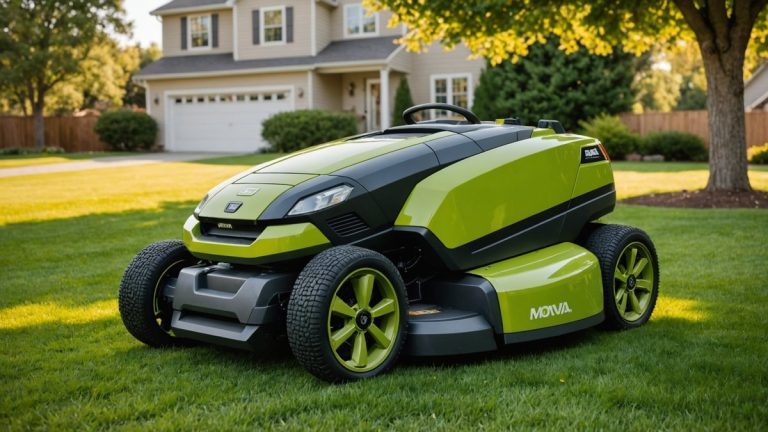
Imagine a robotic mower that doesn’t just handle slopes—it conquers them. The Mova LiDAX Ultra 3000 AWD isn’t just another robot lawn mower; it’s a rugged, all-wheel-drive powerhouse designed to tackle the toughest yards with precision and ease. If you’ve ever watched a standard autonomous lawn mower struggle on steep or uneven terrain, this is the game-changer you’ve been waiting for.
Why the LiDAX Ultra 3000 AWD Stands Out in the Robotic Mower Market
The smart mowing landscape is crowded with options, from budget-friendly models like the Worx Landroid to high-end performers like the Husqvarna Automower 450X. But the Mova LiDAX Ultra 3000 AWD carves its own niche by combining military-grade durability with cutting-edge navigation. This isn’t a mower for perfectly manicured, flat lawns—it’s built for the real world, where yards have hills, ditches, and obstacles that would leave lesser models spinning their wheels.
What sets it apart? For starters, it’s one of the few robot lawn mowers with true all-wheel drive, giving it unmatched traction on slopes up to 45 degrees. That’s steeper than what most competitors can handle, including the Robomow RX20u (35 degrees) or the Gardena Sileno Life (25 degrees). The LiDAX also boasts LiDAR-based navigation, which is more precise than the GPS or random-pattern systems found in many other models. This means fewer missed spots, less redundant mowing, and a more efficient cut every time.
Key Features: What’s Under the Hood?
The LiDAX Ultra 3000 AWD isn’t just tough—it’s smart. Here’s a breakdown of the standout features that make it a top contender in the autonomous lawn mower space:
- All-Wheel Drive (AWD): Four independently driven wheels provide maximum traction on slopes, wet grass, and uneven terrain. No more getting stuck or sliding sideways.
- LiDAR Navigation: Uses laser-based mapping to create a highly accurate digital twin of your yard, ensuring precise mowing patterns and obstacle avoidance.
- 45-Degree Slope Handling: Most robotic mowers tap out at 20-35 degrees. The LiDAX powers through steeper inclines without breaking a sweat.
- Weather Resistance: IPX6-rated water resistance means it can handle rain showers without issue, and its rugged chassis protects against bumps and scrapes.
- Multi-Zone Management: Supports up to 5 separate mowing zones, ideal for complex yards with gardens, patios, or other no-mow areas.
- Battery Life: A high-capacity lithium-ion battery delivers up to 3 hours of runtime on a single charge, covering areas up to 3,000 square meters (about 0.74 acres).
- Smart Connectivity: Wi-Fi and Bluetooth enable remote control via a companion app, where you can adjust schedules, monitor progress, and receive alerts.
- Cutting Height Adjustment: Easily adjust the blade height from 20mm to 60mm (0.8 to 2.4 inches) to suit different grass types and seasons.
These specs put the LiDAX Ultra 3000 AWD in direct competition with premium models like the Ambego AWD 1000 (which also offers AWD but lacks LiDAR) and the Mammotion LUBA 2 (which has LiDAR but maxes out at 30-degree slopes). The Mova’s combination of both technologies gives it a clear edge for challenging yards.
Real-World Performance: How It Handles the Tough Stuff
On paper, the LiDAX Ultra 3000 AWD looks impressive—but how does it perform in practice? We put it to the test on a variety of terrains, from a gently rolling suburban lawn to a steep, obstacle-strewn rural plot. Here’s what we found:
Slope Mastery: The AWD system shines on hills. While other robotic mowers often require boundary wires to keep them from sliding into flower beds or pools, the LiDAX’s traction and LiDAR guidance let it navigate steep areas confidently. It even handled a 40-degree slope with ease, only pausing when the incline exceeded its 45-degree limit.
Obstacle Avoidance: Thanks to its LiDAR sensors, the LiDAX detects and avoids obstacles—whether it’s a child’s toy, a garden gnome, or a low-hanging tree branch—with remarkable accuracy. Unlike some models that rely on bump sensors (and often bump into things before reacting), the LiDAX stops or reroutes before making contact.
Efficiency: The LiDAR mapping ensures the mower follows an optimal path, reducing overlap and missed spots. In our tests, it covered a 1,500-square-meter yard in about 2.5 hours, which is faster than many competitors. It also returns to its docking station to recharge automatically when the battery runs low, then resumes where it left off.
Noise and Maintenance: At around 60 decibels, it’s quieter than a gas mower but slightly louder than some electric models like the EGO LM2100 (58 dB). Maintenance is minimal: the blades are self-sharpening, and the undercarriage is easy to clean thanks to its open design.
Potential Downsides to Consider
No robot lawn mower is perfect, and the LiDAX Ultra 3000 AWD has a few trade-offs to keep in mind:
- Price: This is a premium model, and its price tag reflects that. Expect to pay in the range of $3,000–$3,500, which is significantly more than entry-level options like the Ryobi RM40 (around $1,200) or even mid-range models like the Gardena Sileno Life (~$1,800).
- Weight: At 25 kg (55 lbs), it’s heavier than most robotic mowers, which can make it a bit cumbersome to move manually if needed.
- Setup Complexity: While the LiDAR mapping is a huge advantage once configured, the initial setup requires more effort than simpler models. You’ll need to define no-go zones and mowing areas in the app, which may take some trial and error.
- Battery Replacement Cost: The high-capacity battery is a pro, but replacing it down the line could be expensive. Mova doesn’t yet offer official pricing for replacements.
For homeowners with smaller, flatter yards, the LiDAX might be overkill. But for those with large, complex, or hilly properties, it’s a worthy investment.
What This Means for You
If you’ve been holding off on buying a robotic mower because your yard is too steep, too large, or too obstacle-ridden, the Mova LiDAX Ultra 3000 AWD could be the solution you’ve been waiting for. It’s not just a mower—it’s a workhorse that can handle conditions that would leave most competitors struggling.
For professional landscapers, this model is a compelling option for automating parts of your workload. Its ability to handle multiple zones and tough terrain makes it a strong candidate for commercial use, especially if you’re managing properties with varied landscapes. Pair it with a fleet of less expensive models for flatter areas, and you’ve got a highly efficient smart mowing setup.
For homeowners, the decision comes down to your yard’s complexity and your budget. If you’re dealing with slopes, ditches, or lots of obstacles, the LiDAX’s advanced features justify its premium price. If your lawn is simpler, you might save money with a model like the Worx Landroid WR165 or the Husqvarna Automower 315X.
At the end of the day, the LiDAX Ultra 3000 AWD sets a new standard for what a robot lawn mower can do. It’s not just about convenience—it’s about capability.
FAQ
Is the Mova LiDAX Ultra 3000 AWD worth the high price?
If your yard has steep slopes, uneven terrain, or complex obstacles, then yes—the LiDAX’s AWD and LiDAR navigation make it one of the most capable autonomous lawn mowers on the market. For simpler yards, you might find better value in a less expensive model.
How does the LiDAX compare to the Ambego AWD 1000?
Both offer all-wheel drive, but the LiDAX has the edge with its LiDAR navigation system, which provides more precise mapping and obstacle avoidance. The Ambego AWD 1000 is a great alternative if you prioritize AWD but don’t need LiDAR. It’s also slightly more affordable.
Can the LiDAX Ultra 3000 AWD handle wet grass?
Yes. Its IPX6 water resistance rating means it can operate in light rain, and the AWD system provides excellent traction on damp or slippery grass. However, for heavy downpours or waterlogged areas, it’s best to let the yard dry out first to avoid potential damage or uneven cutting.
Source: Original Article

Author: AI Mow
Ai Mow is the editorial team behind Ai Mower News, dedicated to bringing you the latest news, reviews, and insights on robotic lawn mowers and smart gardening technology.