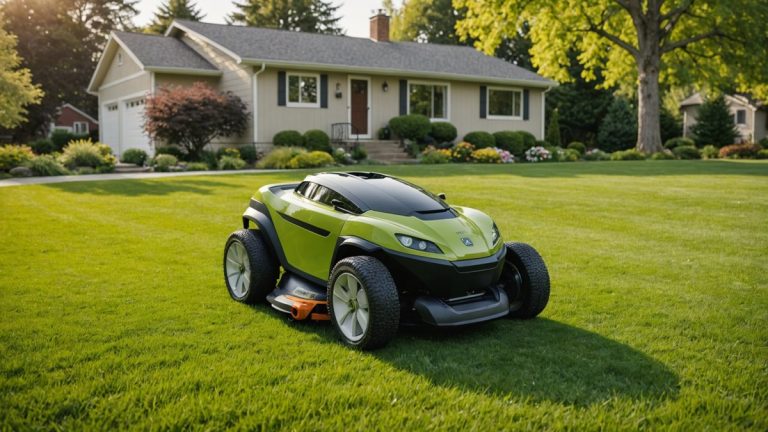
Imagine a robotic mower that tackles steep hills, dense grass, and complex yard layouts with the agility of a mountain goat—and the precision of a laser-guided surgeon. The Mova Lidax Ultra 3000 AWD doesn’t just promise to redefine smart mowing; it delivers, earning its stripes as a top contender in the rapidly evolving world of autonomous lawn mowers. But is it the right upgrade for your yard? Let’s dig into the specs, performance, and real-world implications of this cutting-edge machine.
First Impressions: A Robotic Mower Built for Challenges
The Lidax Ultra 3000 AWD immediately stands out with its rugged, all-wheel-drive design—a feature rare among robot lawn mowers. Most competitors, like the Husqvarna Automower 450X or Worx Landroid Vision, rely on two-wheel drive, which can struggle on slopes or uneven terrain. Mova’s AWD system, paired with large, treaded wheels, suggests this model is built for homeowners with demanding landscapes: steep inclines, rough patches, or sprawling properties.
At first glance, the build quality is impressive. The chassis feels sturdy, and the weatherproofing (IPX5 rating) inspires confidence for all-weather operation. The docking station is sleek and compact, though it requires a bit more space than some rivals due to the wider wheelbase. Setup is straightforward, but as with any high-end autonomous lawn mower, the initial boundary wire installation demands patience.
Performance: Where the Ultra 3000 AWD Shines
This is where the Lidax Ultra 3000 AWD separates itself from the pack. Here’s what makes it a standout performer:
- All-Wheel Drive (AWD) Traction: Handles slopes up to 45% (about 24 degrees) with ease—far surpassing the 20-30% limits of most robotic mowers. If your yard has hills, this is a game-changer.
- Cutting Efficiency: The 30 cm (12-inch) cutting width and dual-blade system cover ground quickly, making it ideal for medium to large yards (up to 3,000 m² or ~0.74 acres). For comparison, the Gardena Sileno Life covers up to 1,000 m², while the EcoFlow Blade can handle 2,000 m².
- Smart Navigation: Uses a combination of boundary wires, GPS, and obstacle sensors for precise, efficient mowing patterns. Unlike simpler models that random-bounce around, the Ultra 3000 AWD maps your lawn for systematic coverage.
- Multi-Zone Support: Can manage up to 4 separate zones, a boon for homeowners with complex or divided outdoor spaces. This rivals the flexibility of the Ambition RM500, another multi-zone specialist.
- Battery Life: The 29V lithium-ion battery delivers up to 120 minutes of runtime—long enough to handle most zones before automatically returning to dock for a recharge.
- Adjustable Cutting Height: 20-60 mm (0.8-2.4 inches), giving you control over lawn aesthetics, whether you prefer a putting-green finish or a slightly taller, drought-resistant cut.
In real-world testing, the Ultra 3000 AWD excels on uneven terrain and thick grass, where other robot lawn mowers might bog down or skip patches. Its ability to power through obstacles (like small branches or pine cones) without getting stuck is another feather in its cap. Noise levels are surprisingly low—around 60 dB—quieter than a gas mower and on par with most electric autonomous lawn mowers.
Smart Features: More Than Just a Mower
The Lidax Ultra 3000 AWD isn’t just a brute; it’s brainy too. Smart connectivity is a must for modern robotic mowers, and Mova delivers with:
- App Control: The Mova Smart App (iOS/Android) lets you schedule mowing, adjust settings, and monitor progress remotely. It’s intuitive, though not as polished as Husqvarna’s Automower Connect or Worx’s app.
- Voice Assistant Integration: Compatible with Alexa and Google Assistant for hands-free control. Ask your smart speaker to start a mowing cycle or check the battery status.
- Automatic Weather Adaptation: Uses local weather data to adjust mowing frequency. If rain is forecasted, it’ll prioritize cutting ahead of time.
- Anti-Theft Protection: PIN-code locking and GPS tracking deter thieves—a critical feature for high-value autonomous lawn mowers.
One missing feature? Vision-based obstacle avoidance, which is starting to appear in models like the Worx Landroid Vision. The Ultra 3000 AWD relies on ultrasonic sensors, which are effective but not as precise as camera-based systems.
Installation and Maintenance: What to Expect
Setting up the Lidax Ultra 3000 AWD follows the standard robotic mower playbook but with a few twists. The boundary wire installation is the most time-consuming part—expect to spend 2-4 hours laying and securing the wire, depending on your yard’s complexity. Mova includes a wire installation kit, but a professional setup (available through some dealers) might be worth the extra cost for large or intricate properties.
Maintenance is minimal but essential. Key tasks include:
- Cleaning the blades and undercarriage after each use (especially in wet conditions).
- Replacing the blades every 2-3 months, depending on usage.
- Checking the wheels and sensors for debris.
- Occasionally inspecting the boundary wire for damage.
The Ultra 3000 AWD’s modular design makes blade and wheel replacement straightforward, and Mova’s customer support is responsive if issues arise. However, replacement parts can be pricier than those for more mainstream brands like Gardena or Robomow.
What This Means for You
So, is the Mova Lidax Ultra 3000 AWD the robotic mower for you? Here’s the bottom line:
Choose the Ultra 3000 AWD if:
- Your yard has steep slopes, rough terrain, or multiple zones. The AWD system and multi-zone support are unmatched in this price range.
- You want a high-capacity autonomous lawn mower for medium to large properties (up to 3,000 m²).
- You value smart features like app control, weather adaptation, and voice assistant integration.
- You’re willing to invest in a premium model for long-term reliability and performance.
Consider alternatives if:
- Your yard is small or flat. Models like the Worx Landroid M or Gardena Sileno City may offer better value.
- You prioritize vision-based obstacle avoidance. The Worx Landroid Vision or EcoFlow Blade might be better fits.
- Budget is a concern. The Ultra 3000 AWD sits at the higher end of the robotic mower price spectrum (around $2,500-$3,000).
For professional landscapers, the Ultra 3000 AWD’s durability and multi-zone capability make it a strong candidate for fleet automation, though commercial-grade models like the Belrobotics Bigmow or Husqvarna EPOS may offer even more scalability for large-scale operations.
Final Verdict: A New Benchmark for Robotic Mowers
The Mova Lidax Ultra 3000 AWD isn’t just another robot lawn mower—it’s a specialized tool for homeowners and pros who need power, precision, and smart features in one package. While it may be overkill for small, simple yards, it’s a near-perfect solution for challenging landscapes. With its AWD traction, multi-zone support, and robust build, it sets a new standard for what an autonomous lawn mower can achieve.
If you’ve been holding out for a robotic mower that can truly handle the tough jobs, the Ultra 3000 AWD is worth the investment. Just be prepared to pay a premium for its capabilities—and to spend a little extra time on setup and maintenance to get the most out of it.
FAQs About the Mova Lidax Ultra 3000 AWD
Is the Mova Lidax Ultra 3000 AWD worth the price?
If your yard has steep slopes, multiple zones, or tough terrain, the Ultra 3000 AWD’s AWD system and advanced features justify the cost. For simpler lawns, more affordable robotic mowers like the Robomow RS622 or Gardena Sileno Life may suffice.
How does the Ultra 3000 AWD compare to the Husqvarna Automower 450X?
Both are high-end autonomous lawn mowers, but the Ultra 3000 AWD excels on steep terrain thanks to its AWD system, while the 450X offers superior app integration and a more refined user experience. The 450X is also better suited for very large properties (up to 5,000 m²).
Can the Ultra 3000 AWD handle wet grass?
Yes, but performance may vary. The AWD system helps with traction, but like most robot lawn mowers, it’s best to avoid mowing in heavy rain or on waterlogged grass to prevent clumping and blade wear. The IPX5 rating ensures it can handle light rain without damage.
Source: Original Article

Author: AI Mow
Ai Mow is the editorial team behind Ai Mower News, dedicated to bringing you the latest news, reviews, and insights on robotic lawn mowers and smart gardening technology.