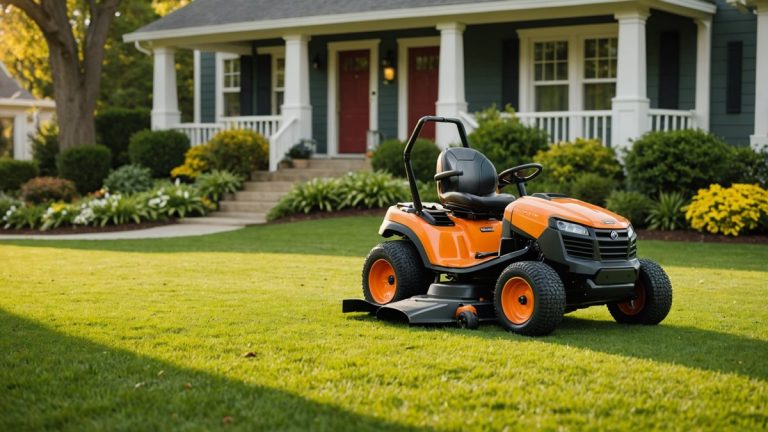
Imagine a robotic mower that tackles steep hills, muddy patches, and sprawling lawns without breaking a sweat—or your back. The rise of 4WD robot lawn mowers is making this a reality for homeowners with large, complex yards. Two of the most compelling options in this space are the GOKO M6 and the Worx Landroid, both designed to handle terrain that would leave standard autonomous lawn mowers spinning their wheels. But which one earns its place in your garage? We’re breaking down the specs, performance, and real-world implications to help you decide.
Why 4WD Matters in Robotic Mowers
For years, robotic mowers were limited to flat, obstacle-free lawns. But as yards grow larger and more varied, the demand for all-terrain capability has surged. A 4WD system distributes power to all four wheels, providing the traction needed to:
- Conquer slopes up to 35-45% (depending on the model),
- Navigate wet or uneven ground without getting stuck,
- Handle larger lawns (often 1 acre or more) with consistent efficiency.
Both the GOKO M6 and Worx Landroid leverage 4WD, but their approaches differ in power, battery life, and smart features—key factors for anyone investing in smart mowing technology.
GOKO M6: The Heavy-Duty Contender
The GOKO M6 is built for homeowners who need brute force and endurance. This robot lawn mower doesn’t just handle large yards; it devours them. With a robust 4WD system and a cutting width of 22 inches, the M6 can cover up to 1.2 acres on a single charge, making it ideal for expansive properties. Its 60V lithium battery delivers longer runtime, while the dual-blade cutting system ensures a clean, even finish—even in thick grass.
What sets the M6 apart is its adaptive terrain technology. Sensors continuously monitor the lawn’s conditions, adjusting speed and blade height automatically. This is a game-changer for yards with mixed terrain, as it prevents the mower from getting bogged down or missing spots. Plus, with app-based controls, you can schedule mowing sessions, adjust settings, and even receive alerts if the mower encounters an issue.
Key Specs for the GOKO M6:
- Cutting Width: 22 inches
- Max Yard Size: 1.2 acres per charge
- Battery: 60V lithium (approximately 90-120 minutes runtime)
- Slope Capability: Up to 45%
- Cutting Height: Adjustable from 1.5 to 3.5 inches
- Smart Features: App control, rain sensor, anti-theft system
- Weight: ~65 lbs
Worx Landroid: The Smart and Agile Performer
If the GOKO M6 is the heavyweight champion, the Worx Landroid is the agile middleweight with a few tricks up its sleeve. Worx is no stranger to the robotic mower market, and its Landroid series has earned a reputation for reliability and user-friendly design. The 4WD model, in particular, stands out for its balance of power and precision.
The Landroid’s 4WD system is paired with a 20-inch cutting deck, making it slightly less imposing than the M6 but still capable of handling up to 0.75 acres per charge. Where it shines is in its smart mowing features. Worx’s AI-powered navigation uses a combination of boundary wires and GPS to map your lawn, ensuring efficient coverage and minimal overlap. This not only saves time but also extends battery life.
One of the Landroid’s most practical features is its modular battery system. It uses Worx’s 20V or 40V Power Share batteries, which are compatible with other tools in the Worx ecosystem. This is a major plus for homeowners who already own Worx cordless tools, as it allows for easy battery swaps and reduces long-term costs.
Key Specs for the Worx Landroid (4WD Model):
- Cutting Width: 20 inches
- Max Yard Size: 0.75 acres per charge
- Battery: 40V lithium (approximately 60-90 minutes runtime)
- Slope Capability: Up to 35%
- Cutting Height: Adjustable from 1.5 to 4 inches
- Smart Features: App control, GPS navigation, rain sensor, voice assistant compatibility
- Weight: ~50 lbs
Head-to-Head: GOKO M6 vs. Worx Landroid
Choosing between these two autonomous lawn mowers comes down to your yard’s size, terrain, and your priorities in a robot lawn mower. Here’s how they stack up in key categories:
Yard Size and Coverage: The GOKO M6 is the clear winner for large properties, covering up to 1.2 acres compared to the Landroid’s 0.75 acres. If your lawn is vast, the M6’s wider cutting deck and longer battery life will save you time and hassle.
Terrain Handling: Both mowers handle slopes well, but the M6’s 45% slope capability edges out the Landroid’s 35%. If your yard has steep hills or uneven ground, the M6’s extra traction and power may be worth the investment.
Battery and Runtime: The M6’s 60V battery provides longer runtime, but the Landroid’s modular Power Share system offers flexibility and cost savings if you’re already invested in the Worx ecosystem.
Smart Features: The Worx Landroid takes the lead here with its AI-powered navigation and GPS mapping, which optimize mowing patterns for efficiency. The GOKO M6’s adaptive terrain tech is impressive, but the Landroid’s smart features feel more polished and user-friendly.
Price: The GOKO M6 typically retails for around $2,500-$3,000, while the Worx Landroid (4WD) is more affordable at $1,500-$2,000. For budget-conscious buyers, the Landroid offers excellent value, especially with its smart features.
What This Means for You
So, which 4WD robotic mower is right for your lawn? The answer depends on your specific needs:
- Choose the GOKO M6 if: You have a large yard (1 acre or more), steep slopes, or tough terrain. Its power, endurance, and adaptive tech make it a workhorse for demanding properties. It’s also a solid choice if you prioritize cutting width and battery life over smart features.
- Choose the Worx Landroid if: Your lawn is under 0.75 acres but still challenging, and you want a smart, user-friendly mower with advanced navigation. The Landroid is also ideal if you’re already part of the Worx ecosystem or want a more affordable 4WD option.
For professional landscapers, both models offer compelling features, but the GOKO M6 may be the better fit for commercial use due to its durability and larger coverage area. Meanwhile, homeowners with mid-sized yards will appreciate the Worx Landroid’s balance of performance and price.
Before making a decision, consider testing both models (if possible) or reading in-depth robotic mower reviews to see how they perform in real-world conditions. And don’t forget to factor in long-term costs like replacement blades, batteries, and maintenance.
Final Thoughts
The rise of 4WD robot lawn mowers like the GOKO M6 and Worx Landroid is a game-changer for homeowners and pros alike. These machines are no longer limited to flat, simple lawns—they’re tackling real-world challenges with power, precision, and smart technology. Whether you prioritize raw performance or cutting-edge features, there’s a model here to fit your needs.
As the autonomous lawn mower market continues to evolve, we can expect even more innovations—longer battery life, better AI, and perhaps even fully wire-free navigation. For now, though, the GOKO M6 and Worx Landroid represent the pinnacle of what’s possible in smart mowing for large, complex yards.
FAQ
Are 4WD robotic mowers worth the extra cost?
If your yard has slopes, rough terrain, or is larger than 0.5 acres, then yes. 4WD robotic mowers offer the traction and power needed to handle these challenges efficiently. For flat, small lawns, a 2WD model may suffice and save you money.
How do the GOKO M6 and Worx Landroid compare to Husqvarna or Robomow?
Both the GOKO M6 and Worx Landroid are strong competitors to established brands like Husqvarna and Robomow. The M6’s larger cutting deck and battery life rival Husqvarna’s high-end models, while the Landroid’s smart features and affordability make it a great alternative to Robomow’s mid-range options. Husqvarna and Robomow do offer more models with varying features, so it’s worth comparing specs if you’re considering all options.
Can these mowers handle obstacles like trees, rocks, or garden beds?
Yes, but with some caveats. Both mowers use boundary wires to define their mowing area, so they’ll avoid obstacles within those limits. However, they may struggle with very tight spaces or dense obstacles. The Worx Landroid’s GPS navigation helps it navigate more precisely, while the GOKO M6’s adaptive terrain tech ensures it doesn’t get stuck in rough patches. For best results, clear your lawn of large debris and ensure boundary wires are properly installed.
Source: Original Article

Author: AI Mow
Ai Mow is the editorial team behind Ai Mower News, dedicated to bringing you the latest news, reviews, and insights on robotic lawn mowers and smart gardening technology.