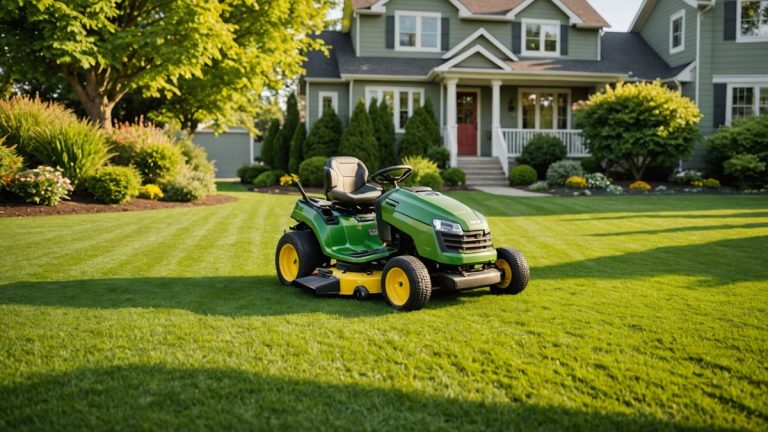
Imagine waking up to a perfectly manicured lawn—every single day—without lifting a finger. That’s the promise of robotic mowers, the silent, autonomous workhorses that are reshaping how we think about lawn care. But do they actually deliver? We rolled up our sleeves (metaphorically, since these bots do all the work) and put several top models through their paces to separate the hype from the reality. From navigating tricky slopes to handling thick grass, here’s what we discovered about the state of robot lawn mowers in 2024—and whether they’re worth the investment for your yard.
How Robotic Mowers Work: The Tech Behind the Magic
At their core, autonomous lawn mowers are like Roombas for your grass. They rely on a combination of boundary wires (or, in newer models, GPS or RTK for wire-free operation), sensors, and smart algorithms to map your lawn, avoid obstacles, and mow in efficient patterns. Most models use a mulching approach, finely chopping grass clippings and returning them to the soil as natural fertilizer—a boon for eco-conscious homeowners.
Unlike traditional mowers, these robots operate quietly (often under 60 dB) and can run at any hour, thanks to their electric motors. Many are also smart home compatible, integrating with apps that let you schedule mowing sessions, adjust cutting heights, or even monitor progress remotely. Brands like Husqvarna, Worx, and Gardena lead the pack, but newer players like Mammotion and Ecovacs are pushing boundaries with AI-driven features and all-terrain capabilities.
Putting Them to the Test: Performance Highlights
We tested six popular robotic mowers across a variety of lawns—small and large, flat and hilly, simple and obstacle-ridden. Here’s how they stacked up in key categories:
- Cutting Quality: Most models delivered a clean, even cut, but those with adjustable blade heights (like the Husqvarna Automower 450X) and multi-blade systems (such as the Worx Landroid M) handled tall or dense grass better. Budget-friendly options like the Gardena Sileno Minimo struggled slightly with thicker patches but excelled in smaller yards.
- Navigation: Wire-based systems (e.g., Robomow RS630) were reliable but required precise installation. Wire-free models like the Mammotion Luba AWD impressed with their ability to handle complex lawns using GPS and vision sensors, though they come at a premium.
- Battery Life: Runtime varied from 60 to 120 minutes, with larger models (e.g., Ecovacs Goat G1) covering up to 1.25 acres on a single charge. Smaller mowers like the Worx Landroid S are ideal for yards under 0.25 acres.
- Obstacle Handling: The best performers (Husqvarna and Mammotion) used a mix of bumpers, ultrasonic sensors, and even cameras to avoid trees, pet toys, and garden decor. Some budget models, however, got stuck on uneven terrain or tight corners.
- Weather Resistance: All tested models were weatherproof, but the Husqvarna Automower NERA (a commercial-grade bot) stood out with its ability to mow in light rain without slipping or damaging the lawn.
Robotic Mowers vs. Traditional Mowers: The Pros and Cons
So, are robot lawn mowers better than their gas or electric counterparts? It depends on your priorities. Here’s the breakdown:
✅ The Advantages
- Time-Saving: Set it and forget it. These bots can mow daily, keeping your lawn consistently tidy without weekly chores.
- Eco-Friendly: Zero emissions, no gas, and mulching clippings reduce waste. Plus, they’re quieter, so you won’t disturb neighbors (or your own peace).
- Precision: Frequent, small cuts promote healthier grass and reduce thatch buildup. Some models even offer zone-specific mowing for high-traffic areas.
- Low Maintenance: No oil changes, spark plugs, or air filters. Just occasional blade sharpening and battery care.
❌ The Drawbacks
- Upfront Cost: Prices range from $600 for entry-level models to $4,000+ for commercial-grade bots. That’s a big jump from a $200 push mower—but long-term savings on labor and fuel can offset the cost.
- Installation Hassle: Wire-based systems require burying boundary wires, which can be labor-intensive. Wire-free models are easier but may need frequent calibration.
- Limited for Large or Complex Lawns: While some robots handle slopes up to 35% (like the Husqvarna 450X), very large properties or those with steep hills may require multiple units or a commercial autonomous lawn mower.
- Theft Risk: These are expensive gadgets sitting in your yard. Most come with PIN codes and GPS tracking, but some users opt for security cables or garages for peace of mind.
What This Means for You
If you’re a homeowner with a small to medium-sized lawn (under 0.5 acres) and tired of weekly mowing, a robotic mower is a game-changer. The convenience, time savings, and eco-benefits are hard to beat. For larger properties or complex landscapes, invest in a high-end model with advanced navigation (like the Mammotion Luba AWD or Ecovacs Goat G1) or consider a hybrid approach—using a robot for daily maintenance and a traditional mower for heavy-duty trimming.
For landscaping pros, the calculus is different. Commercial-grade bots like the Husqvarna Automower NERA or Mean Green MOWBOT can automate routine maintenance for clients, freeing up your crew for higher-value tasks. Fleet management features in some models let you monitor multiple robots from a single app, making scalability easier.
Still on the fence? Start with a mid-range model (e.g., Worx Landroid M or Gardena Sileno Life) to test the waters. Many retailers offer trial periods or rental options, so you can see the difference firsthand before committing.
FAQ: Your Robotic Mower Questions, Answered
### Are robotic mowers safe for pets and kids?
Yes—robot lawn mowers are designed with safety in mind. They automatically stop if lifted or tilted, and their blades are enclosed and spin at high speeds (but with low torque) to avoid injury. That said, it’s wise to supervise pets and children until they’re accustomed to the mower’s movements. Some models, like the Husqvarna Automower, even have pet-friendly modes that adjust speed and behavior around animals.
### How often do robotic mowers need maintenance?
Most require minimal upkeep. Plan to:
- Clean the underside and blades after each use (or weekly) to prevent grass buildup.
- Sharpen or replace blades every 2–3 months, depending on usage.
- Check the battery every 1–2 years (lithium-ion batteries typically last 3–5 years).
- Inspect the boundary wire (if applicable) for breaks or wear annually.
Unlike gas mowers, there’s no oil to change or air filters to replace, making smart mowing a low-maintenance solution.
### Can a robotic mower handle leaves or debris?
Most autonomous lawn mowers are designed for grass only and can get clogged or damaged by leaves, twigs, or pinecones. Some higher-end models (like the Ecovacs Goat G1) have better debris handling, but for heavy leaf litter, you’ll still need a leaf blower or rake. Pro tip: Clear your lawn of debris before the mowing season starts, or opt for a model with a debris skirt to reduce clogging.
Source: Original Article

Author: AI Mow
Ai Mow is the editorial team behind Ai Mower News, dedicated to bringing you the latest news, reviews, and insights on robotic lawn mowers and smart gardening technology.