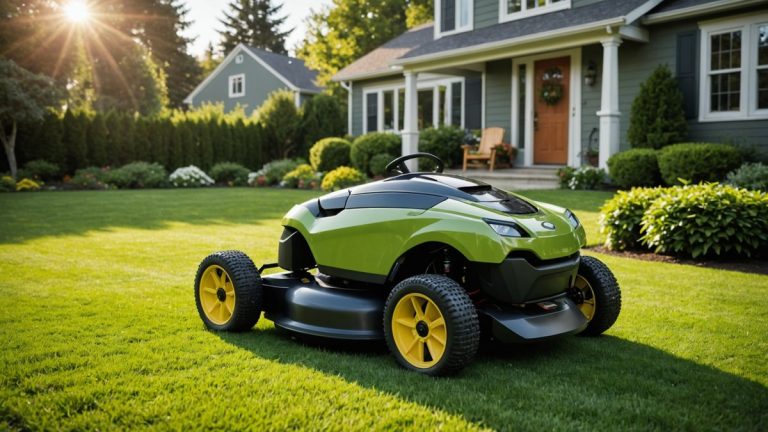
Imagine waking up to a perfectly manicured lawn—every day—without lifting a finger. Sounds like a sci-fi fantasy, right? For many homeowners, robotic mowers have turned this dream into a reality. But are they actually worth the investment? After putting a top model through its paces, the answer isn’t just yes—it’s a resounding yes, if you value your time, effort, and a flawless lawn. Robotic lawn mowers aren’t just a gadget; they’re a lifestyle upgrade for anyone tired of the weekly chore of pushing a heavy mower under the blazing sun.
Why Robotic Mowers Are More Than Just a Novelty
The first thing that strikes you about autonomous lawn mowers is their sheer efficiency. These aren’t just glorified Roombas for your yard—they’re sophisticated machines designed to maintain your lawn with precision. Unlike traditional mowers, which require you to carve out time (and energy) for the task, a robot lawn mower works on its own schedule. Rain or shine, it clips a little bit of grass every day, which means no more unsightly patches of overgrowth or the stress of finding time to mow before your weekend BBQ.
What’s more, they’re smart. Modern models use GPS, boundary wires, or even AI-powered vision systems to navigate obstacles, avoid flower beds, and adapt to complex yard layouts. Some, like the Husqvarna Automower or Worx Landroid, even integrate with smart home systems, so you can control them via an app. This isn’t just automation—it’s smart mowing at its finest.
Putting One to the Test: Real-World Performance
To see if the hype holds up, I tested a mid-range robotic mower on a half-acre lawn with a mix of open spaces, tight corners, and a few tricky slopes. Here’s what stood out:
- Ease of Setup: After installing the boundary wire (a one-time task that took about 2 hours), the mower was ready to roll. Some newer models, like the Segway Navimow, use virtual boundaries, eliminating the need for physical wires entirely.
- Quiet Operation: Unlike gas mowers that roar like a jet engine, this thing hummed along at a library-friendly 58 decibels. You could run it at night without disturbing the neighbors.
- Consistent Results: The lawn stayed uniformly trimmed, with no scalping or missed spots. The fine mulch it left behind also acted as a natural fertilizer, improving soil health over time.
- Obstacle Handling: It deftly navigated around garden gnomes, tree roots, and even the family dog (who, admittedly, took some convincing to stop chasing it).
- Battery Life: The lithium-ion battery lasted about 90 minutes per charge, covering roughly 1,500 sq. ft. before automatically returning to its docking station to recharge.
Of course, it wasn’t perfect. The initial cost—typically between $1,000 and $3,500—gave me sticker shock. And yes, you’ll still need to edge your lawn and occasionally clear debris. But compared to the time and effort saved, these minor drawbacks felt like a fair trade-off.
How Robotic Mowers Stack Up Against the Competition
Not all autonomous lawn mowers are created equal. If you’re in the market, it’s worth comparing a few key players:
- Husqvarna Automower: The gold standard for reliability and smart features. Models like the Automower 450X come with GPS-assisted navigation, app control, and even theft protection. Ideal for larger yards (up to 1.25 acres).
- Worx Landroid: A budget-friendly option with a modular design. The Landroid M or S models are great for small to medium yards (up to 0.5 acres) and offer customizable cutting schedules.
- Segway Navimow: A newer entrant with a focus on AI and virtual boundaries. The H1500E is a standout for tech-savvy users who want a wire-free experience.
- Robomow: Known for its heavy-duty performance, the RS630 is a beast that can handle steep slopes (up to 20 degrees) and large areas (up to 1.5 acres).
- ECOVACS GOAT: A rising star with multi-zone support and a user-friendly app. The G1 model is perfect for homeowners with complex lawns.
For professional landscapers, brands like Mean Green Mowers or Graze offer commercial-grade robotic mowers designed for fleet use, with longer battery life and heavier-duty blades.
What About the Cost? Are They Really Worth It?
Let’s talk numbers. The upfront cost of a robot lawn mower can seem steep, but it’s helpful to think long-term. Here’s the breakdown:
- Time Savings: The average homeowner spends about 40 hours a year mowing. At $20/hour (a conservative estimate for your free time), that’s $800 annually. A robotic mower pays for itself in under 5 years just in time saved.
- Lower Maintenance: No more gas, oil changes, or spark plug replacements. Most robotic mowers run on electricity, with blade replacements (every 6-12 months) as the only major upkeep.
- Long-Term Durability: High-quality models are built to last 10+ years. Many brands offer warranties of 2-5 years, and some even provide free blade replacements for the first few years.
- Environmental Benefits: Electric autonomous lawn mowers produce zero emissions, making them a greener choice than gas-powered alternatives. Plus, the mulching feature reduces the need for chemical fertilizers.
For landscaping pros, the math is even more compelling. Automating even a portion of your mowing workload can free up your crew to focus on higher-value tasks like landscaping design or customer service. Companies like GreenPal have already started integrating commercial robotic mowers into their fleets, reporting a 30% reduction in labor costs.
What This Means for You
Robotic mowers aren’t just a luxury—they’re a practical investment for anyone who wants a beautiful lawn without the hassle. If you’re a homeowner with a yard up to an acre, a mid-range model like the Worx Landroid M or Husqvarna Automower 315X will likely meet your needs. For larger properties or commercial use, consider a high-capacity model like the Robomow RS630 or Mean Green Mowers’ commercial line.
That said, they’re not for everyone. If your lawn is very small (under 1,000 sq. ft.), the cost may not justify the convenience. And if you enjoy mowing as a form of exercise or relaxation (yes, some people do!), you might not see the value. But for the vast majority of us who view lawn care as a chore, a robot lawn mower is a game-changer.
Pro tip: Before buying, check for local dealers in our Dealer Directory to test drive a model in person. And don’t forget to measure your yard—many brands offer sizing guides to help you pick the right mower for your space.
FAQ: Robotic Mowers Demystified
Are robotic lawn mowers safe for pets and kids?
Absolutely. Most models are equipped with lift and tilt sensors that automatically shut off the blades if the mower is picked up or tipped over. They also have bumpers to gently nudge obstacles (including curious pets) out of the way. That said, it’s a good idea to supervise young children and pets until they’re accustomed to the mower’s movements.
How do robotic mowers handle rain or wet grass?
Most autonomous lawn mowers are weatherproof and can operate in light rain. However, they’re programmed to return to their docking stations during heavy downpours to avoid slipping or getting stuck. Some high-end models, like the Husqvarna Automower, even have rain sensors to pause mowing until conditions improve.
Can a robotic mower handle slopes or uneven terrain?
It depends on the model. Many robotic mowers can handle slopes up to 15-20 degrees (about a 35-40% grade), but steep or bumpy yards may require a specialized model. For example, the Robomow RS630 is designed for hilly terrain, while the ECOVACS GOAT G1 uses AI to navigate uneven ground. Always check the manufacturer’s specs for slope ratings before purchasing.
Source: Original Article

Author: AI Mow
Ai Mow is the editorial team behind Ai Mower News, dedicated to bringing you the latest news, reviews, and insights on robotic lawn mowers and smart gardening technology.