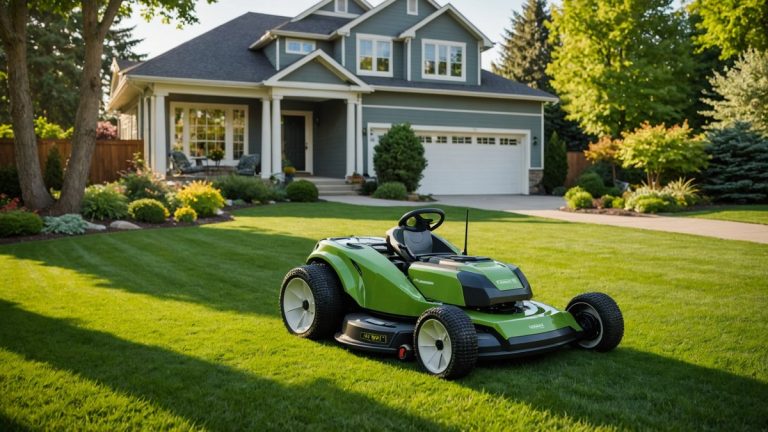
Imagine waking up to a perfectly manicured lawn—every day—without lifting a finger. That’s the promise of robotic mowers, and after putting one to the test, I can confirm these high-tech helpers are more than just a gadget. But are they worth the investment for your yard? The answer depends on your lawn’s size, your budget, and how much you value your weekends. After hands-on testing and comparing models from brands like Husqvarna, Worx, and Gardena, here’s the full breakdown of what autonomous lawn mowers bring to the table—and when they might not be the right fit.
How Robotic Mowers Work: Set It and Forget It
At their core, robot lawn mowers are like Roombas for your yard. They use boundary wires (or, in some newer models, GPS or RTK for wire-free operation) to define the mowing area, then navigate randomly or in systematic patterns to trim grass to your desired height. Sensors detect obstacles, slopes, and even rain, ensuring they retreat to their charging docks when conditions aren’t ideal.
Most models require an initial setup—burying or staking down a perimeter wire—which can take a few hours for a typical suburban lawn. Once that’s done, you program the mowing schedule via an app (yes, these are smart mowing machines) and let the robot do its thing. Some high-end models, like the Husqvarna Automower 450X or Mammotion LUBA, even support multi-zone mowing, perfect for complex yards with separate front and back areas.
The Pros: Why Homeowners Are Switching to Autonomous Mowing
After testing a mid-range robotic mower for a full season, the benefits became clear—and they go beyond just saving time.
- Time-Saving Convenience: No more weekend chores. The robot mows daily (or on your schedule), keeping grass consistently trimmed. This also means no more lugging out a heavy mower or dealing with clippings—most models mulch finely, returning nutrients to the soil.
- Eco-Friendly Operation: Most robot lawn mowers are battery-powered, producing zero emissions. They’re also quieter than gas mowers, so you won’t disturb the neighbors (or your nap).
- Precision and Consistency: Unlike human mowing, which can leave uneven patches if you’re in a hurry, robotic mowers cut a little bit every day, resulting in a golf-course-like finish. They also handle tight spaces and edges better than you might expect.
- Smart Features: Higher-end models integrate with smart home systems (like Alexa or Google Assistant), offer theft protection (alarms, GPS tracking), and even adjust mowing patterns based on grass growth rates.
The Cons: Limitations to Consider
While the upsides are compelling, autonomous lawn mowers aren’t a perfect fit for every yard or homeowner. Here’s what to watch out for:
- Upfront Cost: Prices range from $800 for entry-level models (like the Worx Landroid M) to over $4,000 for commercial-grade machines. That’s a significant investment compared to a $300 push mower.
- Installation Hassles: Laying the boundary wire is a one-time chore, but it can be tricky for yards with lots of obstacles, slopes, or flower beds. Some newer models (like the Gardena Sileno Life) offer easier wire-free setups, but these are pricier.
- Not for All Terrains: Most robotic mowers struggle with very steep hills (beyond 20-25 degrees), thick weeds, or large yards (over 1 acre). If your property has these challenges, you might need a hybrid approach—using a robot for maintenance and a traditional mower for heavy-duty work.
- Ongoing Maintenance: Blades need replacing every few months, and the charging dock should be kept clean. You’ll also need to periodically check the boundary wire for breaks.
How It Compares to Traditional Mowing
To put it in perspective, let’s compare a robot lawn mower to the alternatives:
- Push Mower: Cheaper upfront, but requires manual labor, gas/oil (for non-electric models), and storage space. No smart features, and the results depend on your skill and time.
- Riding Mower: Great for large yards, but expensive, loud, and requires more maintenance. They also take up a lot of garage space and aren’t eco-friendly.
- Landscaping Service: Saves you time, but costs add up over the years (often $1,000+ annually for weekly cuts). Plus, you’re at the mercy of someone else’s schedule.
For a 1/4-acre lawn, a robotic mower will likely pay for itself in 2-3 years compared to a landscaping service. And unlike traditional mowers, they keep your lawn looking pristine all the time, not just after a weekend mow.
What This Means for You
Bottom line: If you have a medium-sized lawn (up to 1/2 acre), a reasonable budget, and want to reclaim your weekends, a robotic mower is absolutely worth it. The convenience, consistency, and eco-friendly benefits outweigh the upfront cost for most homeowners. However, if your yard is very large, hilly, or full of obstacles, you might need to wait for the next generation of autonomous lawn mowers—or pair a robot with a traditional mower for now.
For professional landscapers, these machines are a game-changer for fleet automation. Companies like Husqvarna and STIGA offer commercial-grade models that can handle multiple properties, reducing labor costs and increasing efficiency. It’s an investment that can scale with your business.
FAQ: Robotic Mowers Answered
Do robotic mowers work in the rain?
Most robot lawn mowers are weatherproof and can operate in light rain, but heavy downpours can clog the blades or damage the electronics. Higher-end models have rain sensors and will automatically return to their docks when it starts pouring. Always check your model’s IP rating (IPX5 or higher is ideal for rain resistance).
Can a robotic mower handle multiple lawn zones?
Yes, but it depends on the model. Entry-level autonomous lawn mowers typically handle one continuous zone, while premium models like the Husqvarna Automower 430X or Mammotion LUBA AWD support multiple zones with separate mowing schedules. This is ideal for yards with front/back lawns or detached areas.
How long do robotic mower batteries last?
Battery life varies by model, but most robotic mowers offer 60-120 minutes of runtime per charge. Larger yards may require a model with a bigger battery (e.g., 5Ah or more) or a fast-charging dock. Lithium-ion batteries typically last 3-5 years before needing replacement, depending on usage.
Source: Original Article

Author: AI Mow
Ai Mow is the editorial team behind Ai Mower News, dedicated to bringing you the latest news, reviews, and insights on robotic lawn mowers and smart gardening technology.