


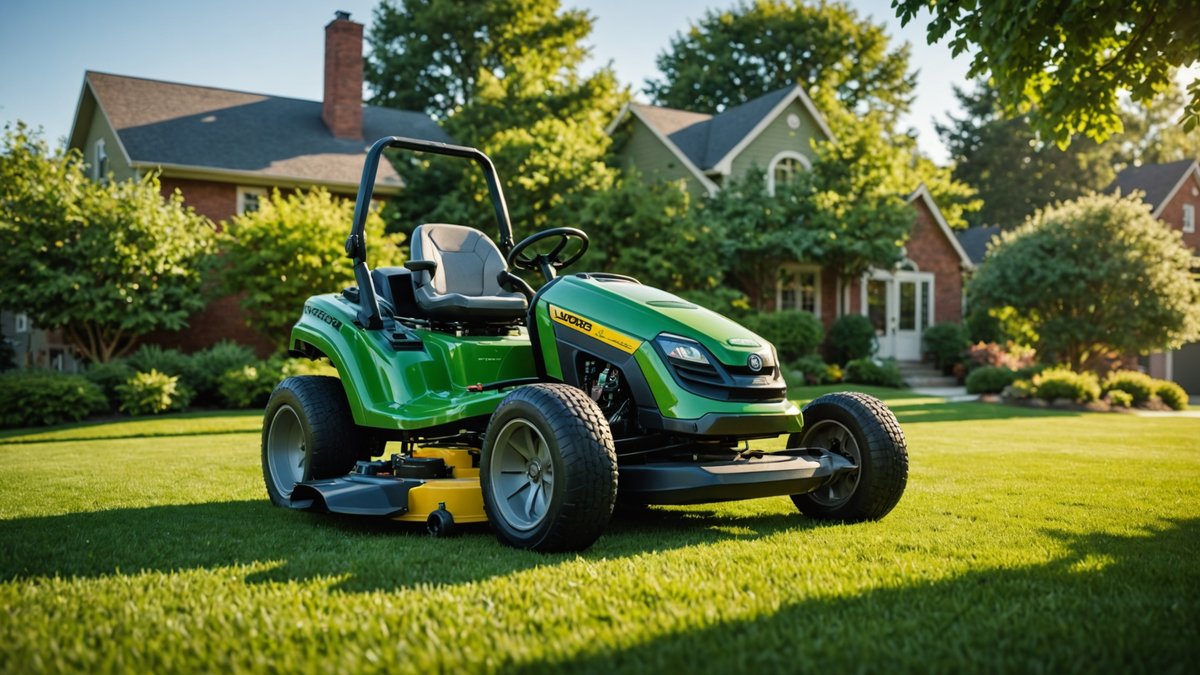
Imagine a robotic mower that doesn’t rely on GPS, cellular signals, or even a boundary wire to navigate your yard. Roborock, the brand best known for its smart vacuum cleaners, has just unveiled a game-changing autonomous lawn mower that uses advanced LiDAR technology to map and mow your lawn with precision—no satellites required. This bold step could redefine smart mowing for homeowners who want a hassle-free, high-tech solution without the traditional limitations.
Why LiDAR Changes the Game for Robotic Mowers
Most robot lawn mowers on the market today rely on a combination of GPS, boundary wires, or RTK (real-time kinematic) positioning to navigate. Brands like Husqvarna, Worx, and Gardena have perfected these systems, but they come with trade-offs. GPS can struggle in areas with poor satellite visibility, while boundary wires require tedious installation and can be damaged over time.
Roborock’s new approach swaps these methods for LiDAR—a technology already proven in its robot vacuums. LiDAR (Light Detection and Ranging) uses laser pulses to create a detailed 3D map of the environment in real time. This means the mower can:
- Navigate without external signals: No GPS, no cellular data, and no reliance on satellites. Ideal for yards with tall trees, dense foliage, or urban canyons where signals drop.
- Avoid obstacles intelligently: Unlike bump-and-turn models (common in entry-level mowers like the Ryobi RM40), LiDAR allows for precise object detection, so it can steer clear of garden decor, pet toys, or even small animals.
- Adapt to complex lawns: Slopes, multiple zones, and irregular shapes are no problem. The mower can dynamically adjust its path, similar to how Roborock’s vacuums handle multi-room cleaning.
This isn’t the first time LiDAR has been used in outdoor robots—companies like Mammotion already offer LiDAR-equipped models for large or commercial properties. But Roborock’s entry signals a shift toward making this technology more accessible to everyday homeowners.
Key Features and Specs
While Roborock hasn’t released full specifications yet, early details and industry leaks suggest this autonomous lawn mower will pack some impressive hardware. Here’s what we know so far:
- LiDAR Navigation: Dual or multi-line LiDAR for high-precision mapping, even in low-light conditions.
- No Boundary Wires: Unlike traditional models (e.g., Husqvarna Automower or Gardena Sileno), this mower won’t require buried wires to define its workspace.
- Multi-Zone Support: Likely capable of handling multiple lawn areas, which is a boon for homeowners with front and back yards separated by driveways or paths.
- Smart Connectivity: Expected to integrate with Roborock’s existing app ecosystem, allowing for scheduling, remote control, and firmware updates via Wi-Fi or Bluetooth.
- Battery and Runtime: Rumored to feature a large-capacity lithium-ion battery (possibly 24V or higher) for extended runtime, though exact capacity is unconfirmed.
- Cutting System: Details are scarce, but we anticipate a floating blade deck for uneven terrain, similar to premium models like the Stihl iMow.
One notable omission? There’s no mention of a rain sensor—a feature found in many high-end robotic mowers (including the Worx Landroid). This could be a drawback for users in wet climates, though it’s possible Roborock will add this in a future iteration.
How It Compares to the Competition
Roborock’s LiDAR mower enters a crowded but rapidly evolving market. Here’s how it stacks up against the current leaders in smart mowing:
- Husqvarna Automower (GPS/RTK): The gold standard for reliability, but requires boundary wires for most models. Higher-end versions use RTK for pinpoint accuracy but come with a hefty price tag.
- Worx Landroid (GPS + Boundary Wire): A budget-friendly option with solid performance, but still dependent on wires for navigation. The Landroid M is one of the few wire-free models, but it uses GPS, which may not work as well in shaded areas.
- Mammotion LUBA (LiDAR): A commercial-grade robot lawn mower that already uses LiDAR, but it’s designed for large properties and carries a premium price. Roborock’s offering could bring LiDAR to a broader audience.
- Gardena Sileno (Boundary Wire): A solid mid-range option, but lacks the advanced navigation features of Roborock’s proposed system.
Roborock’s biggest advantage is its wire-free, satellite-free design, which could appeal to tech-savvy users frustrated by the limitations of traditional systems. However, it remains to be seen whether the mower can match the durability and precision of established brands like Husqvarna, which have decades of experience in outdoor equipment.
Potential Challenges
While the LiDAR approach is exciting, it’s not without hurdles. Here are a few questions that need answering:
- Price Point: Roborock’s robot vacuums are premium-priced, so will this robotic mower follow suit? If it’s significantly more expensive than wire-based models, adoption could be slow.
- Lawn Size Limitations: LiDAR works best in contained spaces. Can this mower handle large, open yards as effectively as GPS-based systems?
- Weather and Terrain: LiDAR can be affected by heavy rain, fog, or dust. Will the mower pause operations in poor conditions, or will it power through?
- Safety: LiDAR is great for obstacle avoidance, but will it be enough to prevent accidents with pets or small children? Most autonomous lawn mowers include lift and tilt sensors—will Roborock’s model go further?
These are challenges Roborock will need to address in testing and real-world use. Early adopters may face a learning curve, but if the technology delivers on its promises, it could set a new benchmark for the industry.
What This Means for You
For Homeowners:
If you’ve been holding off on buying a robot lawn mower because of the hassle of installing boundary wires or the unreliability of GPS in your yard, Roborock’s LiDAR model could be a game-changer. It offers a truly wire-free, satellite-free experience, which means:
- Easier setup: No digging trenches or laying wires—just place the mower and let it map your lawn.
- More flexibility: Ideal for renters or homeowners who don’t want to modify their property.
- Better obstacle avoidance: Fewer collisions with garden features, toys, or other hazards.
However, if you have a very large lawn (over 1 acre) or live in an area with extreme weather, you may still want to consider a GPS-based model like the Husqvarna Automower 450X or a commercial-grade option like the Mammotion LUBA.
For Landscaping Pros:
Professional landscapers evaluating fleet automation should keep an eye on this development. While Roborock’s mower may not be rugged enough for commercial use out of the gate, the LiDAR technology could trickle down to more robust models in the future. For now, stick with proven commercial solutions like the Mean Green or EZICut, but watch this space for innovations that could simplify large-scale smart mowing.
FAQ
Will Roborock’s LiDAR mower work at night?
LiDAR technology doesn’t rely on visible light, so in theory, the mower could operate in low-light or nighttime conditions. However, most robotic mowers are programmed to avoid nighttime use for safety and noise reasons. We’ll need to wait for official specs to confirm whether Roborock’s model will offer this feature.
How does LiDAR compare to RTK GPS for accuracy?
RTK GPS can achieve centimeter-level accuracy, making it ideal for large, open areas. LiDAR, on the other hand, excels in detailed, close-range mapping and obstacle avoidance. For most residential lawns, LiDAR’s precision will be more than sufficient, especially in areas where GPS signals are weak or blocked. However, for expansive properties, RTK GPS may still have the edge.
When will Roborock’s LiDAR mower be available, and how much will it cost?
As of now, Roborock hasn’t announced a release date or pricing. Given the brand’s track record, we expect a premium product, likely in the $1,500–$2,500 range, comparable to high-end models from Husqvarna or Worx. Stay tuned to AI Mower News for updates as they emerge!
Source: Original Article

Author: AI Mow
Ai Mow is the editorial team behind Ai Mower News, dedicated to bringing you the latest news, reviews, and insights on robotic lawn mowers and smart gardening technology.