


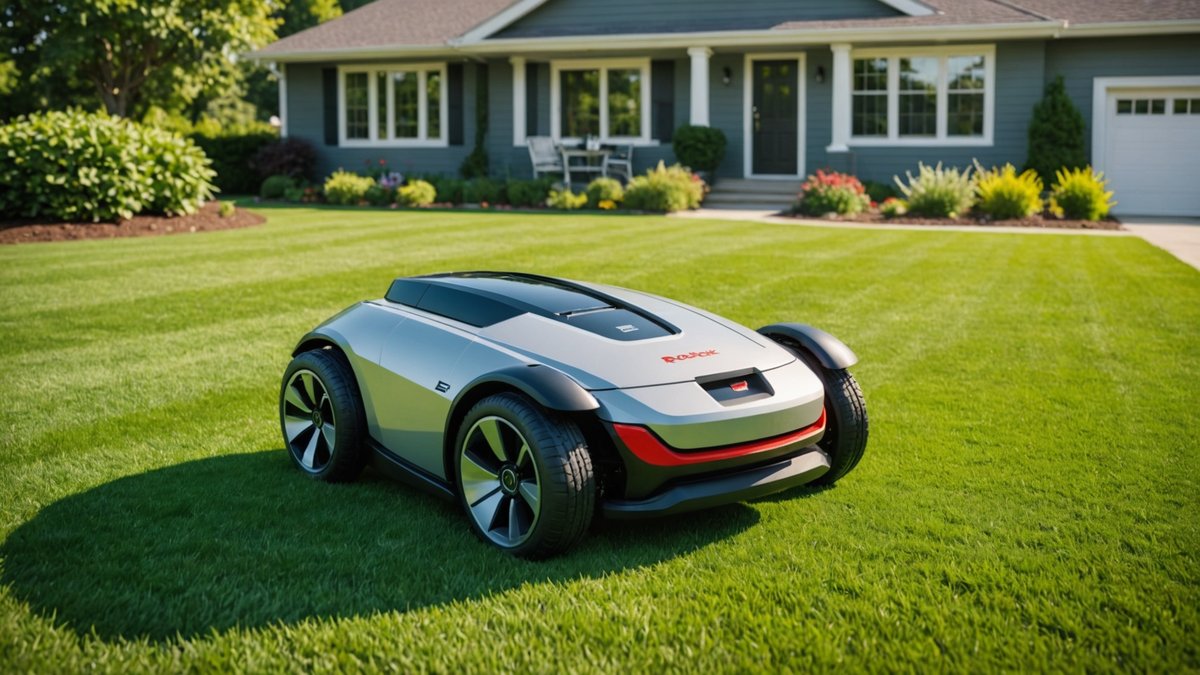
Imagine a robotic mower that doesn’t rely on GPS, cellular signals, or even a boundary wire to navigate your yard. Roborock, the brand known for its high-end robot vacuums, is shaking up the autonomous lawn mower market with a bold new approach—LiDAR-powered precision mowing. This isn’t just an incremental upgrade; it’s a rethinking of how robot lawn mowers work, promising smarter, more reliable performance without the usual dependencies. For homeowners frustrated by spotty GPS coverage or pros managing large, complex properties, this could be a game-changer.
Why LiDAR is a Big Deal for Robotic Mowers
Most robotic mowers today use one of three navigation systems: boundary wires, GPS/RTK (real-time kinematic) positioning, or a hybrid of the two. Boundary wires require tedious installation and can be damaged by landscaping work. GPS-based systems, like those in Husqvarna’s Automower or Worx Landroid, struggle in areas with poor satellite visibility—think dense tree cover or urban canyons. Some newer models, such as the Mammotion LUBA, use RTK for centimeter-level accuracy, but they still depend on external base stations and cellular signals.
Roborock’s LiDAR-based system, however, creates a real-time 3D map of your yard using laser sensors, much like its indoor robot vacuums. This means the mower can navigate obstacles, avoid drop-offs, and efficiently cover your lawn without pre-installed wires or satellite dependencies. For properties with irregular shapes, multiple zones, or frequent layout changes (e.g., adding flower beds or a new shed), LiDAR offers flexibility that traditional systems can’t match.
Key Features and Specs
While Roborock hasn’t released full technical details yet, early reports and patent filings suggest this autonomous lawn mower will pack impressive hardware. Here’s what we know so far:
- LiDAR Navigation: Uses multiple laser sensors to map the environment in real time, enabling precise path planning and obstacle avoidance.
- No Boundary Wires: Eliminates the need for perimeter cables, reducing installation hassle and maintenance.
- No GPS Dependency: Works in areas where satellite signals are weak or blocked, such as under trees or near tall buildings.
- Multi-Zone Support: Expected to handle complex yards with separate mowing areas (e.g., front lawn, back lawn, side garden) without manual intervention.
- Smart Mowing Modes: Likely includes customizable cutting patterns (spiral, random, systematic) and adjustable schedules via a companion app.
- Obstacle Detection: Uses LiDAR and possibly cameras to identify and avoid pets, toys, or landscaping features.
- Battery and Runtime: Speculations point to a high-capacity lithium-ion battery (similar to Roborock’s vacuums) with enough juice for 1-2 acres per charge, though official numbers are pending.
- Weather Resistance: Expected to be IP-rated for dust and water resistance, with sensors to detect rain and automatically pause mowing.
Roborock’s entry into the robot lawn mower space puts it in direct competition with established players like Husqvarna, Worx, and Gardena, as well as newer innovators like Mammotion and EcoFlow (which recently unveiled its Blade robotic mower). The big question: Can LiDAR deliver the same level of reliability as RTK or boundary wires in real-world conditions?
Potential Advantages Over Traditional Robotic Mowers
For homeowners, the biggest draw of Roborock’s approach is simplicity. No burying wires. No worrying about GPS dropouts. No need for a base station in every corner of a large property. Here’s how it stacks up against the competition:
- Vs. Boundary Wire Mowers (e.g., Husqvarna Automower 430X): Boundary wire systems are highly reliable but labor-intensive to install. They also struggle with dynamic environments—if you move a planter or add a new garden bed, you’ll need to adjust the wire. Roborock’s LiDAR mower adapts on the fly.
- Vs. GPS/RTK Mowers (e.g., Mammotion LUBA AWD 3000): RTK offers pinpoint accuracy but requires a stable cellular connection and a base station. If your yard has poor signal coverage, the mower may lose its position. LiDAR, on the other hand, relies only on its sensors.
- Vs. Hybrid Systems (e.g., Gardena Sileno Life): Some mowers combine boundary wires with GPS for backup. While this improves reliability, it doesn’t solve the installation complexity. Roborock’s all-LiDAR approach could simplify the entire process.
For professional landscapers, the benefits are even more compelling. Fleets of autonomous lawn mowers could be deployed to large properties (golf courses, parks, commercial campuses) without the need for extensive infrastructure. LiDAR’s ability to handle dynamic obstacles—like parked cars or temporary fencing—could also reduce downtime and manual intervention.
Potential Drawbacks and Unknowns
Of course, no technology is perfect. LiDAR-based navigation has its own challenges:
- Cost: LiDAR sensors are expensive, which could make Roborock’s mower pricier than wire-based or GPS alternatives. Mammotion’s LUBA, for example, starts at around $3,000 for RTK models. Expect Roborock’s offering to be in a similar range—or higher.
- Performance in Poor Conditions: LiDAR can struggle in heavy fog, dust, or direct sunlight (which can interfere with laser sensors). Roborock will need to demonstrate that its system works reliably in all weather.
- Mapping Large Areas: For very large properties (5+ acres), LiDAR may require frequent recalibration or additional sensors to maintain accuracy. We’ll need to see real-world testing to confirm its scalability.
- Battery Life: LiDAR sensors consume more power than GPS or boundary wire systems. This could impact runtime, especially for larger yards.
There’s also the question of maturity. While Roborock has a strong track record with robot vacuums, smart mowing is a different beast. The company will need to prove that its LiDAR system can handle the unique challenges of outdoor navigation—uneven terrain, tall grass, and unpredictable obstacles—just as well as its indoor counterparts handle carpets and furniture.
What This Means for You
For Homeowners: If you’ve been holding off on buying a robotic mower because you don’t want to deal with boundary wires or GPS limitations, Roborock’s LiDAR model could be the solution you’ve been waiting for. It’s ideal for:
- Yards with complex layouts (e.g., multiple zones, irregular shapes).
- Properties with poor GPS coverage (e.g., heavily treed lots or urban areas).
- Tech-savvy users who want a cutting-edge, future-proof system.
However, if you have a simple, small yard and prioritize affordability, a boundary wire mower (like the Worx Landroid M) might still be the better value.
For Landscaping Pros: Roborock’s LiDAR mower could be a compelling addition to your fleet, especially for commercial properties where installing boundary wires isn’t feasible. The ability to quickly map and adapt to new environments could save time and labor costs. That said, until we see durability and scalability data, it’s worth testing a unit in a controlled setting before committing to a full rollout.
Regardless of your use case, keep an eye on Roborock’s official announcement for pricing, availability, and full specs. If early reports are accurate, this could be one of the most exciting developments in smart mowing since the advent of RTK.
FAQ
How does LiDAR compare to RTK for robotic mower navigation?
LiDAR and RTK (Real-Time Kinematic) are both high-precision technologies, but they work differently. RTK uses GPS satellites and a base station to achieve centimeter-level accuracy, making it ideal for large, open areas. However, it requires a stable cellular connection and can struggle in areas with poor satellite visibility. LiDAR, on the other hand, uses laser sensors to create a 3D map of the environment in real time. It doesn’t rely on external signals, so it works well in areas with GPS dropouts (e.g., under trees). However, LiDAR may struggle in extreme weather conditions (heavy fog, dust) and could be more power-intensive.
Will Roborock’s LiDAR mower work with smart home systems?
While Roborock hasn’t confirmed integrations yet, it’s likely that the mower will work with popular smart home platforms like Amazon Alexa, Google Assistant, or Apple HomeKit, given Roborock’s track record with its robot vacuums. Expect voice control for starting/stopping mowing sessions, checking battery status, and adjusting schedules. Some competitors, like Husqvarna, already offer smart home compatibility, so this would be a natural feature for Roborock to include.
When will Roborock’s LiDAR robotic mower be available?
Roborock hasn’t announced an official release date yet, but given the buzz around this technology, we expect a launch in late 2024 or early 2025. Keep an eye on AI Mower News for updates—we’ll be covering the announcement in detail as soon as it’s official. In the meantime, check out our robotic mower reviews to compare existing models.
Source: Original Article

Author: AI Mow
Ai Mow is the editorial team behind Ai Mower News, dedicated to bringing you the latest news, reviews, and insights on robotic lawn mowers and smart gardening technology.