


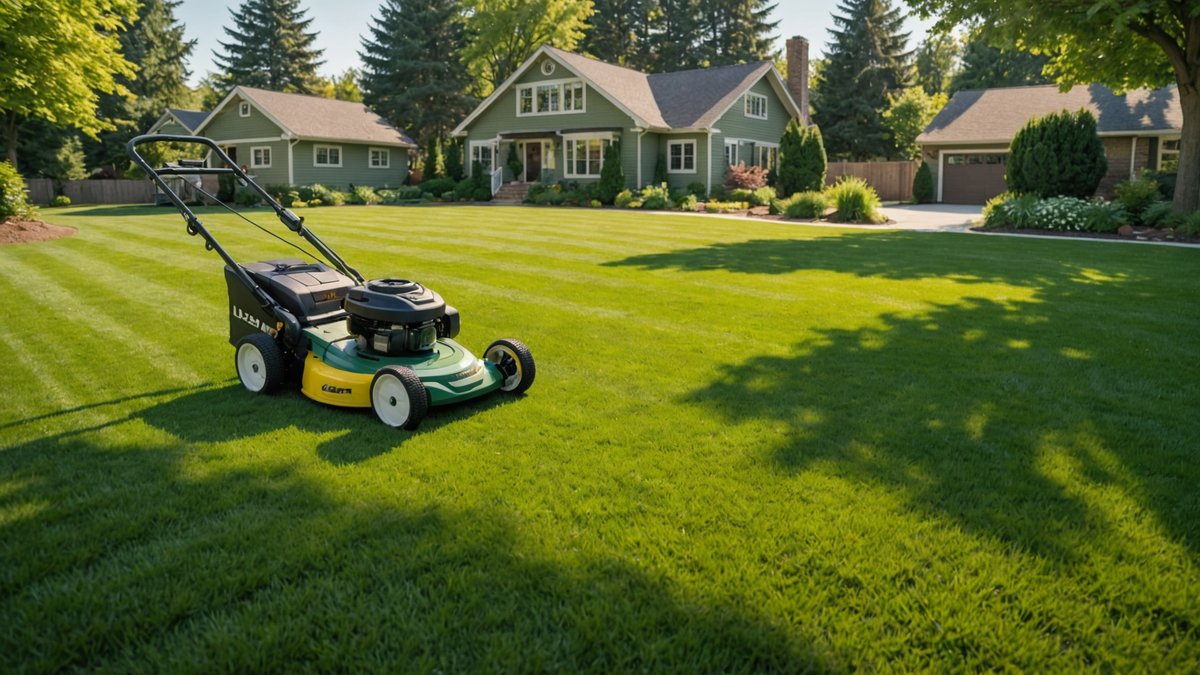
Imagine a robotic mower that ditches boundary wires, skips expensive RTK base stations, and still maps your yard with pinpoint accuracy—sounds like sci-fi, right? The Dreame A3 AWD is turning that vision into reality, blending advanced autonomous lawn mower tech with user-friendly features that could make it a game-changer for homeowners tired of traditional setup hassles. With LiDAR, vision-based navigation, and all-wheel drive, this model is pushing the boundaries of what a robot lawn mower can do—without the usual strings attached.
Wire-Free Freedom: How the Dreame A3 AWD Ditches the Cables
One of the biggest pain points for robotic mower owners has long been the installation process. Traditional models like the Husqvarna Automower or Worx Landroid require burying boundary wires or setting up RTK (Real-Time Kinematic) systems for precise navigation. The Dreame A3 AWD flips the script by using a combination of LiDAR (Light Detection and Ranging) and vision-based AI to create a digital map of your lawn—no wires, no base stations, and no professional installation required.
This approach is a breath of fresh air for DIYers and tech-savvy homeowners. Instead of spending hours (or hundreds of dollars) on setup, you can simply place the A3 AWD in your yard, let it scan the area, and watch as it autonomously defines mowing zones, obstacles, and no-go areas. It’s a level of convenience that rivals even the most advanced smart mowing systems on the market, like the Ecovacs Goat G1 or the Mammotion Luba 2.
Under the Hood: LiDAR, Vision, and All-Wheel Drive
The Dreame A3 AWD isn’t just about convenience—it’s packed with cutting-edge tech to tackle real-world lawn challenges. Here’s what sets it apart:
- LiDAR Navigation: Uses laser pulses to create a 3D map of your yard, enabling precise path planning and obstacle avoidance. This is the same tech used in high-end robot vacuums like the DreameBot X30 Ultra, adapted for outdoor use.
- Vision-Based AI: A built-in camera system helps the mower recognize and classify objects (e.g., trees, flower beds, or pet toys) to avoid collisions or damage. This is a step up from models that rely solely on bump sensors.
- All-Wheel Drive (AWD): Unlike most robot lawn mowers, which use two-wheel drive, the A3’s AWD system improves traction on slopes (up to 20 degrees) and uneven terrain. This makes it a strong contender for yards with hills or rough patches.
- Auto Mapping: The mower learns your lawn’s layout over time, optimizing its mowing pattern for efficiency. You can also manually edit the map via the companion app to adjust zones or exclude areas.
- App Control: The Dreame app (iOS/Android) lets you schedule mowing sessions, monitor progress, and receive alerts. It’s intuitive and packed with features, though some users may prefer the more polished apps from brands like Gardena or Ambient.
While the lack of RTK might raise eyebrows for some (RTK-enabled models like the DJI Agras T40 offer centimeter-level precision), the A3 AWD’s LiDAR+vision combo proves that you don’t always need RTK to achieve reliable, autonomous mowing. For most residential users, the accuracy is more than sufficient.
Performance: How Does It Handle Real Lawns?
On paper, the Dreame A3 AWD looks impressive—but how does it perform in the wild? Early adopters and reviewers (including the YouTube video that sparked this article) report that the mower excels in mid-sized yards (up to 1,000 square meters, per Dreame’s specs) with complex layouts. Here’s what stands out:
- Obstacle Avoidance: The LiDAR and vision system work together to detect and avoid obstacles with remarkable consistency. It’s far less likely to get stuck on garden hoses or small toys compared to older autonomous lawn mower models.
- Edge Cutting: Without boundary wires, edge performance can be hit-or-miss. The A3 AWD handles edges decently, though it may not be as precise as wired models like the Robomow RS630. For crisp edges, you might still need occasional manual trimming.
- Battery Life: The 29V 6.0Ah battery provides roughly 90-120 minutes of runtime, covering about 800-1,000 square meters per charge. If your lawn is larger, the mower will automatically return to its charging station and resume where it left off.
- Cutting Height: Adjustable from 20mm to 60mm, which is a solid range for most grass types. However, it lacks the fine-tuned adjustments (e.g., 10mm increments) found in premium models like the Stihl iMow RMI 632.
One potential downside: the A3 AWD struggles in very dense or tall grass. Like most robotic mowers, it’s designed for regular maintenance, not overgrown lawns. If you’ve let your grass grow wild, you’ll need to do an initial manual cut before deploying the A3.
How It Compares to the Competition
The robot lawn mower market is heating up, and the Dreame A3 AWD enters a crowded field. Here’s how it stacks up against some key competitors:
- Ecovacs Goat G1: Another wire-free model with LiDAR and AWD, but it’s more expensive and has a slightly larger cutting capacity (up to 1,500 square meters). The Goat G1 also includes a rain sensor, which the A3 AWD lacks.
- Mammotion Luba 2: Uses RTK for ultra-precise navigation and supports multi-zone mowing. It’s a great choice for large or complex yards, but the RTK setup adds complexity and cost. The A3 AWD is simpler and more plug-and-play.
- Worx Landroid M: A budget-friendly wired option with solid performance. If you don’t mind burying boundary wires, the Landroid M is a reliable choice—but it can’t match the A3’s wire-free convenience.
- Husqvarna Automower NERA: A new wire-free model from Husqvarna with advanced AI and obstacle avoidance. It’s a direct competitor to the A3 AWD, but it’s pricier and has a more limited availability (as of mid-2024).
For homeowners prioritizing ease of use and wire-free operation, the Dreame A3 AWD is one of the most compelling options available. It’s particularly well-suited for tech enthusiasts who want the latest in smart mowing without the hassle.
Bottom Line: What This Means for You
The Dreame A3 AWD is a bold step forward for autonomous lawn mowers. By eliminating boundary wires and RTK dependencies, it removes two of the biggest barriers to entry for robotic mowing: installation complexity and cost. For homeowners with mid-sized yards (under 1,000 square meters) who want a hassle-free, high-tech solution, this mower is a standout choice.
That said, it’s not perfect. The lack of RTK means it may not be as precise as some competitors, and its edge-cutting performance could be improved. But for most users, the trade-offs are worth it for the convenience and innovation. If you’re tired of the old-school robotic mower setup, the Dreame A3 AWD offers a glimpse of the future—today.
Pros: Wire-free, LiDAR + vision navigation, AWD for slopes, easy setup, great obstacle avoidance.
Cons: No RTK, edge cutting could be better, struggles with very tall grass.
FAQ
Does the Dreame A3 AWD work on slopes?
Yes! The all-wheel-drive system allows the A3 AWD to handle slopes up to 20 degrees (about a 36% grade). This is better than many two-wheel-drive robot lawn mowers, which typically max out at 15 degrees. However, for steeper yards, you might need a specialized model like the Husqvarna Automower 450X, which can tackle slopes up to 24 degrees.
How does the Dreame A3 AWD compare to wire-based models?
Wire-based models like the Worx Landroid or Gardena Sileno are often more precise at edge cutting and can handle larger yards more efficiently. However, they require burying boundary wires, which can be time-consuming and disruptive. The Dreame A3 AWD trades a bit of precision for convenience, making it ideal for users who prioritize ease of setup and wire-free operation.
Can I use the Dreame A3 AWD in the rain?
The Dreame A3 AWD is weather-resistant (IPX6 rated), so it can handle light rain. However, it doesn’t have a built-in rain sensor, so it won’t automatically return to its dock if it starts raining. If heavy rain is in the forecast, it’s best to manually pause mowing via the app to avoid potential issues like slipping or muddy terrain.
Source: Original Article

Author: AI Mow
Ai Mow is the editorial team behind Ai Mower News, dedicated to bringing you the latest news, reviews, and insights on robotic lawn mowers and smart gardening technology.