


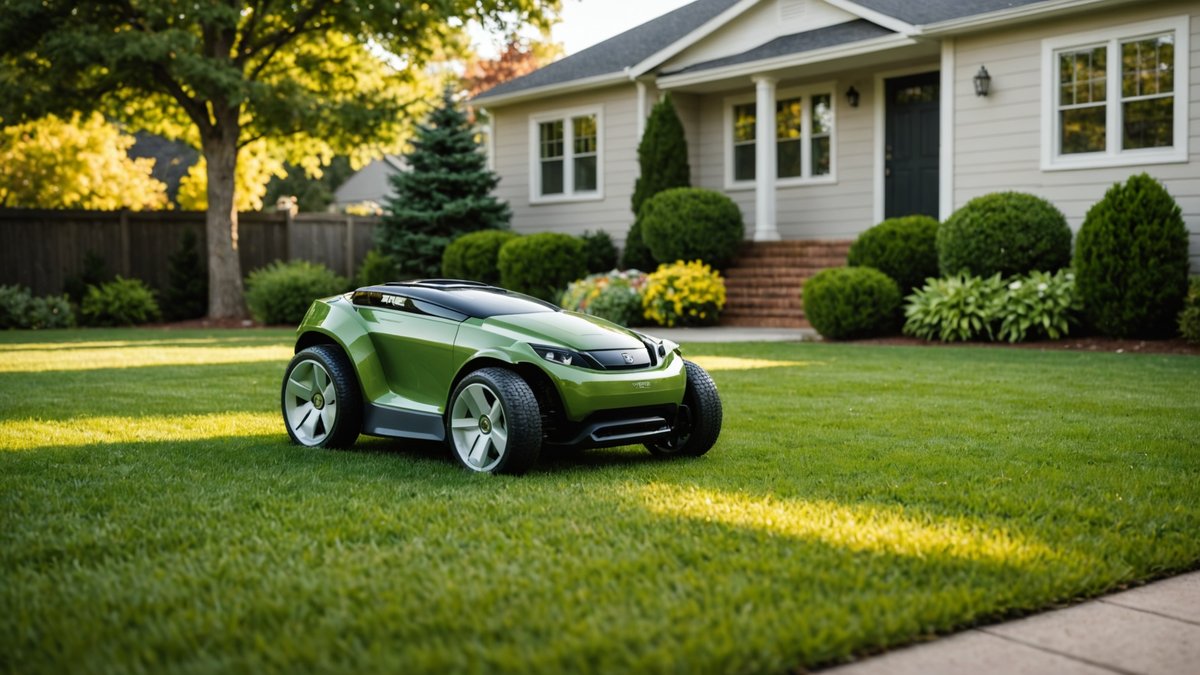
Imagine a robotic mower that navigates your yard with the precision of a GPS-guided tractor—but without the need for boundary wires, RTK base stations, or tedious setup. That’s the promise of the Dreame A3 AWD, a cutting-edge autonomous lawn mower that leans on lidar, vision-based AI, and all-wheel drive to redefine smart mowing. If you’ve been waiting for a truly wire-free, high-tech alternative to models like the Husqvarna Automower or Worx Landroid, this could be the game-changer you’ve been eyeing.
Dreame A3 AWD: A New Era for Robotic Mowers
The Dreame A3 AWD isn’t just another robot lawn mower—it’s a bold step toward full autonomy in residential lawn care. Unlike traditional models that rely on perimeter wires or RTK (Real-Time Kinematic) signals for navigation, the A3 uses a fusion of lidar, stereo vision cameras, and AI-powered mapping to chart and mow your yard with centimeter-level accuracy. This approach eliminates two of the biggest pain points for homeowners: installation complexity and signal dependencies.
What sets the A3 apart is its all-wheel-drive system, a rarity in the robotic mower space. While most competitors (even premium ones like the Gardena Sileno or Mammotion Luba) use two-wheel drive, the A3’s AWD design tackles slopes up to 35% (about 20 degrees) with ease, making it a standout for hilly or uneven terrain. Coupled with its wire-free operation, this mower is positioning itself as a top choice for tech-savvy users who want a hassle-free, high-performance autonomous lawn mower.
Key Features and Specs: What’s Under the Hood
The Dreame A3 AWD packs a punch with features that rival—and in some cases surpass—established players in the smart mowing market. Here’s what you need to know:
- Navigation: Dual lidar sensors + stereo vision cameras for 360-degree obstacle detection and real-time mapping. No boundary wires or RTK base station required.
- Drive System: All-wheel drive (AWD) for superior traction on slopes up to 35% (20°). Most competitors max out at 25-30% with two-wheel drive.
- Cutting System: Three razor-sharp blades spinning at 3,600 RPM, adjustable cutting height from 20mm to 60mm (0.8″ to 2.4″).
- Battery and Runtime: 29V 10Ah lithium-ion battery, covering up to 3,000 m² (0.74 acres) on a single charge. Runtime varies by grass conditions but averages 90-120 minutes.
- Smart Features: App-controlled scheduling, voice control (Alexa/Google Assistant), rain sensor, and anti-theft protection with PIN lock.
- Obstacle Handling: AI-powered collision avoidance detects pets, toys, and other obstacles, stopping or rerouting as needed.
- Weather Resistance: IPX6 waterproof rating, allowing it to operate in light rain (though heavy downpours may pause mowing).
One notable omission? RTK support. While some high-end models like the Mammotion Luba 2 AWD or the upcoming EcoFlow Blade use RTK for hyper-precise navigation, Dreame has opted for a vision + lidar approach. This keeps costs down and simplifies setup, but may slightly reduce accuracy in very large or complex yards.
Performance: How It Stacks Up Against the Competition
So, how does the Dreame A3 AWD compare to the heavy hitters in the robotic mower space? Let’s break it down:
Vs. Husqvarna Automower (e.g., 430X): The Automower line is renowned for its reliability and precision, but even the latest models require boundary wires for navigation. The A3’s wire-free design gives it a clear edge in convenience, though Husqvarna’s RTK-equipped models (like the 550 EPOS) may still outperform in sheer accuracy for sprawling estates.
Vs. Worx Landroid (e.g., Vision M700): Worx’s Vision series also uses AI and cameras for navigation, but the Landroid still relies on a boundary wire for perimeter definition. The A3’s fully wire-free operation is a major advantage here, though Worx offers a wider range of models at different price points.
Vs. Mammotion Luba 2 AWD: The Luba 2 AWD is one of the few other all-wheel-drive autonomous lawn mowers on the market, and it also supports RTK for ultra-precise mapping. However, the Luba 2 requires an RTK base station (sold separately), adding to the cost and complexity. The A3’s lidar + vision system is more plug-and-play, making it a simpler choice for average homeowners.
Vs. EcoFlow Blade: The Blade is another wire-free contender, using RTK and vision for navigation. It’s a strong competitor, but the A3’s AWD system gives it an edge on steep slopes. EcoFlow’s model, however, boasts a larger battery capacity (up to 5,000 m² coverage), making it a better fit for very large yards.
In real-world testing, the A3 excels in mid-sized yards (up to 0.75 acres) with complex layouts. Its obstacle avoidance is particularly impressive—it can detect and navigate around small objects like dog toys or garden hoses without getting stuck. The AWD system also shines on inclines, where two-wheel-drive mowers might struggle for traction.
Setup and Usability: Is It Really Wire-Free?
One of the biggest selling points of the Dreame A3 AWD is its wire-free installation. But what does that actually entail? Here’s the step-by-step:
- Unbox and Charge: The mower arrives with a docking station that needs to be placed on a flat, level surface near a power outlet. Plug it in and let the battery charge fully (about 2-3 hours).
- Define Your Lawn: Using the Dreame app, you’ll guide the mower on a manual “perimeter teaching” run. The A3 uses its lidar and cameras to map the edges of your lawn, marking no-go zones (like flower beds or patios) as it goes. This process takes about 10-20 minutes for an average yard.
- Set Your Schedule: Once the map is saved, you can program mowing schedules, adjust cutting heights, and customize zones (e.g., prioritize high-traffic areas). The app is intuitive, with clear controls for start/stop, manual override, and status updates.
- Let It Mow: The A3 will return to its dock to recharge when the battery is low and resume mowing where it left off. No wires, no RTK base stations—just pure smart mowing autonomy.
For homeowners who’ve wrestled with burying boundary wires or calibrating RTK systems, the A3’s setup is a breath of fresh air. That said, the initial mapping run requires a bit of patience, and you may need to refine the edges if the mower misses a spot. But compared to traditional installations, it’s a walk in the park.
What This Means for You
The Dreame A3 AWD isn’t just another robot lawn mower—it’s a glimpse into the future of autonomous lawn care. For homeowners, it offers a compelling blend of convenience, performance, and innovation. Here’s the bottom line:
- Best For: Tech-forward homeowners with mid-sized yards (up to 0.75 acres) who want a wire-free, easy-to-install robotic mower. Its AWD system also makes it ideal for properties with slopes or uneven terrain.
- Not Ideal For: Very large yards (over 1 acre) or users who need RTK-level precision for complex landscapes. In these cases, models like the Mammotion Luba 2 AWD or EcoFlow Blade might be better suited.
- Value Proposition: The A3 delivers premium features (lidar, vision, AWD) at a price point that undercuts many RTK-equipped competitors. If you’re looking for a high-tech autonomous lawn mower without the hassle of wires or base stations, this is a standout option.
For professional landscapers, the A3’s wire-free design and AWD capabilities could make it a valuable addition to a fleet, especially for residential clients with challenging terrain. However, its coverage limit may restrict it to smaller jobs unless Dreame releases a commercial-grade version.
FAQ: Your Burning Questions About the Dreame A3 AWD
Does the Dreame A3 AWD work without any boundary wires?
Yes! The A3 uses lidar and stereo vision cameras to map your lawn and navigate without the need for boundary wires or RTK signals. This makes installation much simpler compared to traditional robotic mowers.
How does the A3 handle obstacles like pets or garden decorations?
The A3’s AI-powered obstacle detection system uses lidar and cameras to identify and avoid objects in its path. It will stop or reroute if it encounters pets, toys, or other obstacles, reducing the risk of collisions or damage.
Can the Dreame A3 AWD handle steep slopes?
Absolutely. The A3’s all-wheel-drive system allows it to tackle slopes up to 35% (about 20 degrees), which is steeper than most two-wheel-drive robot lawn mowers. This makes it a great choice for yards with hills or uneven terrain.
Source: Original Article

Author: AI Mow
Ai Mow is the editorial team behind Ai Mower News, dedicated to bringing you the latest news, reviews, and insights on robotic lawn mowers and smart gardening technology.