


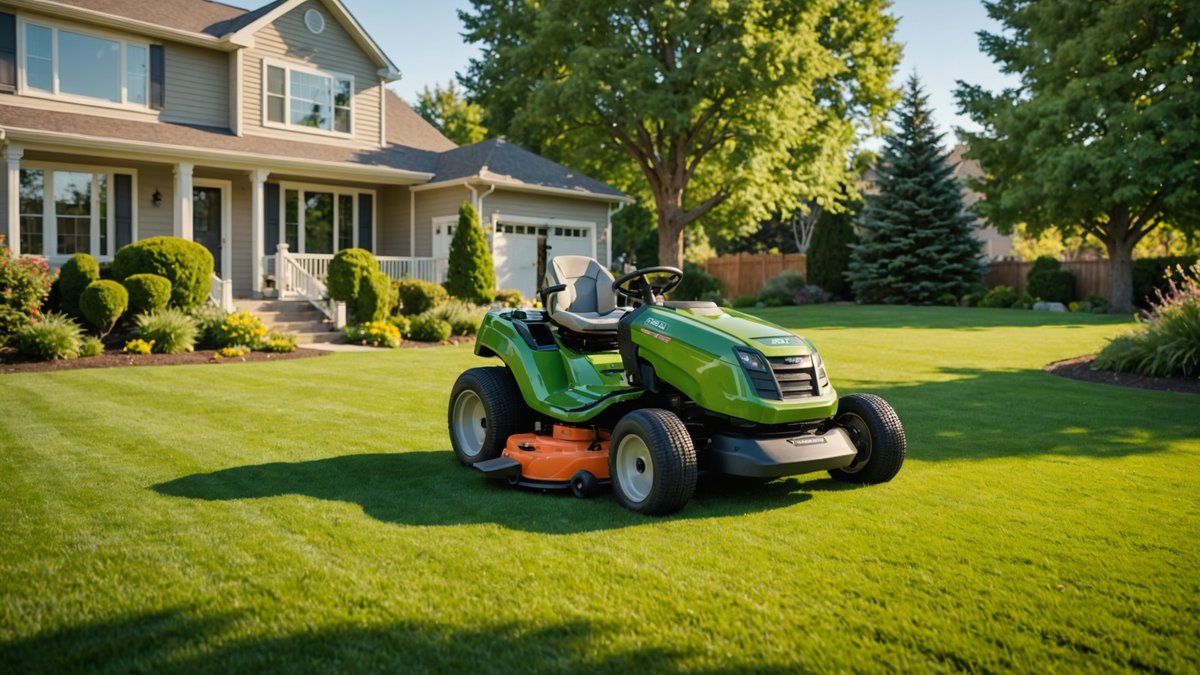
Imagine trading your noisy, gas-guzzling riding mower for a silent, emissions-free workhorse that mows your lawn while you sip iced tea on the porch. That’s the promise of the latest wave of robotic mowers, which are rapidly evolving from niche gadgets to must-have tools for homeowners and landscaping pros alike. With advancements in battery life, smart navigation, and eco-friendly design, these autonomous lawn mowers are redefining what it means to maintain a perfect yard—no sweat, no fumes, and no weekend time wasted.
The Rise of the Robot Lawn Mower: Why Now?
Robotic mowers aren’t new, but they’ve reached a tipping point in 2024. Thanks to leaps in AI-driven navigation, lithium-ion battery efficiency, and user-friendly app controls, today’s models are smarter, more reliable, and far more capable than early iterations. Where first-gen robot lawn mowers struggled with complex yards or steep slopes, the latest units—like those from Husqvarna, Worx, and Gardena—tackle all but the most extreme terrains with ease.
There’s also the environmental angle. A single gas-powered riding mower can emit as much pollution in an hour as 11 cars. In contrast, smart mowing robots run on rechargeable batteries, produce zero emissions, and often use mulching blades to return clippings to the soil as natural fertilizer. For eco-conscious homeowners, it’s a no-brainer.
How Today’s Robotic Mowers Stack Up
Not all autonomous lawn mowers are created equal. Here’s what sets the top performers apart:
- Cutting Width & Height: Most residential models handle 0.25–0.5 acres per charge, with cutting widths from 7 to 10 inches. Commercial-grade units (like STIHL’s iMow or Mean Green’s WM-60) can cover 2+ acres and feature wider decks.
- Navigation Tech: Entry-level robots use random bounce-and-mow patterns, while premium models (e.g., Husqvarna Automower 450X) employ GPS-assisted zone mapping and laser sensors for precision.
- Battery Life: Expect 60–120 minutes per charge for mid-range models, with high-end units lasting up to 3 hours. Some, like the Worx Landroid WR165, support swappable batteries for extended runtime.
- Smart Features: App control, voice assistant integration (Alexa/Google), and automatic weather-based scheduling are becoming standard. The Gardena Sileno Life even adjusts mowing frequency based on grass growth rates.
- Installation: Most require a boundary wire (buried or surface-mounted), but wire-free options like the Mammotion LUBA use RTK-GPS for virtual boundaries.
Robotic Mowers vs. Traditional Options: The Real Comparison
How do robotic mowers measure up against riding mowers, push mowers, and even professional landscaping services? Let’s break it down:
Cost: Upfront, robotic mowers are pricier—$800–$3,500 for residential models, while riding mowers start around $1,500. However, over time, the savings add up: no gas, no oil changes, and minimal maintenance (just blade sharpening and occasional cleaning). For pros, fleets of autonomous mowers can reduce labor costs by up to 50%.
Time Savings: A robotic mower works 2–3 times per week in short sessions, keeping your lawn consistently manicured. Compare that to the 1–2 hours per week most homeowners spend pushing or riding a mower. For landscapers, automation means reallocating crews to higher-value tasks like design or hardscaping.
Environmental Impact: As mentioned, gas mowers are pollution heavyweights. Robotic mowers also reduce noise pollution—most operate at 50–60 decibels (quieter than a vacuum cleaner), making them ideal for early-morning or late-evening mowing without disturbing neighbors.
Lawn Health: Frequent, small clippings from smart mowing robots act as a natural fertilizer, promoting thicker, greener turf. Traditional mowers often cut too infrequently, leading to stress and thatch buildup.
Who Should (and Shouldn’t) Go Robotic
Great for:
- Homeowners with yards up to 1 acre (or larger, with high-end models).
- Tech-savvy users who appreciate app-based control and automation.
- Eco-conscious buyers looking to reduce their carbon footprint.
- Busy professionals or frequent travelers who want a low-maintenance lawn.
- Landscaping pros managing multiple small-to-medium properties.
Not ideal for:
- Yards with very steep slopes (>35% grade) unless you opt for a model like the Husqvarna Automower 450X, which handles 45% inclines.
- Lawns with heavy obstacles (e.g., many trees, rocks, or uneven terrain) unless you’re willing to install exclusion zones.
- Budget-conscious buyers unwilling to invest upfront (though long-term savings often justify the cost).
What This Means for You
Bottom line: The era of robotic mowers as a luxury item is over. For most homeowners, they’re now a practical, eco-friendly, and time-saving alternative to traditional mowing methods. If you’re tired of spending weekends behind a mower—or paying someone else to do it—a robot lawn mower could be one of the smartest upgrades you make for your home.
For landscaping pros, the message is even clearer: autonomous lawn mowers aren’t replacing human crews (yet), but they’re a powerful tool for scaling your business, improving efficiency, and offering clients a greener service. Early adopters are already seeing ROI within 1–2 seasons.
The only question left is: Are you ready to let a robot take over your lawn?
FAQ: Robotic Mowers Demystified
Are robotic mowers safe around kids and pets?
Yes—modern robotic mowers are designed with safety in mind. They feature lift sensors (blades stop if the mower is picked up), tilt sensors (shut off if flipped), and collision sensors to avoid obstacles. The blades are also tucked underneath, spinning at high RPM but with low torque, so they won’t cause injury if touched. That said, it’s still wise to supervise young children and pets until they’re accustomed to the mower’s movements.
How much maintenance do robotic mowers require?
Far less than traditional mowers. Most require:
- Blade replacement or sharpening every 2–3 months (or as needed).
- Occasional cleaning of the deck and wheels to prevent grass buildup.
- Checking the boundary wire for breaks or damage (if applicable).
- Battery replacement every 2–4 years, depending on usage.
No oil changes, spark plugs, or air filters to worry about!
Can a robotic mower handle a large or complex yard?
It depends on the model. For yards up to 0.5 acres, most mid-range autonomous lawn mowers (like the Worx Landroid M or Robomow RS630) will suffice. For larger or more complex yards (1+ acres, multiple zones, steep slopes), look for high-end models with:
- Multi-zone mapping (e.g., Husqvarna Automower NERA).
- Longer battery life or fast-charging capabilities.
- All-wheel drive or tracks for traction on hills.
- Wire-free navigation (e.g., Mammotion LUBA 2) to simplify installation.
For very large properties (2+ acres), commercial-grade robots or a fleet of residential units may be the best solution.
Source: Original Article

Author: AI Mow
Ai Mow is the editorial team behind Ai Mower News, dedicated to bringing you the latest news, reviews, and insights on robotic lawn mowers and smart gardening technology.