

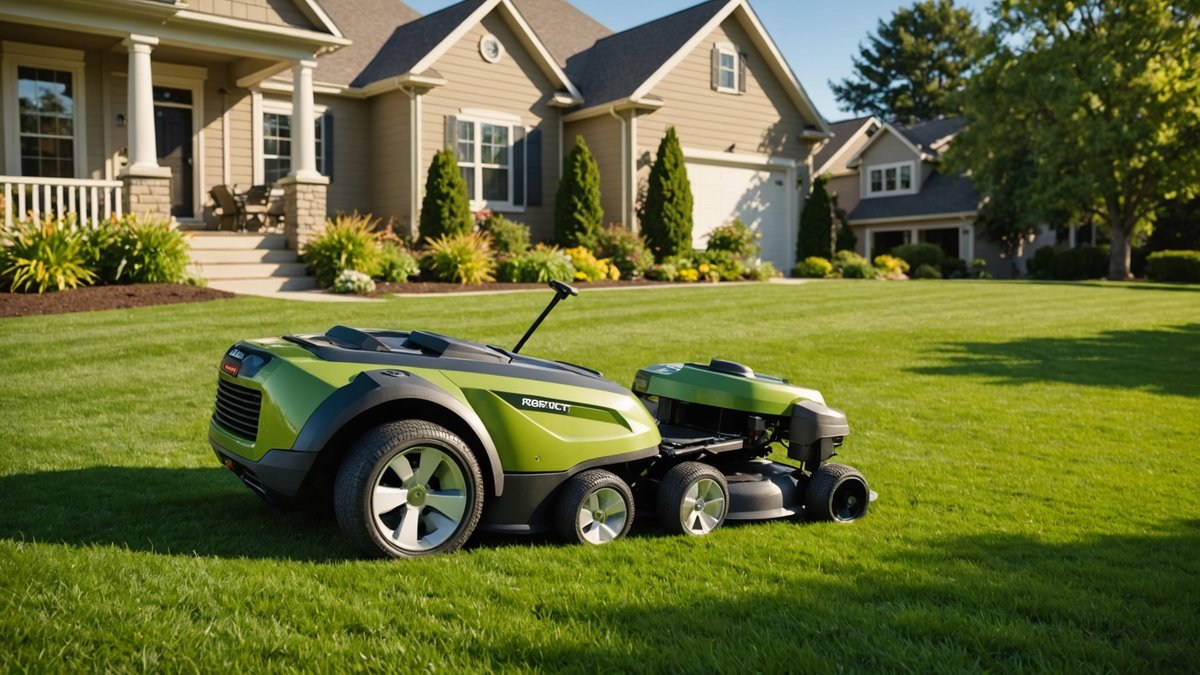
Imagine trading your loud, gas-guzzling riding mower for a quiet, emissions-free robotic mower that works while you relax—or even while you’re at work. That’s the promise of the latest wave of autonomous lawn mower technology, which is making it easier than ever for homeowners to maintain a pristine lawn without the hassle, noise, or environmental footprint of traditional equipment. These smart machines aren’t just a novelty; they’re a game-changer for anyone tired of spending weekends behind a mower.
Why Robotic Mowers Are Gaining Traction
The shift from riding mowers to robot lawn mowers isn’t just about convenience—it’s also about sustainability and efficiency. Traditional riding mowers are not only noisy and require regular maintenance, but they also contribute to carbon emissions. In contrast, autonomous lawn mowers run on rechargeable batteries, produce zero direct emissions, and operate almost silently. This makes them ideal for eco-conscious homeowners and those living in noise-sensitive neighborhoods.
Moreover, these machines are designed to mow frequently, cutting small amounts of grass each time. This “little and often” approach promotes healthier lawns by reducing stress on the grass and encouraging thicker growth. For landscaping professionals, this means less time spent on manual labor and more time focusing on higher-value tasks.
How Smart Mowing Technology Works
At the heart of every robotic mower is a combination of sensors, GPS (in some models), and intelligent software that allows it to navigate your yard autonomously. Most models use boundary wires or virtual boundaries to define the mowing area, ensuring they stay within the designated space. Advanced models, like those from Husqvarna, Worx, or Gardena, even include obstacle detection to avoid trees, garden decorations, or pets.
One of the most appealing features is their ability to return to a charging station when the battery is low and resume mowing once recharged. This means you can set it and forget it, with the mower handling the entire process without human intervention. Some high-end models also offer smart mowing features like app control, voice assistant integration (e.g., Alexa or Google Assistant), and weather-based scheduling to optimize mowing times.
Top Robotic Mowers to Consider
If you’re ready to make the switch, here are some of the standout models in the autonomous lawn mower market, each offering unique features to suit different needs:
- Husqvarna Automower 450X:
- Covers up to 1.25 acres
- GPS-assisted navigation and theft tracking
- Smart home integration (Alexa, Google Assistant)
- Weather timer adjusts scheduling based on rainfall
- Worx Landroid M WR165:
- Affordable option for smaller yards (up to 0.5 acres)
- AI-powered navigation for complex lawns
- App-controlled with voice assistant support
- Fully programmable cutting schedules
- Gardena Sileno Life:
- Quiet operation (just 57 dB)
- Ideal for medium-sized lawns (up to 0.75 acres)
- Bluetooth and app connectivity
- Eco-friendly with low energy consumption
- Robomow RS630:
- Heavy-duty model for large lawns (up to 1.5 acres)
- All-wheel drive for tackling slopes and rough terrain
- Remote control via app
- Base station included for automatic charging
For those with smaller lawns or tighter budgets, the Worx Landroid series is a great entry point, while the Husqvarna Automower line caters to larger properties with advanced features. Meanwhile, professionals managing multiple properties might look into commercial-grade options like the Mean Green Mower or Belrobotics models, which offer fleet management and heavy-duty performance.
Overcoming Common Concerns
Despite their advantages, some homeowners hesitate to adopt robot lawn mowers due to misconceptions or concerns. Let’s address a few:
- Safety: Modern autonomous lawn mowers are equipped with multiple safety features, including lift and tilt sensors that stop the blades instantly if the mower is picked up or tipped over. Many also have PIN code protection to prevent unauthorized use.
- Installation: While setting up boundary wires may seem daunting, most manufacturers provide step-by-step guides, and some even offer professional installation services. Virtual boundary models (like those from Husqvarna’s newer lines) eliminate the need for wires entirely.
- Cost: Yes, the upfront cost of a robotic mower is higher than a traditional push or riding mower. However, when you factor in long-term savings on gas, maintenance, and time, they often pay for themselves within a few years. Plus, prices are becoming more competitive as the technology matures.
- Performance: Some worry that robotic mowers can’t handle complex lawns. While early models struggled with steep slopes or intricate landscapes, today’s smart mowing machines are far more capable. For example, the Robomow RS630 can handle inclines up to 35%, and Husqvarna’s Automower 450X navigates narrow passages with ease.
What This Means for You
For homeowners, the rise of autonomous lawn mowers means reclaiming your weekends and reducing your environmental impact. Instead of spending hours mowing, you can let a robot lawn mower do the work while you enjoy your free time. For landscaping professionals, these machines offer a way to increase efficiency, reduce labor costs, and take on more clients without expanding your workforce.
If you’re on the fence, consider starting with a mid-range model like the Worx Landroid or Gardena Sileno to test the waters. For larger properties or commercial use, investing in a high-end Husqvarna Automower or Robomow could be a game-changer. And as the technology continues to evolve, we can expect even more features—like multi-zone mowing, improved AI navigation, and better integration with smart home ecosystems—to make these machines even more appealing.
The bottom line? Robotic mowers are no longer a futuristic fantasy—they’re a practical, eco-friendly solution for modern lawn care. Whether you’re a tech enthusiast, an eco-conscious homeowner, or a busy professional, there’s never been a better time to explore the world of smart mowing.
FAQ
Are robotic mowers worth the investment?
For most homeowners with medium to large lawns, yes. While the upfront cost is higher, the long-term savings on gas, maintenance, and time make robot lawn mowers a cost-effective choice. Plus, they contribute to a healthier lawn and a quieter, cleaner environment.
Can a robotic mower handle slopes and obstacles?
Many modern autonomous lawn mowers are designed to handle slopes up to 20-35% and can navigate around obstacles like trees, rocks, and garden decorations. Models like the Robomow RS630 and Husqvarna Automower 450X are particularly adept at tackling challenging terrain.
How do I choose the right robotic mower for my lawn?
Start by assessing the size and complexity of your lawn. For small, simple yards, a budget-friendly model like the Worx Landroid M WR165 may suffice. For larger or more complex lawns, look for models with advanced navigation, like the Husqvarna Automower or Gardena Sileno Life. Also, consider features like app control, weather-based scheduling, and safety mechanisms to match your needs.
Source: Original Article

Author: AI Mow
Ai Mow is the editorial team behind Ai Mower News, dedicated to bringing you the latest news, reviews, and insights on robotic lawn mowers and smart gardening technology.