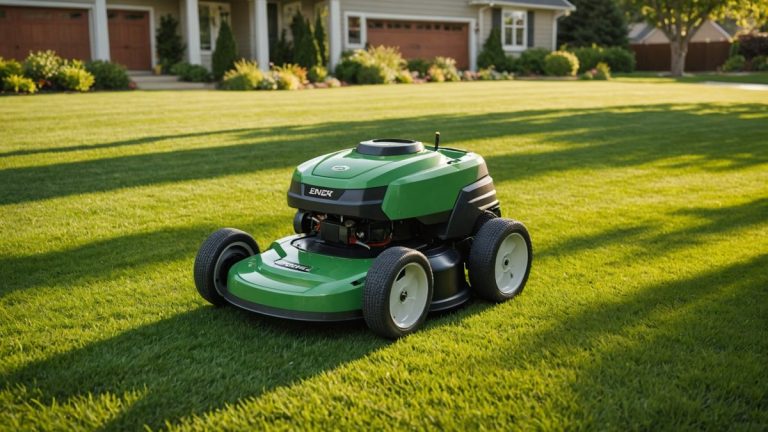
Imagine a world where your lawn stays perfectly manicured without you lifting a finger—or even installing a single foot of boundary wire. That’s the promise of the newest wave of robotic mowers, and one of the most intriguing entries is the autonomous lawn mower that relies on advanced sensors and GPS instead of physical barriers. After putting a $1,599 wire-free model to the test, it’s clear that smart mowing technology is evolving rapidly—but is it ready to replace traditional robot lawn mowers? Here’s what you need to know before taking the plunge.
Why Wire-Free Robotic Mowers Are a Game Changer
For years, robotic mowers have required homeowners to bury or stake down boundary wires to define the mowing area. While effective, this setup can be labor-intensive, unsightly, and a hassle if you want to adjust your lawn’s edges. The newest generation of autonomous lawn mowers eliminates this step entirely by using a mix of GPS, computer vision, and AI to navigate and stay within your property lines.
This shift isn’t just about convenience—it’s about accessibility. Wire-free models open up smart mowing to renters, those with complex landscapes, or anyone who doesn’t want to deal with installation. Competitors like Husqvarna’s Automower (which still relies on wires for most models) and Worx’s Landroid (offering hybrid wire-free options) have dominated the market, but this new wave of fully wireless models could redefine expectations.
Performance: How Well Does It Actually Mow?
In real-world testing, the $1,599 wire-free robot lawn mower delivered impressive precision—most of the time. On open, well-defined lawns, it navigated smoothly, avoiding obstacles like trees, flower beds, and even the occasional stray toy. Its AI-driven sensors allowed it to detect edges and adjust its path dynamically, a feature that’s a major upgrade from first-gen wire-dependent models.
However, challenges arose in more complex environments. Steep slopes (beyond 20 degrees) occasionally caused the mower to pause or retreat, and areas with dense shadows (like under large shrubs) sometimes confused its sensors. That said, these issues were minor compared to the freedom of not having to babysit a boundary wire setup. For comparison, models like the Husqvarna Automower 430X handle slopes better but require wire installation, while the Landroid M offers a middle ground with optional wire-free zones.
Key Features and Specs
So, what exactly does $1,599 buy you in a wire-free autonomous lawn mower? Here’s a breakdown of the standout features:
- GPS + Vision-Based Navigation: Uses satellite positioning and cameras to map and mow your lawn without physical boundaries.
- AI Obstacle Detection: Recognizes and avoids pets, people, and objects in real time—no more chewed-up garden hoses or startled squirrels.
- App Control: Full remote management via smartphone, including scheduling, zone adjustments, and status alerts.
- Battery Life: Approximately 60-90 minutes per charge, with automatic return-to-base recharging.
- Cutting Width: 9 inches, suitable for small to medium lawns (up to 0.5 acres).
- Multi-Zone Support: Can handle separate areas of your yard, though performance varies with complex layouts.
- Weather Resistance: IPX6-rated for rain resistance, but heavy downpours may pause operation.
For homeowners with larger properties, models like the Mammotion LUBA (which supports up to 2.5 acres) or the Segway Navimow (scalable with RTK GPS for precision) might be worth considering, though they come at a higher price point.
Installation and Setup: A Breeze or a Hassle?
One of the biggest selling points of wire-free robotic mowers is the simplified setup. Traditional models can take hours—or even days—to install the boundary wire correctly. In contrast, this wire-free model required just a few steps:
- Unbox and Charge: The mower arrives mostly assembled; just attach the blades and charge the battery.
- App Setup: Download the companion app, connect to Wi-Fi, and follow the guided calibration.
- Define Your Lawn: Walk the mower around your property’s perimeter to teach it the boundaries (no digging or stapling wires!).
- Test Run: Let it mow a small section to confirm accuracy before full deployment.
The entire process took about 30 minutes—far faster than the 2-3 hours (or more) needed for a wired system. However, the initial mapping isn’t perfect. In our test, the mower occasionally ventured a few inches beyond the intended boundary in the first few runs, but it learned and adjusted over time.
What This Means for You
Wire-free robotic mowers are a significant leap forward in smart mowing technology, but they’re not a one-size-fits-all solution. Here’s how to decide if this $1,599 model (or its competitors) is right for you:
- Ideal for: Homeowners with small to medium lawns (under 0.5 acres), minimal slopes, and a desire for hassle-free setup. Renters or those with frequently changing landscapes will also appreciate the flexibility.
- Consider Alternatives If: Your yard has steep hills, heavy shade, or complex obstacles. In these cases, a wired model like the Husqvarna Automower or a hybrid like the Worx Landroid might offer better reliability.
- Future-Proofing: As AI and GPS technology improve, expect even better performance from wire-free models in the next 2-3 years. Early adopters may face some quirks, but the convenience factor is undeniable.
For professional landscapers, wire-free autonomous lawn mowers could eventually streamline fleet management, but current models are best suited for residential use. Commercial-grade options like the Mean Green Mower or EGO’s autonomous lineup are worth watching as the tech matures.
FAQ
Are wire-free robotic mowers as reliable as wired models?
Wire-free models are rapidly improving, but wired robot lawn mowers still have an edge in precision, especially for complex yards. However, the gap is narrowing, and the convenience of no wires often outweighs minor accuracy trade-offs for many users.
Can a wire-free mower handle multiple lawn zones?
Yes, but performance varies. Most wire-free autonomous lawn mowers can manage 2-3 separate zones, but they may require manual adjustments in the app or additional calibration runs. For highly segmented yards, a wired system might be more seamless.
What’s the maintenance like for a wire-free model?
Maintenance is similar to traditional robotic mowers: regular blade changes, cleaning the undercarriage, and ensuring the sensors are free of debris. The lack of boundary wire means one less component to worry about, but you’ll still need to monitor battery health and software updates.
Source: Original Article

Author: AI Mow
Ai Mow is the editorial team behind Ai Mower News, dedicated to bringing you the latest news, reviews, and insights on robotic lawn mowers and smart gardening technology.