

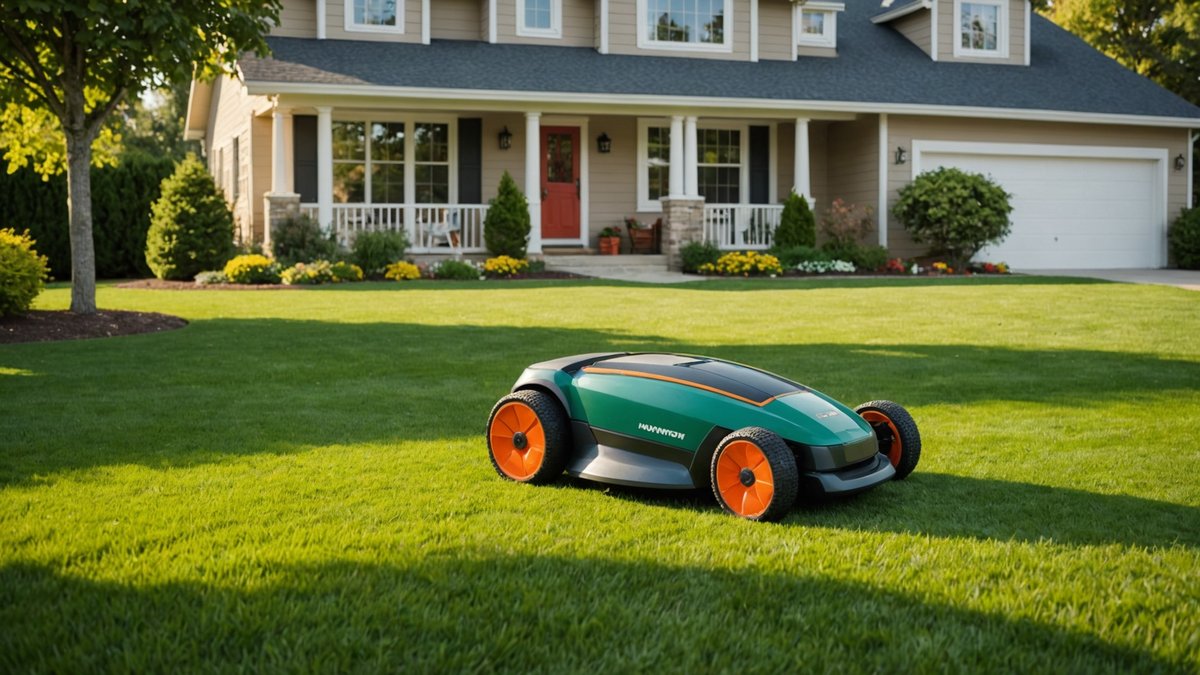
Imagine a robot lawn mower that navigates your yard with the precision of a laser-guided surgeon—no bumpers, no guesswork, just clean, efficient cuts every time. That’s the promise of the newly announced Navimow i215, a LiDAR-powered autonomous lawn mower that’s turning heads in the smart mowing space. But this isn’t just another incremental upgrade. With advanced obstacle avoidance, multi-zone mapping, and a price point that undercuts some of the heavyweights like Husqvarna and Worx, the i215 could be the game-changer homeowners and landscaping pros have been waiting for.
LiDAR Takes Robotic Mowing to the Next Level
If you’ve ever watched a robotic mower bump awkwardly into a garden gnome or get stuck in a tight corner, you’ll appreciate the i215’s most standout feature: LiDAR (Light Detection and Ranging). Unlike traditional models that rely on bump sensors or basic ultrasonic detection, LiDAR creates a 3D map of your yard in real time, allowing the mower to detect and avoid obstacles—even small ones—with surgical precision. This means fewer interruptions, less wear and tear on the mower, and a lawn that looks like it was tended by a pro.
LiDAR isn’t entirely new in the autonomous lawn mower world—brands like Mammotion and Ecovacs have dabbled in it—but the i215 is one of the first to bring this tech to a more accessible price point. For homeowners tired of the limitations of bump-and-turn models, this could be the upgrade that finally makes robotic mowing feel truly “set it and forget it.”
Key Features: What Sets the Navimow i215 Apart
The i215 isn’t just about LiDAR. Navimow has packed this smart mowing machine with features that rival (and in some cases, surpass) the competition. Here’s what you need to know:
- LiDAR Navigation: Real-time 3D mapping for precise obstacle avoidance, even in complex yards with narrow passages or dense landscaping.
- Multi-Zone Management: Program up to 5 separate mowing zones, ideal for properties with distinct areas like front/back yards, side lawns, or detached garden plots.
- RTK GPS + Virtual Boundaries: No need for physical boundary wires in most cases. The i215 uses high-precision GPS (with RTK correction) to stay within virtual boundaries, making installation a breeze.
- All-Wheel Drive: Tackles slopes up to 45% (about 24 degrees) with ease—steeper than many competitors, including the Husqvarna Automower 450X (which maxes out at 40%).
- Cutting Performance: Three razor-sharp blades spin at 3,600 RPM, delivering a clean cut on lawns up to 1.25 acres (5,000 m²). Adjustable cutting height ranges from 0.8″ to 3.1″ (20mm to 80mm).
- Weather Resistance: IPX6 waterproof rating means it can handle rain showers without missing a beat. The mower will even pause and return to its dock if heavy rain is detected.
- Smart Connectivity: Control via the Navimow app (iOS/Android), with features like remote start/stop, scheduling, and real-time status updates. Supports voice control via Alexa and Google Assistant.
- Battery & Runtime: 29V 6,700mAh lithium-ion battery provides up to 150 minutes of runtime per charge. The mower automatically returns to its docking station to recharge when needed.
How It Stacks Up Against the Competition
Navimow isn’t the only player in the robot lawn mower space, so how does the i215 compare to established names? Let’s break it down:
vs. Husqvarna Automower 450X: The 450X is a top-tier model with excellent performance, but it lacks LiDAR, relying instead on bump sensors and ultrasonic detection. The i215’s obstacle avoidance is far more advanced, and its 45% slope capability beats Husqvarna’s 40%. However, Husqvarna’s ecosystem (including its Automower Connect app) is more polished, and its dealership network offers better support for pros.
vs. Worx Landroid M200: The Landroid M200 is a budget-friendly option with solid performance, but it uses a random mowing pattern and lacks LiDAR. The i215’s systematic, GPS-guided mowing ensures more even coverage and fewer missed spots. That said, the Landroid’s modular design (swappable batteries with other Worx tools) is a nice perk for DIYers.
vs. Ecovacs Goat G1: The Goat G1 is another LiDAR-equipped autonomous lawn mower, but it’s priced higher than the i215 and lacks the same level of slope capability. The Goat G1 excels in large, open areas, while the i215’s multi-zone support makes it more versatile for complex properties.
vs. Mammotion LUBA AWD 5000: The LUBA AWD 5000 is a premium model with LiDAR and AWD, but it’s significantly more expensive. The i215 offers similar features at a fraction of the cost, making it a compelling alternative for cost-conscious buyers.
Who Should Consider the Navimow i215?
The i215 isn’t for everyone, but it’s a standout choice for several types of users:
- Homeowners with Complex Yards: If your property has narrow passages, tight corners, or lots of obstacles (trees, rocks, garden beds), the i215’s LiDAR will save you headaches. Traditional robotic mowers often struggle in these scenarios.
- Tech-Savvy Users: The app-based controls, virtual boundaries, and smart features are a dream for those who love tinkering with gadgets. If you’re already using smart home tech, the i215 will fit right in.
- Professional Landscapers: For pros managing multiple properties, the i215’s multi-zone support and efficient mowing patterns can save time and labor. The AWD and slope capability also make it suitable for challenging terrains.
- Eco-Conscious Buyers: Like all robotic mowers, the i215 is electric, producing zero emissions and reducing noise pollution compared to gas mowers.
On the flip side, if you have a very large property (over 1.25 acres), you might need a higher-capacity model like the Mammotion LUBA AWD 10000. And if you prefer a tried-and-true brand with a vast service network, Husqvarna or Worx might still be the safer bet.
Bottom Line: What This Means for You
The Navimow i215 represents a significant leap forward for smart mowing technology. By bringing LiDAR to a more affordable price point, Navimow is democratizing a feature that was once reserved for high-end models. For homeowners frustrated with the limitations of bump-sensor mowers, this could be the upgrade that finally makes robotic mowing feel truly autonomous.
What’s more, the i215’s combination of AWD, multi-zone support, and virtual boundaries makes it one of the most versatile robot lawn mowers on the market. Whether you’re a homeowner with a tricky yard or a pro looking to automate part of your fleet, this mower is worth a serious look.
That said, Navimow is still a relatively new player in the space, so long-term reliability and customer support remain question marks. If you’re an early adopter willing to take a chance on innovative tech, the i215 could be a fantastic investment. If you prefer the safety of established brands, you might want to wait for more user reviews—or consider the i215 as a secondary mower for testing.
FAQ
How does LiDAR improve robotic mowing?
LiDAR (Light Detection and Ranging) uses laser pulses to create a 3D map of your yard in real time. This allows the autonomous lawn mower to detect and avoid obstacles—even small ones like toys, pet bowls, or garden decor—with far greater accuracy than bump sensors or ultrasonic detection. The result is smoother operation, fewer interruptions, and a more precise cut.
Do I need to install boundary wires with the Navimow i215?
In most cases, no. The i215 uses RTK GPS and virtual boundaries, so you can set up mowing zones via the app without laying physical wires. However, for properties with very precise or irregular boundaries, you may still opt for a hybrid approach (virtual + physical wires) for added accuracy.
Can the Navimow i215 handle steep slopes?
Yes. The i215’s all-wheel-drive system allows it to tackle slopes up to 45% (about 24 degrees), which is steeper than many competitors, including the Husqvarna Automower 450X (40%) and Worx Landroid M200 (20%). This makes it a great choice for hilly or uneven properties.
Source: Original Article

Author: AI Mow
Ai Mow is the editorial team behind Ai Mower News, dedicated to bringing you the latest news, reviews, and insights on robotic lawn mowers and smart gardening technology.