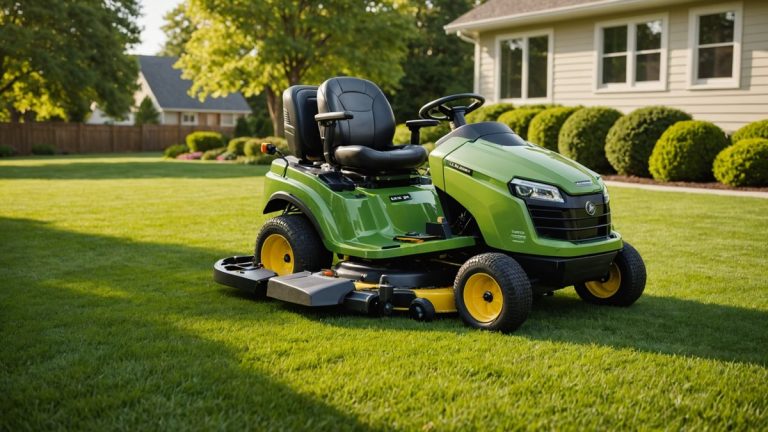
Picture this: a sunny afternoon, a gentle breeze, and you—kicking back in a hammock while your lawn mows itself. Sounds like a futuristic daydream? Not anymore. The rise of robotic mowers has turned this scenario into reality for homeowners looking to reclaim their weekends. After putting one of these autonomous lawn mowers to the test, it’s clear: the future of yard care isn’t just smart—it’s effortless. But does a robot lawn mower truly deliver on its promise, or is it just another gadget clogging up your garage? Let’s dig into the details.
First Impressions: Unboxing and Setup
Right out of the box, the robotic mower in question (a mid-range model comparable to the Husqvarna Automower 430X or Worx Landroid) impressed with its sleek, compact design. Unlike bulkier traditional mowers, this unit is built for agility, with a low profile that lets it navigate tight spaces and uneven terrain. Setup was surprisingly straightforward—no engineering degree required.
The most time-consuming part? Laying the boundary wire, a thin cable that defines the mowing area and keeps the robot safely within your yard. For a medium-sized lawn (around 0.5 acres), this took about 2 hours, including securing the wire with stakes and connecting it to the charging base. Pro tip: sketch a rough map of your yard first to plan the wire’s path, avoiding obstacles like flower beds, trees, or that one gnome collection you’re oddly attached to.
Once the boundary wire was in place, the mower charged up (about 90 minutes for a full battery) and was ready to roll. The companion app—available for both iOS and Android—walked me through the initial calibration, where I input my lawn size, preferred grass height, and mowing schedule. Within minutes, the autonomous lawn mower was off, humming quietly as it began its first pass over the grass.
Performance: How Well Does It Mow?
Here’s where the robot lawn mower truly shines. Unlike traditional mowers that require you to push (or ride) in straight lines, this little workhorse uses a combination of sensors, GPS (in higher-end models), and random algorithms to cover every inch of your lawn. The result? A consistently even cut, with no telltale stripes or missed patches.
During testing, the mower handled a variety of conditions with ease:
- Grass Length: Tackled everything from a freshly trimmed lawn to overgrown patches (up to 6 inches tall) without clogging. The mulching blades chopped clippings finely, returning nutrients to the soil—a boon for eco-conscious homeowners.
- Terrain: Navigated slopes up to 20 degrees (standard for most robotic mowers) and maneuvered around obstacles like rocks, tree roots, and even the occasional stray soccer ball. Bump sensors ensured it reversed course when it hit something solid.
- Weather: Operated in light rain (though it’s best to bring it in during heavy downpours to protect the electronics). The mower’s water-resistant design held up well, and the blades didn’t rust after exposure to damp conditions.
- Noise: At around 60 decibels, it’s quieter than a vacuum cleaner. You can run it at night without disturbing the neighbors (or your own beauty sleep).
One standout feature was the mower’s ability to return to its charging base automatically when the battery ran low. In a 3-hour mowing session, it docked twice to recharge before resuming its work—no babysitting required. For larger lawns, models like the Gardena Sileno Life or Robomow RS630 offer extended battery life and larger cutting decks.
Smart Features: The Tech Behind the Convenience
What sets smart mowing apart from traditional lawn care is the technology under the hood. This autonomous lawn mower came packed with features designed to make life easier:
- App Control: The mobile app let me start, stop, or schedule mowing sessions from anywhere. Adjusting the cutting height (from 0.8 to 2.4 inches) or setting up a weekly schedule took just a few taps. Some models, like the Husqvarna NERA, even integrate with smart home systems like Alexa or Google Assistant for voice control.
- GPS and Theft Protection: Higher-end models include GPS tracking, which not only helps the mower navigate more efficiently but also deters thieves. If someone tries to lift your robot, you’ll get an alert—and some models can even emit a loud alarm or lock the wheels remotely.
- Multi-Zone Support: For yards with separate areas (e.g., front and back), the mower can be programmed to handle multiple zones. This is a game-changer for complex landscapes.
- Seasonal Adjustments: The app includes settings for seasonal changes, like reducing mowing frequency in drought conditions or increasing it during peak growing seasons.
One minor gripe: the app’s interface could be more intuitive. While functional, it took a few tries to figure out how to set up custom mowing schedules. That said, once configured, the system ran flawlessly.
Maintenance: Low-Effort Upkeep
Owners of traditional mowers know the drill: emptying grass bags, cleaning undercarriages, sharpening blades, and winterizing engines. With a robotic mower, maintenance is refreshingly minimal. Here’s what you’ll need to do:
- Blade Replacement: The mulching blades wear down over time and should be replaced every 2-3 months (or as recommended by the manufacturer). This is a 5-minute job—no tools required on most models.
- Cleaning: After each mowing session, it’s a good idea to brush off grass clippings from the undercarriage and wheels. A quick spray with a hose (avoid high pressure) keeps the mower in tip-top shape.
- Battery Care: Lithium-ion batteries degrade over time, but most robot lawn mowers are designed for 3-5 years of use. Storing the mower indoors during extreme weather (both hot and cold) can extend battery life.
- Boundary Wire Checks: Occasionally, the boundary wire may shift or break, especially if you have curious pets or wildlife. A quick visual inspection every few weeks ensures the mower stays on track.
For professional landscapers considering fleet automation, models like the Mean Green Commercial Robotic Mower offer even more durability and easier maintenance for high-volume use.
What This Means for You
So, is a robotic mower worth the investment? For most homeowners, the answer is a resounding yes—with a few caveats. Here’s the breakdown:
Pros:
- Time Savings: The average homeowner spends 40-60 hours per year mowing the lawn. A robot lawn mower eliminates nearly all of that, freeing up time for hobbies, family, or just relaxing (hammock optional).
- Consistency: Your lawn will look perfectly manicured at all times, without the feast-or-famine cycle of traditional mowing.
- Eco-Friendly: No gas, no oil, and no emissions. Many models are also energy-efficient, using less electricity than a standard oven.
- Cost Savings Over Time: While the upfront cost (typically $800–$3,500) is higher than a traditional mower, you’ll save on gas, maintenance, and potentially even lawn care services over the long run.
Cons:
- Upfront Cost: High-quality autonomous lawn mowers aren’t cheap. Budget models start around $500, but they may lack features like GPS or app control.
- Installation: Laying the boundary wire can be labor-intensive for large or complex yards. Some companies offer professional installation for an additional fee.
- Not for Every Yard: If your lawn has steep hills (over 20 degrees), dense wooded areas, or lots of obstacles, a robotic mower might struggle. Always check the manufacturer’s specs for slope and terrain limitations.
For landscaping pros, the calculus is slightly different. While a single robot lawn mower won’t replace a full crew, integrating a few into your fleet can reduce labor costs and allow your team to focus on higher-value tasks like landscaping or hard-to-reach areas. Commercial models, like those from STIHL or Husqvarna, are built for durability and can handle larger properties with ease.
Final Verdict: A Hammock-Worthy Investment
After weeks of testing, it’s clear that robotic mowers are more than just a gimmick—they’re a legitimate upgrade to traditional lawn care. While they’re not perfect (and may not suit every yard), the convenience, consistency, and time savings they offer are hard to beat. If you’re tired of spending your weekends pushing a mower—or paying someone else to do it—a robot lawn mower could be one of the best investments you make for your home.
And yes, you can mow your lawn from a hammock. In fact, we highly recommend it.
FAQ
How long does a robotic mower’s battery last?
Most robotic mowers have a battery life of 60–90 minutes per charge, with higher-end models lasting up to 120 minutes. The mower will automatically return to its charging base when the battery runs low and resume mowing once recharged. For larger lawns, look for models with extended battery life or faster charging times.
Can a robotic mower handle multiple lawns or zones?
Yes! Many mid- to high-end autonomous lawn mowers support multi-zone mowing. You can program the mower to tackle different areas of your yard (e.g., front lawn, back lawn, side yard) by setting up separate boundary wires or using GPS waypoints. This is especially useful for properties with distinct sections or obstacles.
Are robotic mowers safe for pets and kids?
Safety is a top priority for robot lawn mower manufacturers. Most models are equipped with lift and tilt sensors that stop the blades immediately if the mower is picked up or flipped over. Bump sensors also cause the mower to reverse direction if it encounters an obstacle. That said, it’s still a good idea to supervise pets and children around the mower, especially during the first few uses, to ensure they understand how it operates. Always check the manufacturer’s safety guidelines before use.
Source: Original Article

Author: AI Mow
Ai Mow is the editorial team behind Ai Mower News, dedicated to bringing you the latest news, reviews, and insights on robotic lawn mowers and smart gardening technology.