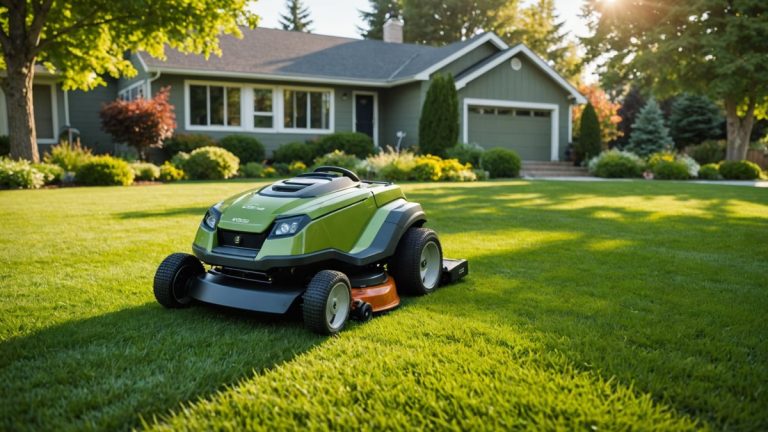
Imagine waking up to a perfectly manicured lawn—every day—without lifting a finger. That’s the promise of the robotic mower, a game-changer for homeowners and landscaping pros tired of the weekly chore of pushing a gas guzzler or wrestling with extension cords. But before you hand over your hard-earned cash for an autonomous lawn mower, there are critical factors to consider. Not all robot lawn mowers are created equal, and the wrong choice could leave you with more headaches than fresh cut grass.
Why Robotic Mowers Are More Than Just a Luxury
Robotic mowers have evolved from niche gadgets to mainstream tools, thanks to advances in smart mowing technology. Unlike traditional mowers, these devices operate autonomously, using boundary wires, GPS, or sensors to navigate your yard. Brands like Husqvarna, Worx, and Gardena have led the charge, but newer players like EcoFlow and Mammotion are pushing boundaries with features like app-controlled scheduling, multi-zone management, and even obstacle avoidance.
For homeowners, the appeal is clear: save time, reduce physical strain, and maintain a consistently neat lawn. For landscaping professionals, robotic mowers offer the potential to automate routine maintenance, freeing up crews for higher-value tasks. But as with any major purchase, the key to satisfaction lies in matching the mower’s capabilities to your specific needs.
Key Considerations Before You Buy
Not every yard—or every owner—is a perfect fit for a robot lawn mower. Here’s what to evaluate before making a decision:
- Yard Size and Complexity: Most entry-level models handle up to 0.5 acres, while high-end options like the Husqvarna Automower 450X or the Mammotion LUBA AWD can tackle 1.5 acres or more. If your lawn has steep slopes (over 20 degrees), narrow passages, or multiple isolated areas, look for mowers with all-wheel drive or advanced navigation systems.
- Installation Requirements: Many robotic mowers require a boundary wire to be buried or staked around the perimeter of your lawn. This can be a DIY project, but larger or irregularly shaped yards may need professional installation. Wire-free models, like those using GPS or RTK (Real-Time Kinematic) technology, are emerging but often come with a higher price tag.
- Battery Life and Charging: Battery capacity determines how long the mower can operate before needing to recharge. For example, the Worx Landroid M offers up to 90 minutes of runtime, while the EcoFlow Blade can run for up to 3 hours. If your lawn is large or divided into zones, prioritize models with fast-charging capabilities or swappable batteries.
- Cutting Performance: Blade type (floating, pivoting, or fixed) and cutting height adjustments matter. Some models, like the Gardena Sileno Life, offer mulching capabilities, which can improve lawn health by returning nutrients to the soil. Others, like the Robomow RS630, excel in handling taller grass or uneven terrain.
- Smart Features: App connectivity, voice control (via Alexa or Google Assistant), and integration with smart home systems are becoming standard. Look for models that offer customizable mowing schedules, weather-based adjustments, and remote monitoring. The Husqvarna Automower Connect app, for example, lets you control your mower from anywhere.
- Safety and Theft Protection: Robotic mowers are equipped with sensors to avoid pets, children, and obstacles. Some, like the Worx Landroid, include PIN code protection or alarm systems to deter theft. If security is a concern, check for models with GPS tracking or geofencing.
Robotic Mowers vs. Traditional Mowers: The Pros and Cons
Switching to a robotic mower isn’t just about convenience—it’s a shift in how you approach lawn care. Here’s how they stack up against traditional options:
Advantages of Robotic Mowers
- Time-Saving: Once installed, the mower handles the work for you, often running daily to maintain a consistent cut.
- Eco-Friendly: Most robotic mowers are electric, producing zero emissions and reducing your carbon footprint compared to gas mowers.
- Quiet Operation: Unlike the roar of a gas engine, robotic mowers operate at a whisper, often under 60 decibels. This means you can run them at night or early morning without disturbing the neighborhood.
- Precision: Smart mowing algorithms ensure even coverage, reducing the risk of missed spots or scalping.
- Long-Term Savings: While the upfront cost is higher (typically $800–$3,500), robotic mowers can save money on fuel, maintenance, and even lawn care services over time.
Disadvantages to Keep in Mind
- Upfront Cost: High-quality robotic mowers are an investment. Budget models start around $600, but premium options can exceed $4,000.
- Installation Hassles: Setting up boundary wires or configuring GPS zones can be time-consuming, especially for complex yards.
- Limited for Large or Rugged Terrain: While some models handle slopes or obstacles well, robotic mowers may struggle with very large properties, thick brush, or highly uneven ground. In such cases, a hybrid approach (using a robotic mower for maintenance and a traditional mower for heavy-duty work) might be best.
- Maintenance Needs: Though they require less upkeep than gas mowers, robotic mowers still need regular blade sharpening, cleaning, and battery replacement every few years.
Alternatives and Competitors to Watch
If you’re in the market for a robotic mower, it’s worth comparing top brands and models to find the best fit for your yard and budget. Here’s a snapshot of the current landscape:
- Husqvarna Automower Series: Industry leaders with models for all yard sizes. The 450X is a top pick for large lawns, while the 115H is a budget-friendly option for small yards.
- Worx Landroid: Known for affordability and user-friendly features, the Landroid M and WR155E are great for mid-sized lawns. Their app is particularly intuitive.
- Gardena Sileno: A strong contender for European-style yards, with models like the Sileno Life offering quiet operation and smart connectivity.
- EcoFlow Blade: A newer entrant with a focus on battery efficiency and multi-zone mowing, ideal for tech-savvy users.
- Mammotion LUBA: A premium option with AWD and advanced obstacle avoidance, perfect for complex or hilly terrain.
- Robomow: A solid choice for larger yards, with models like the RS630 offering robust cutting power and durability.
For landscaping professionals, brands like Mean Green and Scag are also entering the commercial autonomous lawn mower space, offering fleet-ready solutions for large-scale operations.
What This Means for You
So, is a robotic mower right for you? If you value convenience, have a manageable yard size (under 1.5 acres), and are willing to invest in the upfront cost and installation, the answer is likely yes. These devices are no longer just a luxury—they’re a practical solution for anyone looking to reclaim their weekends or streamline their lawn care business.
However, if your yard is particularly large, rugged, or filled with obstacles, you may need to wait for the next generation of smart mowing technology—or consider a hybrid approach. Similarly, if you’re not tech-savvy or prefer the hands-on feel of traditional mowing, a robotic model might not be the best fit.
Start by assessing your lawn’s size, shape, and terrain, then compare models based on battery life, cutting performance, and smart features. And remember: the cheapest option isn’t always the best. Invest in a model that can grow with your needs, and don’t forget to factor in installation and maintenance costs.
FAQ
How long do robotic mowers last?
With proper maintenance, a high-quality robot lawn mower can last 5–10 years. The battery typically needs replacement every 2–4 years, depending on usage. Regular blade sharpening and cleaning will also extend its lifespan.
Can a robotic mower handle a yard with obstacles like trees, rocks, or flower beds?
Yes, but it depends on the model. Most robotic mowers use sensors to detect and avoid obstacles, but their effectiveness varies. For yards with many obstacles, look for models with advanced collision detection, such as the Mammotion LUBA or Husqvarna Automower 450X. Some mowers can even navigate around flower beds if properly programmed with boundary wires or GPS zones.
Are robotic mowers worth the investment for small yards?
For small yards (under 0.25 acres), the upfront cost of a robotic mower might seem steep compared to a traditional push mower. However, if you value your time and want a consistently well-maintained lawn without the effort, the convenience often justifies the cost. Budget-friendly options like the Worx Landroid WR140 or Gardena Sileno Minimo are great starting points for smaller spaces.
Source: Original Article

Author: AI Mow
Ai Mow is the editorial team behind Ai Mower News, dedicated to bringing you the latest news, reviews, and insights on robotic lawn mowers and smart gardening technology.