

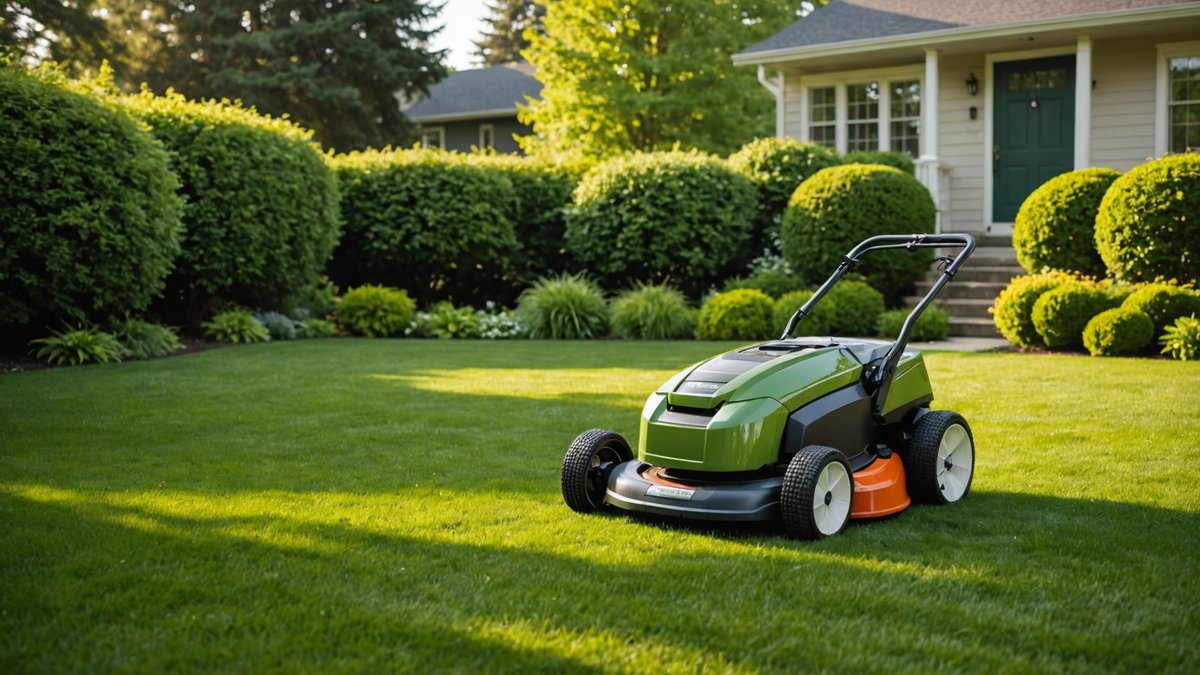
Imagine waking up to a perfectly manicured lawn—every morning—without lifting a finger. That’s the promise of robotic mowers, but before you trade in your push mower for a high-tech helper, there’s more to consider than just the convenience. These autonomous lawn mowers are revolutionizing yard care, but they’re not a one-size-fits-all solution. From terrain challenges to smart features, here’s what you need to know to make an informed decision.
Why Robotic Mowers Are Gaining Traction
The robot lawn mower market is exploding, and for good reason. Homeowners are tired of spending weekends behind a mower, and professionals are looking for ways to scale their services efficiently. Today’s models are smarter, more reliable, and packed with features like GPS navigation, rain sensors, and app-based controls. Brands like Husqvarna, Worx, and Gardena have set the bar high, but newer players are entering the space with innovative twists—think AI-driven mowing patterns and solar-assisted charging.
For landscaping pros, these machines aren’t just gadgets—they’re tools for reducing labor costs and expanding service capacity. A single autonomous lawn mower can handle multiple properties in a day, freeing up crews for higher-value tasks. And for eco-conscious buyers, the shift from gas to electric means quieter operation and zero emissions.
Key Features to Compare
Not all robotic mowers are created equal. Here’s what to look for when evaluating models:
- Cutting Width and Deck Size: Wider decks (20”+) cover large lawns faster, while compact models (10-15”) are ideal for small or complex yards.
- Battery Life and Charging: Lithium-ion batteries dominate, but runtime varies. Some models recharge in under an hour, while others take longer. Solar-assisted charging is a bonus for off-grid use.
- Navigation Tech: Basic models use random patterns, while advanced smart mowing systems employ GPS, perimeter wires, or RTK (real-time kinematic) for precision. Brands like Amboss and Mammotion offer wire-free setups for easier installation.
- Terrain Handling: Can it tackle slopes up to 30%? What about wet grass or uneven ground? Check the specs—some robot lawn mowers struggle with hills or thick turf.
- Smart Features: App control, voice assistant integration (Alexa/Google), and automatic scheduling are game-changers. Some models even integrate with smart home systems like Home Assistant.
- Safety and Security: Look for lift and tilt sensors, PIN-code locks, and anti-theft GPS tracking. Kids and pets should be safe around these machines.
The Hidden Challenges
While the benefits are clear, robotic mowers aren’t without hurdles. Here’s what often catches buyers off guard:
- Installation: Most models require boundary wires to be buried or stapled around the lawn’s perimeter. This can be labor-intensive for large or irregularly shaped properties. Wire-free alternatives (like those from Mammotion or Segway) are gaining popularity but may come at a premium.
- Maintenance: Yes, they’re low-maintenance compared to gas mowers, but blades still need replacing, and debris can clog the underside. Some models have self-cleaning features, but you’ll still need to check them periodically.
- Initial Cost: Entry-level autonomous lawn mowers start around $1,000, but high-end models with advanced features can cost $4,000 or more. Compare this to the lifetime cost of a traditional mower (gas, oil, maintenance) to see if the investment pays off.
- Lawn Complexity: Robotic mowers thrive in open, simple lawns. If your yard has tight spaces, flower beds, or obstacles like trees and play sets, you may need to adjust expectations—or opt for a model with advanced obstacle avoidance.
How They Stack Up Against Competitors
If you’re considering a robotic mower, it’s worth comparing top brands to see which fits your needs:
- Husqvarna Automower: The gold standard for reliability and smart features. Models like the 430XH handle large lawns (up to 0.8 acres) and integrate with smart home systems. Best for tech-savvy users who want a premium experience.
- Worx Landroid: A budget-friendly alternative with solid performance. The Landroid S (20V) is great for small to medium lawns and offers app control. Ideal for first-time buyers.
- Gardena Sileno: Known for quiet operation and efficient cutting. The Sileno Life series is perfect for smaller lawns and offers easy DIY installation.
- Mammotion Luba: A wire-free option with RTK navigation for precision mowing. Great for complex lawns but comes at a higher price point.
- Segway Navimow: Another wire-free contender with AI-powered obstacle avoidance. A strong choice for tech enthusiasts and pros.
For commercial users, brands like Mean Green and Graze offer fleet-ready solutions with robust build quality and service support. These models are designed for heavy use and can mow multiple acres on a single charge.
What This Means for You
Bottom Line
A robotic mower can be a game-changer for your lawn care routine—or your landscaping business—but it’s not a magic bullet. If you have a relatively simple lawn and are willing to invest in the setup, the time savings and convenience are undeniable. For professionals, these machines can significantly boost efficiency and reduce labor costs, especially when managing multiple properties.
However, if your yard is complex or you’re not comfortable with the initial setup and maintenance, a traditional mower might still be the better choice. The key is to match the autonomous lawn mower’s capabilities to your specific needs. Start by measuring your lawn, assessing its complexity, and comparing models based on the features that matter most to you.
And remember: the best robot lawn mower for your neighbor might not be the best for you. Do your homework, read reviews, and consider renting or testing a model before committing.
FAQ
How long do robotic mowers last?
With proper maintenance, a high-quality robotic mower can last 8-10 years or more. Battery life is typically the limiting factor, but many models allow for battery replacements to extend the machine’s lifespan.
Can a robotic mower handle a hilly yard?
It depends on the model. Many autonomous lawn mowers can handle slopes up to 20-30%, but steeper hills may require a specialized model like the Husqvarna Automower 450X or a commercial-grade machine. Always check the manufacturer’s slope rating before purchasing.
Are robotic mowers safe for pets and kids?
Yes, but with caveats. Most robot lawn mowers are equipped with lift and tilt sensors that stop the blades immediately if the mower is picked up or tipped. However, it’s still wise to supervise pets and children until you’re confident they understand how to interact (or not interact) with the machine. Some models also offer geofencing to keep the mower within designated areas.
Source: Original Article

Author: AI Mow
Ai Mow is the editorial team behind Ai Mower News, dedicated to bringing you the latest news, reviews, and insights on robotic lawn mowers and smart gardening technology.