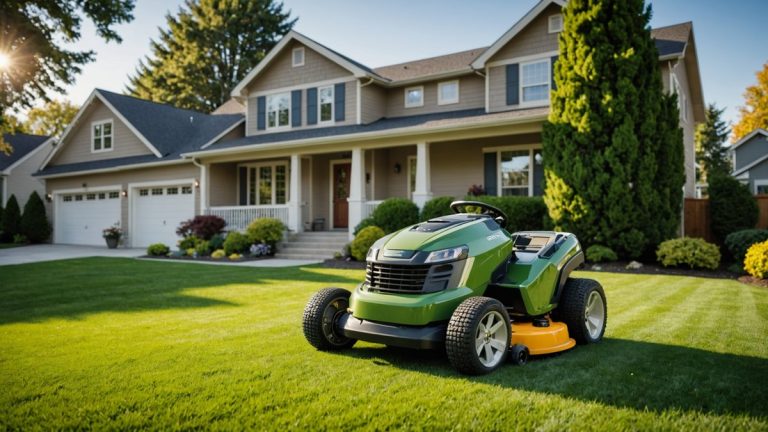
Tired of spending your weekends pushing a heavy lawn mower under the blazing sun? The rise of robotic mowers is transforming how homeowners and landscaping pros maintain perfect lawns—effortlessly, quietly, and with surprising precision. But before you trade in your gas guzzler for an autonomous lawn mower, there are key factors to consider: from yard size and terrain to smart features and long-term savings. Here’s everything you need to know to make an informed decision.
Why Robotic Mowers Are Gaining Popularity
The robot lawn mower market has exploded in recent years, driven by advancements in battery technology, AI-driven navigation, and a growing demand for time-saving yard care solutions. These devices aren’t just novelty gadgets—they’re efficient, eco-friendly alternatives to traditional mowing. Brands like Husqvarna, Worx, and Robomow have refined their models to handle everything from small suburban lawns to sprawling estates, often with smart mowing features like app control, voice assistant integration, and automatic weather adjustments.
For homeowners, the appeal is clear: reclaim hours of free time while achieving a consistently manicured lawn. For commercial landscapers, robotic mowers can supplement fleets, reducing labor costs and allowing crews to focus on higher-value tasks. And with gas prices volatile and environmental concerns rising, the shift to electric, autonomous solutions feels inevitable.
Key Considerations Before Buying
Not all robotic mowers are created equal, and not every yard is a perfect fit. Here’s what to evaluate before purchasing:
- Yard Size and Layout: Most residential robotic mowers handle up to 1 acre, but commercial models (like those from STIHL or Mean Green) can tackle 5+ acres. Check for obstacles like steep slopes (most max out at 20-25° inclines), tight spaces, or frequent obstacles (e.g., trees, garden beds).
- Installation Requirements: Nearly all models require a boundary wire to define the mowing area. Some newer models (e.g., Husqvarna’s EPOS or Worx’s Landroid with RTK) offer wire-free GPS-based navigation, but these are pricier and may need professional setup.
- Battery Life and Charging: Look for lithium-ion batteries with enough runtime for your lawn’s size. Entry-level models (like the Worx WR140) run for 60-90 minutes, while high-end models (e.g., Husqvarna Automower 450X) can mow for 2+ hours. Charging stations should be placed in a sheltered, accessible spot.
- Cutting Performance: Blade type (floating vs. fixed), cutting height (typically 0.8–2.4 inches), and width (7–22 inches) vary. For fine turf, opt for models with mulching capabilities and adjustable schedules.
- Smart Features: App control (via Bluetooth or Wi-Fi), rain sensors, theft alerts, and integration with smart home systems (e.g., Alexa, Google Home) are becoming standard. Some models even support smart mowing zones for targeted care.
- Maintenance and Durability: Check for self-cleaning decks, easy-to-replace blades, and weather resistance (IPX ratings). Winter storage and blade sharpening/replacement are ongoing tasks.
- Cost: Prices range from $500 for basic models to $4,000+ for commercial-grade autonomous lawn mowers. Factor in installation costs (DIY vs. professional) and long-term savings on fuel, labor, and traditional mower maintenance.
How Robotic Mowers Compare to Traditional Options
Still on the fence? Here’s how robotic mowers stack up against their manual and ride-on counterparts:
| Feature | Robotic Mower | Gas/Push Mower | Ride-On Mower |
|---|---|---|---|
| Effort Required | Fully autonomous (after setup) | Manual labor | Manual labor (but faster for large areas) |
| Noise Level | Very quiet (50-60 dB) | Loud (85-95 dB) | Loud (80-90 dB) |
| Eco-Friendliness | Zero emissions, electric | Gasoline, emissions | Gasoline/diesel, emissions |
| Mowing Frequency | Daily/as needed (maintains even height) | Weekly (depends on grass growth) | Weekly (depends on grass growth) |
| Upfront Cost | $500–$4,000+ | $200–$800 | $1,500–$10,000+ |
| Long-Term Cost | Low (electricity, blade replacement) | Moderate (gas, oil, maintenance) | High (fuel, maintenance, storage) |
For small to medium yards, robot lawn mowers often pay for themselves in 2-3 years by eliminating labor and fuel costs. For large properties, hybrid approaches (e.g., a robotic mower for daily maintenance + a ride-on for heavy-duty seasonal cuts) can be ideal.
Top Competitors to Watch in 2024
The robotic mower space is competitive, with brands constantly innovating. Here are the standout players:
- Husqvarna Automower: The gold standard for reliability and smart features. Models like the 450X (residential) and 550 EPOS (commercial, wire-free) lead the pack. Best for: tech-savvy users who want seamless integration.
- Worx Landroid: Affordable and user-friendly, with models like the WR155 (handling up to 0.5 acres) and WR165 (up to 0.75 acres). Best for: budget-conscious buyers and DIY installers.
- Robomow: Known for powerful cutting performance and large-area coverage (up to 2.5 acres). The RS630 is a favorite for complex yards. Best for: challenging terrains and professional use.
- STIHL iMow: Rugged, commercial-grade options like the RMI 632 PC with app control and fleet management. Best for: landscaping pros.
- ECOVACS GOAT: A newer entrant with AI-powered obstacle avoidance and multi-zone mapping. Best for: tech enthusiasts and early adopters.
Alternatives like the Mamotion LUBA (with its unique AWD design) and Segway Navimow (RTK GPS precision) are also worth watching as they push the boundaries of autonomous lawn mower capabilities.
What This Means for You
Investing in a robotic mower isn’t just about convenience—it’s a lifestyle shift. For homeowners, it means more free time, a greener lawn, and a quieter neighborhood. For pros, it’s an opportunity to scale operations and reduce physical strain on crews. However, it’s not a one-size-fits-all solution. Here’s the bottom line:
- Buy a robotic mower if: You have a yard under 1 acre (or are willing to invest in a commercial model for larger areas), prioritize low maintenance, and want a long-term, eco-friendly solution.
- Skip it (for now) if: Your yard has extreme slopes, dense obstacles, or no power outlet for charging. Also, if you enjoy the ritual of mowing or have a very tight budget.
- Consider a hybrid approach if: You have a large property or mixed terrain. Pair a robot lawn mower with a traditional mower for seasonal deep cuts.
Start by mapping your yard’s size and challenges, then compare models based on your must-have features. And don’t forget to check local dealer networks (our Dealer Directory can help!) for hands-on demos and installation support.
FAQs About Robotic Mowers
How safe are robotic mowers around pets and kids?
Safety is a top priority for manufacturers. Most autonomous lawn mowers are equipped with lift and tilt sensors that stop the blades immediately if the mower is picked up or flipped. They also have collision sensors to avoid obstacles (including pets and toys). However, it’s wise to supervise the first few runs and keep small children and pets indoors during operation. Always follow the manufacturer’s safety guidelines.
Can a robotic mower handle leaves and small debris?
Most robotic mowers are designed to mulch grass clippings finely, which act as a natural fertilizer. However, they’re not built to handle thick layers of leaves or large debris. For best results, clear your lawn of sticks, pinecones, and heavy leaf litter before mowing. Some high-end models (like Husqvarna’s Automower with “Leaf Collect” mode) can manage light leaf mulching, but they’re not a replacement for a leaf blower or vacuum.
Do robotic mowers work in the rain?
Most models are weather-resistant (look for IPX4 or higher ratings) and can operate in light rain. However, heavy downpours can clog the cutting deck or make slopes slippery, increasing the risk of the mower getting stuck. Many smart mowing systems include rain sensors that automatically pause operation and resume when conditions improve. For prolonged wet periods, it’s best to manually override and retrieve the mower.
Source: Original Article

Author: AI Mow
Ai Mow is the editorial team behind Ai Mower News, dedicated to bringing you the latest news, reviews, and insights on robotic lawn mowers and smart gardening technology.